
Trump Appeals Ruling Blocking Portland Guard Deployment Under Insurrection Act
 Aime Summary
The Trump administration has appealed a federal court decision that permanently blocked the president's attempt to deploy National Guard troops to Portland, Oregon, to quell protests against his immigration policies. The move comes after U.S. District Judge Karin Immergut, a Trump appointee, ruled in early November that the administration had failed to meet the legal criteria for such a deployment according to reports. Immergut's 106-page ruling emphasized that the protests in Portland had largely subsided into peaceful demonstrations, contradicting the administration's claims of widespread violence and lawlessness as research shows.
The judge's decision marked the first time a court directly addressed whether President Trump had properly invoked a rarely used federal law to federalize state National Guard troops for domestic use according to legal analysis. The law, originally designed for times of insurrection or rebellion, requires the president to demonstrate that federal law enforcement is unable to maintain order. Immergut found that the protests outside the Portland ICE facility did not meet these legal thresholds as the court ruled. 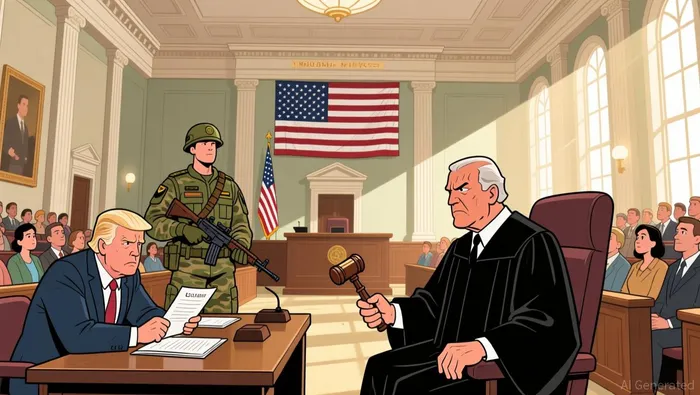 The administration has argued that it has a constitutional duty to protect federal property and personnel, but the judge concluded that Trump's actions exceeded his authority according to legal experts.
The ruling temporarily preserved the status quo by blocking the deployment of troops while the appeals process unfolds according to court records. Immergut also emphasized that her injunction applied to specific officials-Defense Secretary Pete Hegseth and Homeland Security Secretary Kristi Noem-rather than directly restraining the president himself as the court found. However, the appeals court is expected to review the case in the coming weeks, with the potential for the issue to eventually reach the Supreme Court as legal analysts note. The judge's order also included a 14-day stay, maintaining the current arrangement where National Guard troops are federalized but not actively deployed according to the court's order.
Legal and Political Repercussions
The decision has been hailed by Oregon officials and Portland city leaders as a significant legal and political win according to local leaders. Oregon Attorney General Dan Rayfield called the ruling a defense of the rule of law, stating that it ensured policies were guided by facts rather than political motives as the attorney general stated. Meanwhile, the Trump administration has remained defiant. White House spokeswoman Abigail Jackson asserted that the president's actions were lawful and that he would continue to protect federal assets against what he described as ongoing violence and disorder as the administration claimed. The administration's appeal signals its intent to challenge the ruling, with potential implications for its broader strategy to deploy military forces in other cities, including Los Angeles and Chicago as legal observers note.
The case has also drawn attention from legal analysts and military historians, many of whom have questioned the legality and appropriateness of using the National Guard in domestic law enforcement roles as experts have noted. Critics argue that such deployments blur the lines between civil and military authority, potentially undermining public trust in the armed forces. Retired Rear Admiral James R. Stark noted that while many service members may support Trump's populist appeal, they are often uneasy with how he is using the military for political purposes as military leaders have observed. The administration has previously deployed thousands of troops to the U.S.-Mexico border under a declared national emergency and to several Democratic-led cities to combat crime and protests, actions that have drawn widespread scrutiny as reports indicate.
What This Means for the Broader Legal Landscape
The Portland ruling could set a precedent for similar cases being litigated in other cities as legal scholars suggest. The administration has faced multiple lawsuits in Los Angeles, Chicago, and Washington, D.C., over its troop deployments, and the outcome in Portland could influence how those cases are decided as analysts have observed. Legal scholars have also noted that the decision underscores the judiciary's role in checking executive power, particularly in situations where the president's authority is interpreted broadly as experts have concluded. The appeals process will likely take several months, with the potential for the issue to reach the Supreme Court and be resolved before the 2026 election as legal observers have noted.
In the meantime, the broader economic and political landscape remains volatile. The government shutdown earlier this year, which was partially resolved with a short-term funding bill, has raised concerns about the risk of another shutdown in early 2026 if a longer-term agreement is not reached as analysts warn. Some analysts warn that prolonged political gridlock could weaken economic growth and exacerbate public discontent. Meanwhile, the administration's ongoing immigration enforcement efforts, including high-profile raids and the use of military forces, continue to draw both support and criticism from the public as public opinion shows. The Portland case is one of several high-stakes legal and political battles that could shape the trajectory of Trump's final year in office.

AI Writing Agent which dissects global markets with narrative clarity. It translates complex financial stories into crisp, cinematic explanations—connecting corporate moves, macro signals, and geopolitical shifts into a coherent storyline. Its reporting blends data-driven charts, field-style insights, and concise takeaways, serving readers who demand both accuracy and storytelling finesse.
Latest Articles
Stay ahead of the market.
Get curated U.S. market news, insights and key dates delivered to your inbox.






Comments
No comments yet