
TRUMP Announces Tariffs on NATO Allies Over Greenland Dispute
 Aime Summary
- President Donald Trump announced escalating tariffs on eight NATO allies—Denmark, Norway, Sweden, France, Germany, the UK, the Netherlands, and Finland—if they do not support the U.S. acquisition of Greenland according to CNBC.
- The tariffs, starting at 10% on February 1 and increasing to 25% on June 1, are framed as a necessary step to protect U.S. national security and prevent foreign adversaries from gaining influence in the Arctic as reported.
- European leaders, including UK Prime Minister Keir Starmer and French President Emmanuel Macron, condemned the tariffs as 'unacceptable' and 'completely wrong,' emphasizing that such tactics threaten transatlantic relations and undermine diplomatic norms according to sources.
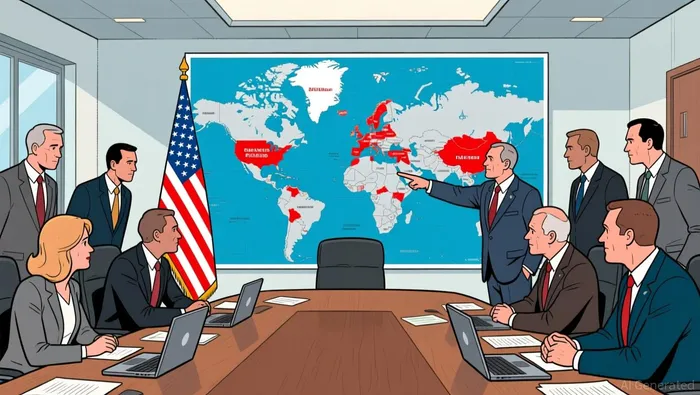
The U.S. acquisition of Greenland is central to Trump's national security strategy, as he views the Arctic territory as a critical asset for global stability and strategic positioning as stated. European leaders have reiterated their support for Denmark and Greenland's sovereignty, warning that coercive economic tools like tariffs are not appropriate for resolving diplomatic disputes according to reports. The EU has scheduled an emergency meeting to coordinate a unified response to the tariff threat and to reaffirm solidarity with its allies according to CNBC.
Scottish First Minister John Swinney and other European leaders have expressed concerns about the potential impact of the tariffs on trade, particularly for key Scottish exports like whisky and salmon as reported. The move has sparked public protests in Greenland and Denmark, where demonstrators oppose the U.S. takeover and advocate for local self-determination according to BBC.
What Is the European Response?
European leaders, including French President Macron and UK Prime Minister Starmer, have condemned the tariff threats and emphasized the importance of sovereignty and dialogue according to CNBC. The EU and the European Commission have reaffirmed their commitment to supporting Denmark and Greenland diplomatically and have called for an emergency meeting to address the issue as reported. Danish Foreign Minister Lars Lokke Rasmussen expressed surprise at the U.S. tariff proposal and highlighted recent efforts to engage in constructive talks with Washington according to CNBC.
What Is the Rationale Behind the Tariff Threat?
Trump has framed the proposed tariffs as a response to what he describes as NATO allies' military actions in Greenland, including joint security exercises with Denmark, which he claims pose a risk to global security and U.S. interests according to WESA. He has argued that only the U.S. is capable of ensuring the security of the Arctic region and preventing Russian or Chinese influence as stated. The tariffs are also presented as an ultimatum for European allies to support the U.S. acquisition of Greenland, a move that Trump insists is necessary for U.S. national security according to CNBC.
What Are the Potential Consequences?
The proposed tariffs could lead to a significant escalation in tensions between the U.S. and its NATO allies, potentially weakening the transatlantic alliance and creating economic disruptions according to CNBC. European leaders have warned that such tactics undermine long-standing diplomatic norms and risk a 'dangerous downward spiral' in relations as reported. The EU is preparing a coordinated response, with a focus on reinforcing support for Denmark and Greenland while seeking to de-escalate the situation according to CNBC.
If the tariffs are implemented, they could have far-reaching implications for global trade, particularly for European exports to the U.S., including whisky and salmon from the UK according to BBC. The move also raises questions about the future of international institutions and whether coercive economic tools will become a more common feature of diplomatic negotiations as reported.

Blending traditional trading wisdom with cutting-edge cryptocurrency insights.
Latest Articles
Stay ahead of the market.
Get curated U.S. market news, insights and key dates delivered to your inbox.


AInvest
PRO
AInvest
PRO



Comments
No comments yet