
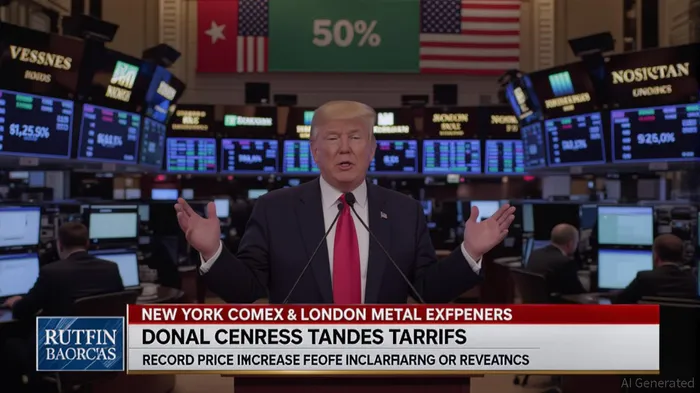
Trump Announces 50% Import Tariff on Copper, Spurring Record Price Surge on New York Comex and Unprecedented Drop in LME Reference
 Aime Summary
A 50% import tariff on copper, announced by Donald Trump in July 2025, has triggered a sharp and unexpected shift in global copper markets. The move has led to a record price increase on the New York Comex, while simultaneously causing a significant drop in the London Metal Exchange (LME) reference price, highlighting the complex interplay between policy and market dynamics.
Policy Shock Sends Comex Prices to Unprecedented Levels
The imposition of a 50% tariff on copper imports has created immediate ripples across the trading landscape. Investors and market participants swiftly reacted to the policy shift, with the New York Comex experiencing a historic price surge. The benchmark copper contract on the Comex hit a new all-time high as traders anticipated the long-term implications of reduced supply and higher costs for imported materials. The price movement reflects a fundamental recalibration of expectations regarding copper availability and pricing power in the U.S. market.
Contrasting Dynamics Emerge on the LME
While the Comex has seen a sharp upward trend, the LME has recorded an unexpected decline in its reference price for copper. This divergence underscores the differing structures and participant bases of the two exchanges. The LME, traditionally seen as a global benchmark, has seen a drop as traders and producers shift to alternative markets or hedge against the new U.S. tariff. The decline may also reflect a reallocation of supply to non-tariff jurisdictions, as global producers seek to maintain access to international buyers unaffected by the policy.
Market Reactions Highlight Policy Uncertainty
The immediate market reactions underscore the sensitivity of commodity prices to policy decisions. The tariff’s impact has not only been swift but also asymmetric, with U.S.-listed contracts reacting more acutely than their global counterparts. Analysts and industry participants are now closely monitoring how the policy will affect long-term supply chains, trade flows, and the broader industrial sector. The move has also intensified discussions around the strategic use of tariffs in shaping market outcomes, particularly in resource-intensive industries.
Policy and Price Volatility Remain Closely Linked
The announcement and its aftermath demonstrate how policy decisions can directly influence price volatility in commodity markets. Copper, a critical input in construction, electronics, and energy sectors, has become a focal point for trade policy debates. The record Comex price and the LME’s contrasting performance illustrate the potential for policy-driven market fragmentation. As the market continues to adjust, the long-term effects of the tariff will depend on how producers, consumers, and traders adapt to the new regulatory environment.
Conclusion
The imposition of a 50% copper import tariff by Donald Trump has triggered a dramatic shift in market dynamics, with the New York Comex experiencing a record price increase and the London Metal Exchange reference price falling sharply. These developments highlight the immediate and complex effects of trade policy on global commodity markets, with copper serving as a key indicator of broader economic and political trends.

Stay ahead of the market.
Get curated U.S. market news, insights and key dates delivered to your inbox.


AInvest
PRO
AInvest
PRO



Comments
No comments yet