
Trump Announces 39% Tariff on Swiss Imports
ByAinvest
Friday, Aug 1, 2025 5:19 am ET1min read
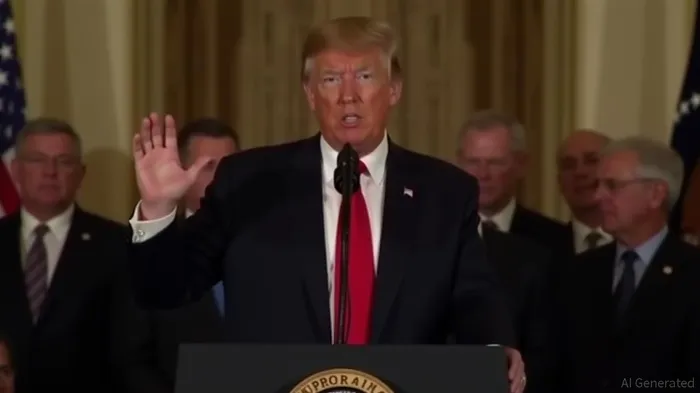
U.S. President Donald Trump announces a 39% tariff on imports from Switzerland, targeting the country's significant trade surplus with the U.S. The move aims to address the trade imbalance and protect American industries, particularly in the steel and aluminum sectors. The tariff decision is likely to impact the Swiss economy and could lead to retaliatory measures from Switzerland.
In a significant move aimed at addressing the persistent trade imbalance, U.S. President Donald Trump has announced a 39% tariff on imports from Switzerland. The decision, effective July 9, 2025, follows a comprehensive review of trade practices and is intended to protect American industries, particularly those in the steel and aluminum sectors.The new tariff is part of a broader strategy to rectify large and persistent annual U.S. goods trade deficits. According to the White House, the tariffs are necessary to deal with an unusual and extraordinary threat to the national security and economy of the United States. The move is consistent with Executive Order 14257, which was issued in April 2025 to address similar issues [1].
Switzerland, known for its significant trade surplus with the U.S., has been identified as a key trading partner in need of additional tariffs. The new tariff rate of 39% is designed to align with the country's current ad valorem rates and address the imbalance in trade. The tariffs are expected to impact the Swiss economy, potentially leading to retaliatory measures from Switzerland.
The tariffs are subject to specific exceptions and will not apply to goods already in transit or loaded onto vessels before the effective date. The Harmonized Tariff Schedule of the United States (HTSUS) will be modified to reflect these changes, with further details provided in Annex II of the order [1].
The announcement follows a series of recommendations from senior officials, who noted the lack of reciprocity in Swiss tariff rates and non-tariff barriers. The move is part of a broader effort to ensure that trading partners align with U.S. economic and national security interests.
The U.S. administration has stated that the tariffs are a necessary step to protect domestic industries and address the trade deficit. The decision is likely to have implications for both the Swiss and U.S. economies, potentially leading to adjustments in trade policies and economic strategies.
References:
[1] https://www.whitehouse.gov/presidential-actions/2025/07/further-modifying-the-reciprocal-tariff-rates/
Stay ahead of the market.
Get curated U.S. market news, insights and key dates delivered to your inbox.


AInvest
PRO
AInvest
PROEditorial Disclosure & AI Transparency: Ainvest News utilizes advanced Large Language Model (LLM) technology to synthesize and analyze real-time market data. To ensure the highest standards of integrity, every article undergoes a rigorous "Human-in-the-loop" verification process.
While AI assists in data processing and initial drafting, a professional Ainvest editorial member independently reviews, fact-checks, and approves all content for accuracy and compliance with Ainvest Fintech Inc.’s editorial standards. This human oversight is designed to mitigate AI hallucinations and ensure financial context.
Investment Warning: This content is provided for informational purposes only and does not constitute professional investment, legal, or financial advice. Markets involve inherent risks. Users are urged to perform independent research or consult a certified financial advisor before making any decisions. Ainvest Fintech Inc. disclaims all liability for actions taken based on this information. Found an error?Report an Issue


ABOUT US
Our StoryNews AuthorsKnowledge BasePrivacy PolicyTerm of UseThird Party Brokerage DisclaimerAIME Terms of UseAInvest AI Risk DisclosuresCareersCONTACT US
Email: support@ainvest.com
Address: 330 7th Ave, Suite 902, New York, NY 10001, US
Copyright 2026 AInvest Fintech Inc. All rights reserved.


Comments
No comments yet