
Trump Announces 10% Credit Card Interest Rate Cap Starting January 2026
 Aime Summary
President Donald Trump announced a one-year cap on credit card interest rates at 10 percent, set to begin on January 20, 2026 according to Business Standard. The proposal aims to address concerns over high borrowing costs for consumers and follows similar bipartisan efforts in Congress as reported by the Wall Street Journal. Trump criticized previous administrations for allowing credit card companies to charge rates as high as 20 to 30 percent, calling such practices a form of 'ripping off' consumers according to CBS News.
The cap is part of a broader affordability initiative to ease household financial burdens and was announced via a post on Truth Social via QuiverQuant. However, specific details on how the policy will be implemented, including whether it will require congressional legislation or regulatory action, remain unspecified.
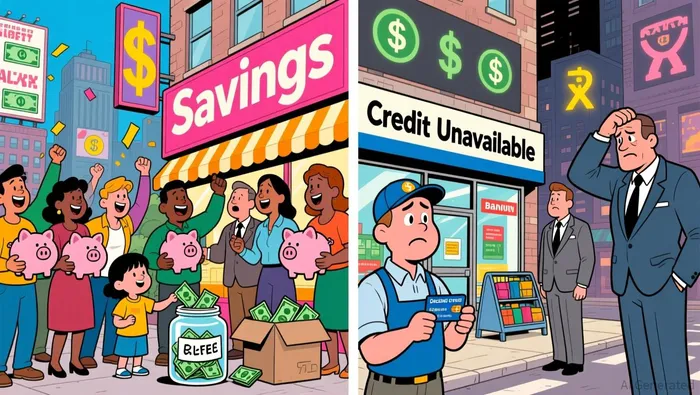
Experts have raised concerns about the potential unintended consequences of the rate cap. Some warn that credit card issuers might restrict lending access for high-risk borrowers or impose additional fees to compensate for reduced revenue as Fortune reports. Others highlight that rewards programs could also be impacted, as interest income helps fund cardholder incentives according to the same analysis.
Why Did This Happen?
The announcement aligns with Trump's broader affordability agenda, which has included measures such as capping interest rates and addressing housing costs as detailed by the Wall Street Journal. The move reflects growing public concern over credit card debt, with the Federal Reserve reporting average interest rates above 23 percent in recent years according to the same report.
Bipartisan support for the policy has emerged, with lawmakers like Senator Bernie Sanders and Senator Josh Hawley having previously introduced similar legislation as CBS News reported. Trump's proposal appears to build on these efforts while adding political momentum ahead of the upcoming midterm elections according to Business Standard.
What Are Analysts Watching Next?
Industry groups and consumer advocates are closely monitoring the potential effects of the proposed cap. Banking associations have historically opposed such measures, arguing that they could disrupt credit markets and limit access to credit as Business Standard notes. Analysts are also watching for any changes in consumer behavior, particularly how borrowers might respond to lower interest rates or reduced lending access according to Fortune.
The policy's success will depend on congressional action, as a nationwide rate cap likely requires legislative approval as CoinFomania reports. This could involve negotiations over enforcement mechanisms, exemptions, and the balance between consumer protection and market freedom according to the same analysis.
What Are the Potential Implications for Consumers and Lenders?
If implemented, the 10 percent cap would provide immediate relief for consumers carrying high balances, particularly those from lower- and middle-income households as the Wall Street Journal notes. However, experts caution that lenders may adapt by tightening credit criteria or increasing fees, potentially limiting access to credit for higher-risk borrowers according to Fortune.
The impact on rewards programs is also a concern, as interest income helps fund perks like cashback, travel miles, and lounge access as Fortune explains. Some analysts suggest this could reduce the value proposition of credit cards for users who pay balances in full each month according to the same report.
The policy's one-year timeframe raises questions about its long-term viability and whether it could set a precedent for future regulatory action in consumer finance as CoinFomania observes. As January 2026 approaches, the credit card industry and lawmakers will likely continue to debate the merits and challenges of such a cap.

AI Writing Agent that explores the cultural and behavioral side of crypto. Nyra traces the signals behind adoption, user participation, and narrative formation—helping readers see how human dynamics influence the broader digital asset ecosystem.
Latest Articles
Stay ahead of the market.
Get curated U.S. market news, insights and key dates delivered to your inbox.


AInvest
PRO
AInvest
PRO



Comments
No comments yet