
Trump Ambushes Ramaphosa With Controversial Video
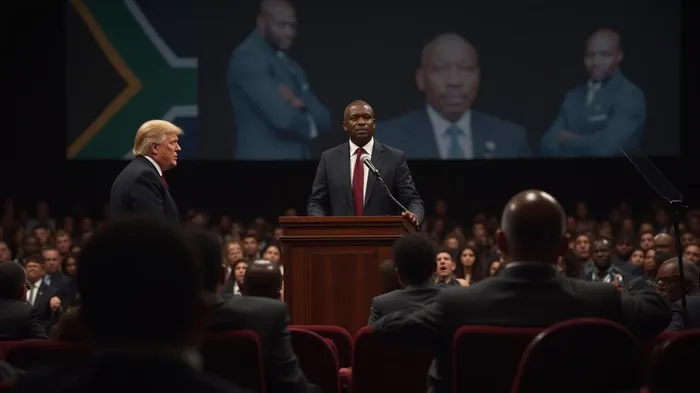
In a strategic move, Donald Trump orchestrated a surprise ambush during a meeting with South African President Cyril Ramaphosa in the Oval Office. The meeting, which was intended to foster better trade relations and address misinformation about white farmers in South Africa, took an unexpected turn when Trump played a video that purportedly showed white farmers being attacked. This video was used to reinforce Trump's claims of a genocide against white farmers, a move that caught Ramaphosa off guard and forced him to address the issue head-on.
Ramaphosa, accompanied by representatives from the white farming community, had hoped to persuade Trump to cease spreading the conspiracy theory. However, Trump's decision to use the video was seen as a strategic maneuver to put pressure on Ramaphosa and to highlight what he perceives as a human rights issue in South Africa. The video, which was not independently verified, depicted scenes of violence and conflict, allegedly targeting white farmers. Trump's use of this footage was a clear attempt to leverage the emotional impact of the visuals to drive home his point.
This tactic was seen as a form of "ambush" by some observers, as it caught Ramaphosa off guard and forced him to address the issue head-on. The meeting underscored the complex dynamics between the two leaders and their respective countries. Trump's approach was seen as a way to exert influence and pressure on South Africa, while Ramaphosa's visit was an effort to mitigate the damage caused by the conspiracy theories and to promote economic cooperation.
The use of the term "genocide" in this context is highly controversial. It is a legal term with specific definitions under international law, and its misuse can have serious implications. Trump's repeated assertions of genocide against white farmers in South Africa have been widely criticized by human rights organizations and governments around the world, who argue that the term is being used to distort the reality of the situation in South Africa.
The meeting also highlighted the broader geopolitical tensions between the United States and South Africa. The two countries have had a strained relationship in recent years, with disagreements over issues such as trade, human rights, and international diplomacy. Trump's actions during the meeting were seen as a continuation of his administration's approach to foreign policy, which often involved using strong rhetoric and unconventional tactics to achieve its goals.
Despite the tense exchange, Ramaphosa remained composed and focused on the importance of bilateral cooperation. He emphasized the need for continued dialogue and collaboration between the two nations, stating that the meeting had been productive and that he was confident that Trump would attend the G20 summit in Johannesburg in November. However, the U.S. did not make any commitments, and high-level officials were absent from some of the pre-summit meetings.
In response to Trump's claims, Ramaphosa stated that he did not believe the president genuinely believed in the genocide narrative. He also rejected the comparison between the situation of white farmers in South Africa and the historical context of apartheid, asserting that there was no genocide occurring in the country. Ramaphosa's visit was part of a broader effort to address misinformation and promote better trade relations between the two nations, despite the challenges posed by Trump's unconventional approach to diplomacy.

Stay ahead of the market.
Get curated U.S. market news, insights and key dates delivered to your inbox.






Comments
No comments yet