
Trump's AI Ambition Meets Market Doubt as Private Sector Ties Drive National Tech Push


 Aime Summary
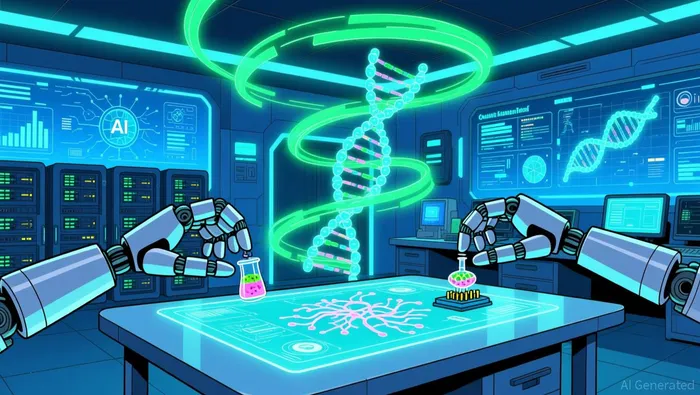
President Donald J. Trump has unveiled the Genesis Mission, a national initiative aimed at accelerating scientific discovery through artificial intelligence, according to a White House fact sheet. The program, formalized via executive order, tasks the Department of Energy (DOE) with creating a centralized AI platform to unify the nation's supercomputers, scientific data, and research infrastructure. By integrating these resources, the mission seeks to enable AI-driven experimentation, robotic laboratories, and the development of foundational models to tackle critical challenges in biotechnology, energy, and quantum science.
The Genesis Mission is part of a broader strategy to reinforce U.S. leadership in AI, following Trump's earlier executive actions to reverse Biden-era policies, promote AI education, and counter "woke AI" in government. The administration argues that AI can revolutionize research by compressing timelines for drug discovery, materials science, and energy innovation. For instance, AI could reduce multi-year research projects to weeks by automating data analysis and experimental design. The DOE's national laboratories, which house vast datasets and high-performance computing resources, will serve as the backbone of this effort.
 Private-sector collaboration is also central to the initiative. C3.ai has expanded its partnership with MicrosoftMSFT-- to enhance AI integration across Microsoft Copilot, Fabric, and Azure AI Foundry. This collaboration allows customers to unify data, reasoning, and model operations within a single platform, streamlining AI deployment for large organizations. C3.ai CEO Stephen Ehikian emphasized the alignment of their technology with Microsoft's cloud infrastructure to deliver scalable, secure AI solutions. The company's strategic alliances with hyperscalers like AWS and Google Cloud have driven 73% of its 2025 agreements, though its stock has fallen 27.4% year-to-date amid competitive pressures and valuation concerns.
Meanwhile, national labs are adopting a more agile approach to AI infrastructure. Argonne National Laboratory, for example, has partnered with Nvidia and Oracle to deploy AI systems in 2026, with tech firms contributing to hardware costs-a shift from traditional government-funded models according to a New York Times report. This "Silicon Valley-style strategy" aims to accelerate access to cutting-edge AI tools, according to Rick Stevens, an Argonne associate director. The move reflects a growing recognition that private-sector expertise and capital are essential to maintaining U.S. technological edge.
Despite these advancements, the AI sector faces headwinds. Companies like C3.ai are grappling with investor skepticism over high valuations and uncertain profitability. A recent Zacks Investment Research report noted that C3.ai's shares have underperformed the IT services sector, citing challenges in execution and margins. However, analysts highlight the potential of strategic partnerships to drive long-term growth, particularly in defense and government sectors.
The Genesis Mission underscores the administration's belief that AI is pivotal to national security and economic competitiveness. By bridging public and private efforts, the U.S. aims to maintain its lead in an increasingly globalized AI race, even as Wall Street reevaluates the sector's risks and rewards.
---

Stay ahead of the market.
Get curated U.S. market news, insights and key dates delivered to your inbox.
AInvest
PRO
AInvest
PRO



Comments
No comments yet