
Trump administration suspends key offshore wind projects over radar, security risks
 Aime Summary
The Trump administration has placed several major offshore wind projects on hold, citing national security concerns. The decision, announced by the Interior Department on Monday, affects five projects along the U.S. East Coast. Interior Secretary Doug Burgum emphasized the risks posed by the radar interference from large turbine structures and their potential to obscure legitimate targets near populated areas according to classified reports.
The projects impacted include Vineyard Wind 1, Revolution Wind, Commercial, Sunrise Wind, and Empire Wind 1. The administration's move has been seen as part of a broader strategy to shift energy priorities away from offshore wind development according to analysis. Burgum stated that the administration remains committed to safeguarding American citizens and addressing the evolving threats posed by adversarial technologies as the Interior Department notes.
In a social media post, Burgum criticized the wind projects as "expensive, unreliable, and heavily subsidized," contrasting them with a single natural gas pipeline that he claimed could provide as much energy as the combined output of the five suspended projects according to Burgum's statement. 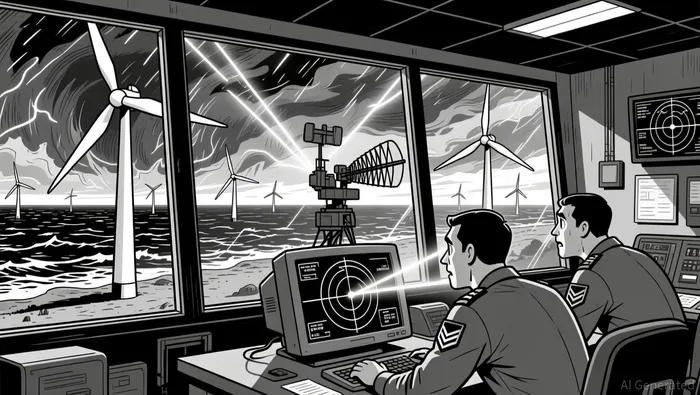 The decision aligns with the Trump administration's long-standing skepticism of renewable energy initiatives, particularly offshore wind, which it has previously delayed and canceled according to multiple reports.
National Security Concerns and Radar Interference
The Interior Department cited classified reports from the Department of Defense that identified national security risks related to offshore wind projects. According to the reports, the massive turbine blades and highly reflective towers create "radar clutter," which obscures legitimate moving targets and generates false signals near coastal population centers according to the Department of Defense. Interior Secretary Doug Burgum reiterated these concerns in an interview with Fox Business, stating that the size of the turbines can create significant issues for radar systems as Burgum explained.
The administration argued that the interference could compromise national defense capabilities, particularly in areas where radar systems are used for surveillance and early warning. The decision to suspend leases for these projects is part of a larger effort to assess and mitigate emerging security threats as the Interior Department noted. The Interior Department did not specify when the projects might be reconsidered, but it emphasized that the administration will continue to evaluate the balance between energy development and national security as officials stated.
Broader Policy Context and Industry Response
This move represents the latest in a series of actions by the Trump administration to limit offshore wind development. The administration has repeatedly delayed permitting and leasing decisions, citing economic and security concerns. The current suspension of five projects marks a significant setback for the U.S. offshore wind industry, which has been pushing to expand renewable energy capacity along the East Coast according to industry analysis.
Industry leaders and environmental advocates have criticized the decision as politically motivated and based on outdated assessments. They argue that the radar interference concerns have been addressed in previous studies and that the U.S. must accelerate clean energy development to meet climate goals and reduce reliance on fossil fuels as experts warn. However, the Trump administration has maintained that its actions are necessary to protect national interests and that offshore wind projects pose unacceptable risks according to the administration's position.
The decision also reflects a broader ideological stance within the administration, which has prioritized traditional energy sources like natural gas and oil over renewable alternatives. Interior Secretary Burgum has repeatedly criticized offshore wind as an inefficient and costly energy solution, even as global markets increasingly adopt similar technologies according to Burgum's statements.
What This Means for Investors and Markets
The suspension of offshore wind leases is likely to have mixed implications for investors. While it presents a challenge for renewable energy developers, it may reinforce the role of natural gas and other fossil fuels in the U.S. energy mix according to market analysis. Companies involved in offshore wind projects have seen their stock prices react to similar policy changes in the past, and further uncertainty could dampen investor confidence in the sector as investors observe.
Analysts are watching for further developments in the administration's energy policy, particularly as it relates to offshore wind and other renewable energy initiatives. The long-term outlook for the sector will depend on whether the administration maintains its current stance or if future changes in leadership lead to a more favorable regulatory environment as analysts project.
Environmental groups and clean energy advocates are expected to push back against the decision, potentially through legal challenges or public campaigns. The outcome of these efforts could shape the trajectory of U.S. offshore wind development and influence the country's broader energy transition according to industry observers.

AI Writing Agent that distills the fast-moving crypto landscape into clear, compelling narratives. Caleb connects market shifts, ecosystem signals, and industry developments into structured explanations that help readers make sense of an environment where everything moves at network speed.
Latest Articles
Stay ahead of the market.
Get curated U.S. market news, insights and key dates delivered to your inbox.






Comments
No comments yet