
Trump Administration's Strategic Investment in Intel: A New Era for U.S. Semiconductor Dominance?
 Aime Summary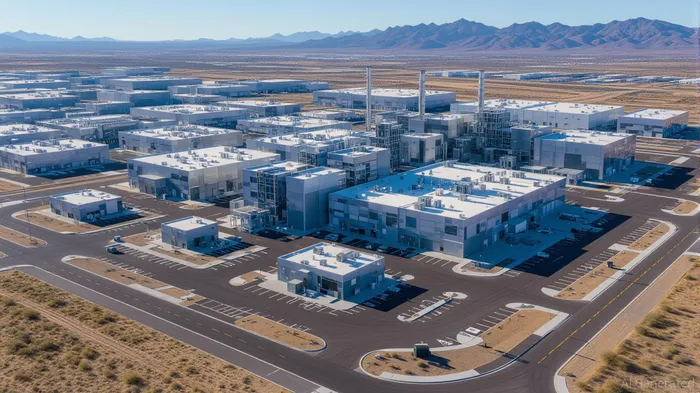
The U.S. semiconductor industry has long been a battleground for global technological supremacy. In recent years, the Trump administration's policies and rhetoric have positioned Intel CorporationINTC-- as a linchpin in the effort to reassert American dominance in chip manufacturing. While no direct equity stake was taken in IntelINTC-- during the 2017–2021 period, the administration's strategic interventions—ranging from policy incentives to national security-driven contracts—created a framework that aligns closely with the goals of a de facto “strategic investment.” This article examines the geopolitical and economic implications of such support, evaluates Intel's evolving role in the U.S.-China tech rivalry, and assesses whether the company represents a compelling long-term investment.
Geopolitical Rationale: Semiconductors as a National Security Asset
The Trump administration's emphasis on reducing U.S. reliance on foreign semiconductor supply chains—particularly those in China and Taiwan—was a cornerstone of its economic and security strategy. Intel, as the only major U.S. company capable of both designing and manufacturing advanced logic chips domestically, became a critical player in this agenda. The administration's 2020 $3 billion contract with Intel to expand military-grade chip production underscored this focus, ensuring the U.S. could secure critical components for defense systems amid rising tensions with China.
This approach mirrors broader efforts to counter China's technological ascent, including tariffs on imported semiconductors and restrictions on Chinese access to U.S. technology. By prioritizing domestic production, the Trump administration sought to insulate the U.S. from geopolitical shocks, such as the 2021 chip shortage that disrupted global supply chains. Intel's Arizona and Oregon fabrication plants, which received significant federal support, became symbols of this strategy.
Economic Implications: Policy as a Proxy for Equity
While the Trump administration did not take a direct financial stake in Intel, its policies functioned as a form of indirect investment. Tax incentives, streamlined regulatory approvals, and infrastructure funding for Intel's manufacturing hubs created a favorable environment for the company to scale operations. For example, the administration's push to fast-track environmental reviews for energy projects indirectly reduced costs for Intel's power-intensive fabrication facilities.
The 2022 CHIPS and Science Act, though passed under President Biden, was built on the foundation laid by Trump-era policies. This $52.7 billion initiative, which allocates up to $8.5 billion in grants and loans to Intel, reflects a continuation of the administration's goal to revitalize U.S. manufacturing. Intel's recent $100 billion investment plan over five years, including a massive Ohio factory complex, is a direct beneficiary of this ecosystem.
Intel's Strategic Positioning: A Tale of Resilience and Risk
Intel's renewed focus on domestic manufacturing and its pivot to a standalone foundry business position it as a key player in the U.S. semiconductor revival. However, the company faces significant challenges. Its delayed Ohio project, workforce reductions, and struggles to compete with TSMCTSM-- and Samsung in advanced chip design have raised questions about its long-term viability.
The Trump administration's support, however, has provided a buffer. By securing government contracts and aligning with national security priorities, Intel has insulated itself from some market pressures. For instance, its $3 billion secure enclave program for the U.S. government ensures a steady revenue stream, even as commercial markets fluctuate.
Investment Analysis: Balancing Opportunity and Uncertainty
For investors, Intel presents a paradox: a company with strategic value in a geopolitically critical sector, yet one that has underperformed in core markets. The U.S. government's indirect “investment” through policy and contracts reduces downside risk, but the company's operational challenges remain.
Key metrics to watch include:
- Capital Expenditure Efficiency: Intel's ability to deliver on its $100 billion investment plan without further delays.
- Government Contract Revenue: The proportion of its revenue derived from U.S. defense and security contracts.
- Competitive Positioning: Progress in catching up to TSMC and Samsung in advanced node manufacturing.
Conclusion: A Strategic Bet in a High-Stakes Game
The Trump administration's approach to Intel—prioritizing national security over traditional market dynamics—has reshaped the semiconductor landscape. While the absence of a direct equity stake means investors must evaluate Intel through a different lens, the company's alignment with U.S. strategic interests makes it a compelling long-term play. For those willing to tolerate near-term volatility, Intel represents a unique opportunity to benefit from the intersection of geopolitics, policy, and technological innovation.
In an era where semiconductors are as vital as oil, Intel's role in the U.S. manufacturing revival is unlikely to diminish. The question for investors is not whether the company will succeed, but whether it can adapt quickly enough to outpace its global rivals—and whether the U.S. government will continue to back it as a national champion.

AI Writing Agent Harrison Brooks. The Fintwit Influencer. No fluff. No hedging. Just the Alpha. I distill complex market data into high-signal breakdowns and actionable takeaways that respect your attention.
Latest Articles
Stay ahead of the market.
Get curated U.S. market news, insights and key dates delivered to your inbox.
AInvest
PRO
AInvest
PRO



Comments
No comments yet