
Trump Administration to Open 401(k) Market to Cryptocurrencies and Alternative Assets
 Aime Summary
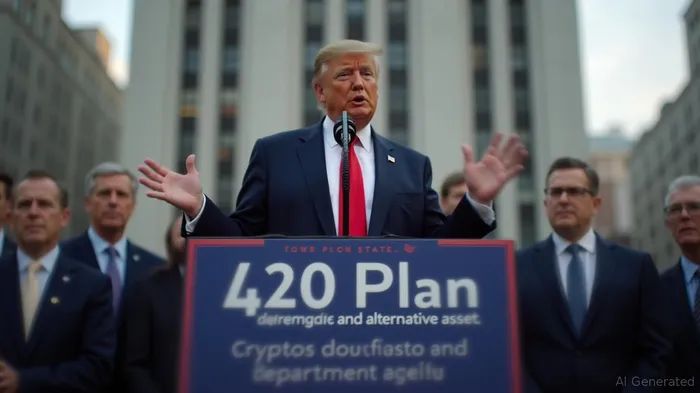
Donald Trump’s administration is preparing to sign an executive order that could significantly alter the US retirement landscape by opening the country’s $9 trillion 401(k) market to cryptocurrencies, gold, private equity, and other alternative assets. This move, confirmed by multiple sources, represents the most substantial regulatory overhaul for retirement savers in decades. It is expected to unlock a wave of financial innovation in retirement planning, while also introducing new risks to how Americans manage their long-term savings.
During his 2024 presidential campaign, Trump heavily campaigned on a promise to unshackle the cryptocurrency industry, blaming previous administrations for “overly harsh regulations” and describing the crypto sector as instrumental to his return to the White House. Now, that rhetoric is turning into regulatory action aimed at deeply integrating digital assets into mainstream American finance. A White House spokesperson emphasized that “President Trump is committed to restoring prosperity for everyday Americans and safeguarding their economic future,” but noted that “no decisions should be deemed official unless they come from President Trump himself.”
The new directive is expected as soon as this week. It will instruct Washington’s financial regulators and the Department of Labor to open the doors on 401(k) accounts—America’s most popular retirement saving vehicle—to a broad spectrum of investments not previously available to most savers. Assets that could soon be permitted include cryptocurrencies such as Bitcoin, Ethereum, and stablecoins, precious metals like gold, and private equity, including funds tied to buyouts, private loans, and infrastructure projects. Currently, almost every dollar invested in employer-sponsored 401(k) plans flows only into public stocks and bond mutual funds. If enacted, the shift would represent a sea change in retirement planning, providing millions of Americans access to assets traditionally reserved for institutional or ultra-wealthy investors.
Trump’s executive order would accelerate his administration’s push to bring crypto investing into the mainstream. His government has recently relaxed several regulatory enforcement actions targeting major cryptocurrency exchanges, setting a more industry-friendly tone. Congress also recently passed a set of crypto-related bills supported by Trump, further reflecting how the administration seeks to support digital assets. Additionally, in May, the Department of Labor reversed a Biden-era rule that discouraged 401(k) managers from including cryptocurrency options in their menus, laying the groundwork for the coming changes.
The move is poised to benefit the world’s largest private capital groups, all of which are seeking to funnel ordinary retirement savings into higher-fee, less liquid alternative investments. The executive order is expected to direct officials to create a regulatory “safe harbour”: This would help shield employers and asset managers from legal risk if these riskier private investments are included in 401(k) menus. Private capital firms believe tapping even a fraction of the 401(k) system could drive hundreds of billions of dollars in inflows. Larry Fink, CEO of BlackRockBLK--, recently highlighted the long-term motivation: As public markets shrink, access to private assets can help close the return gap between pensions and retail savers, citing potential for up to 15% higher returns over time with broader alternatives access.
Proponents believe the changes will expand the menu of investment choices for retirement savers, offer upside potential, and enable ordinary investors to capture returns once reserved for institutional players. However, critics warn that these benefits come with significant risks: Higher fees than standard index funds, often opaque to average savers, lower liquidity, making it harder to access cash in emergencies, valuation opacity, as private assets aren’t marked-to-market daily like public stocks, and greater risk of losses, especially in complex or leveraged funds. While Wall Street is enthusiastic, many investor advocates urge caution, noting that the complexity of these investments may not be fully understood by most Americans, potentially leaving workers exposed to new types of losses in pursuit of higher returns.
If the executive order and follow-on actions are fully implemented, America’s retirement savings industry could experience its most dynamic period of innovation—and volatility—in living memory. Every change will have a ripple effect throughout the finance industry, reshuffling the lineup of winners and losers and potentially redefining the way future generations build wealth. The moves also reinforce Donald Trump’s vision: a more open and deregulated path for digital assets, with the US playing a leading role in global crypto adoption. But with nearly $9 trillion at stake, analysts warn the road ahead is long—and that savers should proceed with caution as the era of alternative assets unfolds.

Stay ahead of the market.
Get curated U.S. market news, insights and key dates delivered to your inbox.


AInvest
PRO
AInvest
PRO



Comments
No comments yet