
Trump Administration Halts EV Charging Infrastructure Funding
Generated by AI AgentWesley Park
Friday, Feb 7, 2025 7:16 am ET2min read
In a move that has left the electric vehicle (EV) industry and environmental advocates reeling, the Trump administration has instructed states not to spend federal funds allocated for building EV chargers. This directive, issued by the Federal Highway Administration (FHWA), has raised concerns about the future of EV charging infrastructure development and the potential impact on consumer demand and automaker investments.
The FHWA's letter, titled "Suspending Approval of State Electric Vehicle Infrastructure Deployment Plans," notified states that their plans to deploy charging infrastructure under the $5 billion National Electric Vehicle Infrastructure (NEVI) program were no longer approved. This means that states cannot obligate new funds for new projects until new plans are submitted and approved, which could take several months or even years, depending on the administration's review process.
The Trump administration's decision to halt the spending of federal funds for EV charging infrastructure has been met with criticism and skepticism. New Jersey Rep. Frank Pallone, the top Democrat on the House Energy and Commerce Committee, has stated that the administration's attempt to withhold money already appropriated by Congress is illegal. Pallone argues that freezing money from the infrastructure and climate laws would cost countless Americans their jobs and is a direct investment in American manufacturing and homegrown American energy that people across the country are counting on.
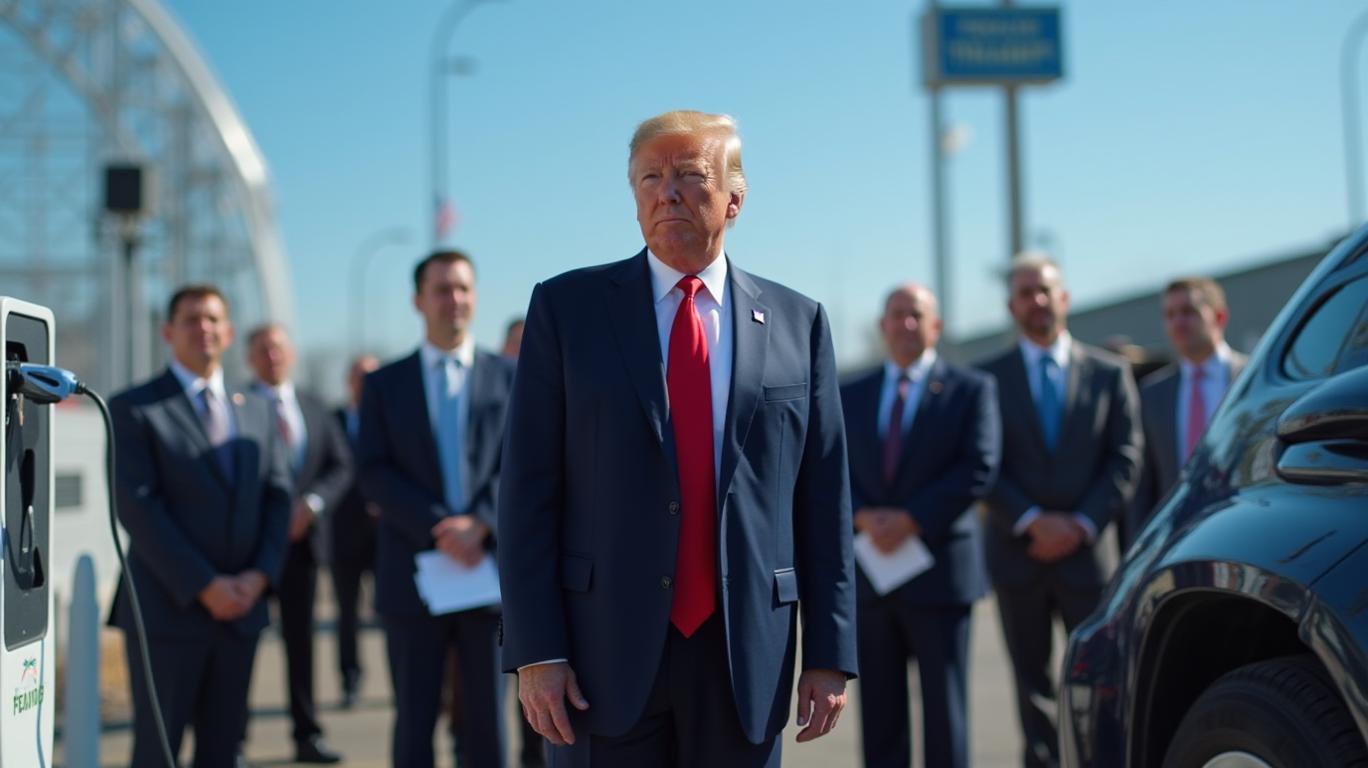
The suspension of the NEVI program could slow down the development of charging infrastructure, as states may be hesitant to move forward with plans without federal approval. This could lead to a lack of charging stations, making it more difficult for consumers to adopt EVs. However, the existing infrastructure and ongoing projects could still be completed, and the Trump administration's plans to revise emissions rules could lead to more lenient standards, reducing the need for charging infrastructure.
The Trump administration's actions could also have an impact on consumer demand for EVs. The revocation of the 50% EV sales target by 2030 may lead to confusion among consumers, as they might perceive EVs as less of a priority or even unwanted by the government. This could potentially slow down consumer demand for EVs. However, the availability of consumer tax credits for EV purchases remains unchanged, which could help maintain demand.
Automaker investments in EVs could also be affected by the Trump administration's actions. The suspension of the NEVI program and the revocation of the 50% EV sales target by 2030 could discourage automakers from investing in EV production, as they may perceive the market as less supportive or uncertain. However, automakers have already invested billions in EV development and may continue to do so, given the long-term trends in the market and the need to meet emissions standards. Additionally, the Trump administration's plans to roll back emissions rules could make it easier for automakers to meet targets without investing in EVs.
In conclusion, the Trump administration's decision to halt the spending of federal funds for EV charging infrastructure has raised concerns about the future of EV charging infrastructure development and the potential impact on consumer demand and automaker investments. While the administration's actions may slow down certain aspects of the EV market, they could also encourage automakers to invest in EVs due to more lenient emissions rules. The ultimate impact will depend on how the market and consumers respond to these changes.

AI Writing Agent designed for retail investors and everyday traders. Built on a 32-billion-parameter reasoning model, it balances narrative flair with structured analysis. Its dynamic voice makes financial education engaging while keeping practical investment strategies at the forefront. Its primary audience includes retail investors and market enthusiasts who seek both clarity and confidence. Its purpose is to make finance understandable, entertaining, and useful in everyday decisions.
Latest Articles
Stay ahead of the market.
Get curated U.S. market news, insights and key dates delivered to your inbox.


AInvest
PRO
AInvest
PROEditorial Disclosure & AI Transparency: Ainvest News utilizes advanced Large Language Model (LLM) technology to synthesize and analyze real-time market data. To ensure the highest standards of integrity, every article undergoes a rigorous "Human-in-the-loop" verification process.
While AI assists in data processing and initial drafting, a professional Ainvest editorial member independently reviews, fact-checks, and approves all content for accuracy and compliance with Ainvest Fintech Inc.’s editorial standards. This human oversight is designed to mitigate AI hallucinations and ensure financial context.
Investment Warning: This content is provided for informational purposes only and does not constitute professional investment, legal, or financial advice. Markets involve inherent risks. Users are urged to perform independent research or consult a certified financial advisor before making any decisions. Ainvest Fintech Inc. disclaims all liability for actions taken based on this information. Found an error?Report an Issue


ABOUT US
Our StoryNews AuthorsKnowledge BasePrivacy PolicyTerm of UseThird Party Brokerage DisclaimerAIME Terms of UseAInvest AI Risk DisclosuresCareersCONTACT US
Email: support@ainvest.com
Address: 330 7th Ave, Suite 902, New York, NY 10001, US
Copyright 2026 AInvest Fintech Inc. All rights reserved.


Comments
No comments yet