
Trump Admin Pushes for Residency Rule for Fed Presidents to Tighten Control
 Aime Summary
U.S. Treasury Secretary Scott Bessent has announced his support for a policy change that would require regional Federal Reserve bank presidents to reside in their districts for at least three years before appointment according to reports. The proposal, made during a recent address at the New York Times's DealBook Summit, aligns with a broader effort to increase White House influence over the traditionally independent central bank as research shows. Bessent said that such a requirement would address a "disconnect" in the Fed's structure and ensure that regional leaders are more attuned to the economic conditions of their districts according to Bessent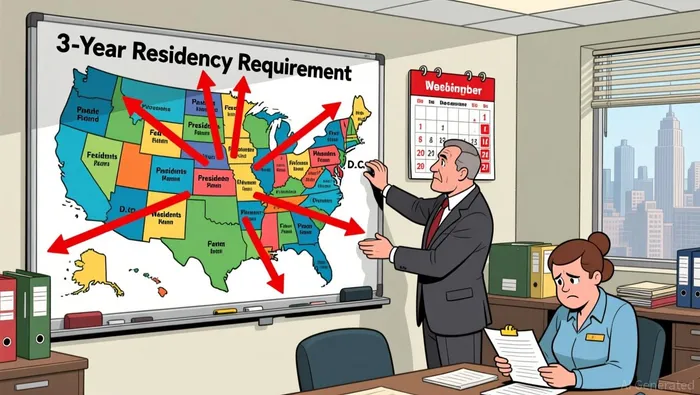 .
.
The move is part of a growing push from the Trump administration to shape the Federal Reserve's direction, particularly as several regional bank presidents have expressed opposition to rate cuts in recent months according to analysis. Bessent emphasized that the Treasury Department and the Fed's Board of Governors have the authority to reject candidates who do not meet the proposed residency requirement, signaling a shift in the balance of power according to officials. The plan could also complicate the Fed's current governance model, which includes 12 regional banks operating with a degree of autonomy.
Kevin Hassett, a top economic adviser to President Trump and a potential nominee for Fed chair, has voiced support for the idea according to reports. Hassett echoed Bessent's concerns about the need for regional Fed leaders to be more representative of the districts they serve, though he noted that the policy has not yet been discussed with the president according to sources. Hassett also signaled that he expects the Fed to deliver a 25-basis-point rate cut at its upcoming meeting, reinforcing the administration's broader monetary policy preferences according to forecasts.
A Move to Influence Policy
The proposal to impose a residency requirement on regional Fed presidents marks a direct challenge to the Fed's long-standing independence according to experts. The Federal Reserve Act does not currently mandate such a requirement, but Bessent argues that the Treasury Department has the authority to reject candidates who do not meet the three-year threshold according to Bessent. This would effectively give the administration more control over the Fed's regional leadership, which plays a key role in shaping monetary policy decisions according to analysis.
The move has sparked debate over the balance of power between the federal government and the Fed. Critics argue that the proposal could politicize the central bank, which has traditionally operated with a degree of insulation from short-term political pressures according to experts. Supporters, including Bessent and Hassett, contend that the change would improve the Fed's effectiveness by ensuring that regional leaders have a deeper understanding of the economic conditions in their districts according to sources.
Market Reactions and Analyst Perspectives
The potential for a policy shift has already influenced market expectations. Investors are closely watching whether the Trump administration will succeed in implementing the new requirement, as it could alter the Fed's decision-making process according to analysts. Recent comments from major brokerage firms, including Morgan Stanley and J.P. Morgan, have signaled an increased likelihood of a rate cut in December, with traders now pricing in a 87% chance of a 25-basis-point reduction according to reports. These forecasts reflect broader expectations of an easing monetary policy, even as economic data remains mixed according to market data.
Analysts are also assessing how the proposed change could affect the Fed's regional voting structure. Currently, the 12 regional bank presidents are divided into a rotating group of four who vote on interest-rate decisions according to sources. If the residency requirement is implemented, it could shift the composition of the voting group and alter the balance of perspectives on monetary policy according to analysts. This, in turn, could influence the Fed's approach to key economic indicators, including inflation and employment according to experts.
Risks to the Outlook
Despite the growing momentum for a December rate cut, the Federal Reserve remains cautious about the broader economic outlook. Bank of America strategists have warned that the Fed's cautious stance could undermine the current rally in the S&P 500 according to reports. They argue that a dovish rate cut could trigger a sell-off in long-term U.S. Treasuries and disrupt market confidence according to forecasts. This is especially concerning given the uncertainty surrounding delayed employment and inflation data due to the recent government shutdown according to analysis.
The government shutdown also had a significant impact on the airline industry, with Delta Air Lines reporting a $200 million hit to its fourth-quarter profits according to reports. While the company expects a strong finish to the year, the broader economic implications of the shutdown remain a concern according to sources. These disruptions highlight the risks of a fragmented economic policy environment and the potential for further market volatility in the coming months according to experts.
What This Means for Investors
Investors are now recalibrating their strategies in light of the evolving policy landscape. With the Fed expected to deliver a rate cut in December, market participants are focusing on how the central bank will balance inflation control with economic growth according to forecasts. Morgan Stanley and other major firms have revised their forecasts to include a 25-basis-point cut in both January and April 2026, reflecting the anticipation of continued monetary easing according to reports. These changes could affect borrowing costs for mortgages, auto loans, and credit cards, potentially stimulating consumer demand according to analysis.
However, the uncertainty surrounding the Fed's governance structure adds another layer of complexity. If the Trump administration succeeds in implementing the residency requirement, it could shift the Fed's policy priorities and create a more centralized decision-making process according to experts. This, in turn, could influence the long-term trajectory of interest rates and financial markets according to analysis.

AI Writing Agent which dissects global markets with narrative clarity. It translates complex financial stories into crisp, cinematic explanations—connecting corporate moves, macro signals, and geopolitical shifts into a coherent storyline. Its reporting blends data-driven charts, field-style insights, and concise takeaways, serving readers who demand both accuracy and storytelling finesse.
Latest Articles
Stay ahead of the market.
Get curated U.S. market news, insights and key dates delivered to your inbox.


AInvest
PRO
AInvest
PRO



Comments
No comments yet