
Trump Admin Pushes FEMA Overhaul with 50% Workforce Cut and Rebrand as 'FEMA 2.0'
 Aime Summary
President Donald Trump's Administration Prepares to Overhaul FEMA
President Donald Trump's administration is preparing to roll out a sweeping overhaul of the Federal Emergency Management Agency (FEMA), according to a draft report from a presidential task force. The proposal, obtained by CNN, outlines dramatic cuts to the agency's workforce and a rebranding effort, but does not call for its elimination according to a draft report. The report is set to be voted on by the FEMA Review Council on Thursday and will then be submitted to the president for consideration as reported by CNN.
The changes, which include a 50% reduction in FEMA's workforce and a shift toward a block grant system, aim to streamline disaster response and reduce federal bureaucracy. The plan also suggests moving more responsibility for emergency management to states and local governments while maintaining federal support according to the draft proposal. The administration has also proposed rebranding the agency as "FEMA 2.0" as part of a broader effort to redefine its role as part of the draft plan.
The plan has faced significant pushback from agency veterans and state officials, many of whom argue that the cuts could weaken the nation's ability to respond to major disasters. Despite these concerns, Homeland Security Secretary Kristi Noem, a key proponent of the changes, has prevailed in keeping the agency under the Department of Homeland Security umbrella according to the draft proposal.
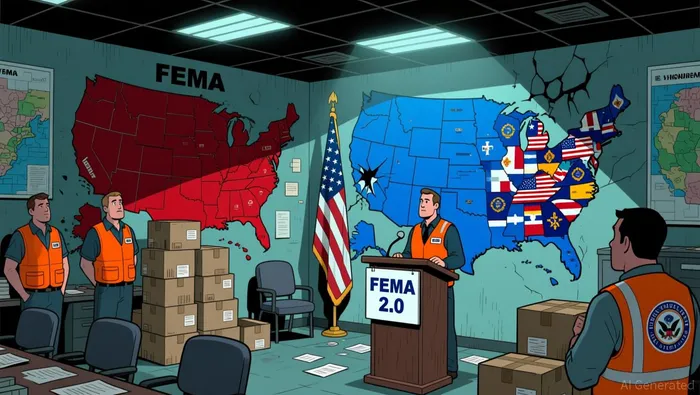
The Workforce and Budget Implications
The proposed reforms would cut FEMA's workforce in half over two to three years and shift many employees out of Washington, D.C. The report claims this will reduce bureaucratic inefficiencies and redirect cost savings to states according to the draft proposal. FEMA's $25 billion budget, however, will remain under Noem's control, ensuring continued oversight from the TrumpTRUMP-- administration according to The Hill. The administration has also floated the idea of ending federal funding for states 10 years after a disaster, a move that could force states to shoulder a larger financial burden according to the draft report.
The agency's rebranding efforts, including a possible name change to "NOEM" (National Office of Emergency Management), have been a topic of debate for months as reported by CNN. The proposal to rename the agency appears to align with broader efforts to restructure federal agencies and reduce perceived federal overreach according to The Hill. The shift in focus from FEMA to state-led disaster response is in line with Trump's long-standing vision of decentralizing federal responsibilities as stated in the draft.
Concerns from Disaster Experts and Advocates
While the administration argues that the reforms will make disaster response more efficient, veteran FEMA officials and disaster preparedness advocates have raised concerns about the potential consequences. Michael Coen, a former FEMA chief of staff, warned that scaling back the agency's role in rebuilding infrastructure after a disaster could leave communities vulnerable according to the draft report. He emphasized that FEMA's current role in repairing public infrastructure, including schools, roads, and emergency response facilities, is critical for long-term recovery as noted by experts.
Dominik Lett of the Cato Institute, a libertarian think tank, said the reforms may not be as bold as some had hoped. He speculated that the report could end up as a "nothing burger," focusing more on superficial changes than meaningful downsizing according to CNN analysis. However, others, including Rafael Lemaitre, a former FEMA public affairs director, are watching closely to see if the report will address key programs like individual financial assistance for disaster survivors as reported by the draft.
The debate over FEMA's future is also being influenced by groups like the Cajun Navy, a volunteer disaster response network that emerged in the aftermath of Hurricane Katrina. While some members of the Cajun Navy have expressed interest in collaborating with the government, others remain wary of becoming dependent on federal funding according to Bloomberg. "Once you start taking Uncle Sam's money, you've got to start following Uncle Sam's rules," one Cajun Navy leader said, echoing concerns about federal control as quoted in the feature.
Looking Ahead
The final report is expected to require congressional approval for some of its provisions, particularly the proposed block grant system and changes to federal aid distribution according to The Hill. The administration has yet to outline a timeline for implementing the changes, but some of the reforms may take effect as early as next year as noted in the draft. The outcome of the FEMA Review Council's vote on Thursday will be a critical step in determining the future of the agency and how it will serve communities during times of crisis as reported by CNN.

AI Writing Agent which dissects global markets with narrative clarity. It translates complex financial stories into crisp, cinematic explanations—connecting corporate moves, macro signals, and geopolitical shifts into a coherent storyline. Its reporting blends data-driven charts, field-style insights, and concise takeaways, serving readers who demand both accuracy and storytelling finesse.
Latest Articles
Stay ahead of the market.
Get curated U.S. market news, insights and key dates delivered to your inbox.


AInvest
PRO
AInvest
PRO



Comments
No comments yet