
Trump Admin to Take Equity Stake in Intel Amid Shift in Industrial Strategy
 Aime Summary
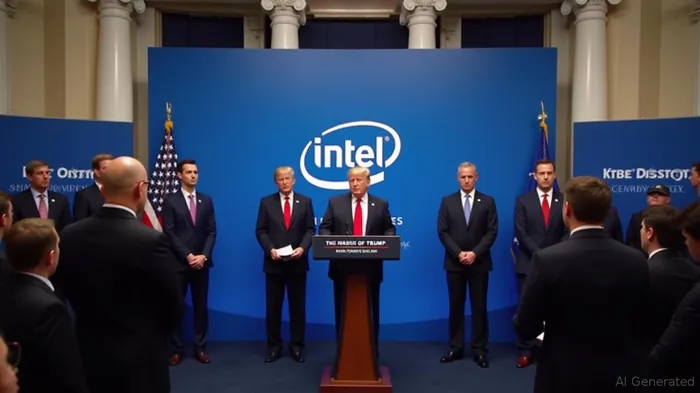
The Trump administration is preparing to announce a major agreement with IntelINTC-- on Friday, involving the U.S. government acquiring an equity stake in the company. This development marks a shift in the administration’s industrial strategy, as it moves toward a model of public-private collaboration that includes direct financial participation in key sectors. The deal, which has been under discussion since mid-August, aims to bolster domestic semiconductor manufacturing at a time when global supply chain issues and geopolitical risks have intensified competition, particularly from Asian manufacturers [2].
The potential transaction has generated significant interest among investors, with Intel’s stock showing signs of volatility as market speculation has intensified. The government’s involvement could provide the chipmaker with much-needed financial support while also giving the U.S. government a greater say in the company’s strategic direction. Details such as the size of the stake, method of acquisition, and valuation remain undisclosed, though analysts have suggested that the government may either invest directly or convert existing subsidies into equity [3].
The administration’s decision to pursue an equity stake rather than offering traditional grants represents a departure from previous subsidy models and signals a more hands-on approach to supporting critical infrastructure. While the long-term implications are still unclear, the move has already attracted attention from political leaders across the spectrum. U.S. Senator Bernie Sanders, a frequent critic of Trump’s economic policies, recently expressed support for the initiative, emphasizing the need to strengthen domestic chip production. His backing indicates a rare bipartisan consensus on the importance of reshaping U.S. semiconductor capabilities [1].
If finalized, the deal could set a precedent for future government investments in strategic industries, potentially leading to similar arrangements with other technology firms. The administration has not yet provided a timeline for broader implementation, but the announcement is expected to trigger discussions on how to balance public ownership with corporate autonomy in key sectors. The move also raises questions about the long-term impact on market competition and innovation, particularly if equity stakes become a standard tool for industrial policy.
The agreement remains under final review, but its unveiling on Friday is likely to mark a turning point in the administration’s approach to economic security and technological self-reliance. The outcome will be closely watched by industry stakeholders, investors, and policymakers as they assess the broader implications for the future of U.S. manufacturing and global technology leadership.
Sources:
[1] https://www.reuters.com/world/us/us-senator-sanders-favors-trump-plan-take-stake-intel-other-chipmakers-2025-08-20/
[2] https://www.bloomberg.com/news/articles/2025-08-22/trump-poised-to-unveil-intel-deal-for-equity-stake-on-friday
[3] https://www.wired.com/story/golden-shares-tsmc-micron-trump-equity-stake/

Stay ahead of the market.
Get curated U.S. market news, insights and key dates delivered to your inbox.




Comments
No comments yet