
Trump Accounts Explained: Tax, Aid, And Investment Strategy
 Aime Summary
The financial landscape for family savings just shifted with the introduction of the Trump Account, a new tax-advantaged investment vehicle designed to boost long-term wealth for the next generation. Launched on July 4, 2026, the program offers a one-time $1,000 federal seed contribution for eligible U.S. citizen children born between January 1, 2025, and December 31, 2028. While the initial gift is attractive, the account's underlying structure and tax implications reveal a more complex reality for investors and parents planning for education and future wealth.
As of September 10, 2026, the prevailing consensus among financial experts is that while the Trump Account is a valuable starting point, it should not be the primary vehicle for ongoing education savings. The account functions structurally like a traditional IRA, meaning that while contributions are made with after-tax dollars, the earnings and the initial $1,000 seed are taxed as ordinary income upon withdrawal after the child reaches the age of 18. This tax treatment, combined with strict liquidity restrictions that prohibit withdrawals before adulthood, creates a distinct set of trade-offs compared to established vehicles like 529 plans and custodial Roth IRAs.
Is The Trump Account A Good Vehicle For Education Savings?
To understand why the Trump Account is rarely recommended as a standalone education funding tool, investors must look past the headline-grabbing federal seed and examine the mechanics of the account itself. The program allows funds to be invested in low-cost U.S. equity index funds, providing exposure to market growth. However, unlike a 529 plan, where qualified withdrawals for education are entirely tax-free, the Trump Account strips away this tax shelter.
When the child turns 18 and gains control of the funds, any growth in the account, along with the original $1,000 federal seed, is subject to ordinary income tax. This stands in sharp contrast to the tax-deferred growth and tax-free qualified withdrawals offered by 529 plans. Furthermore, the Trump Account lacks the flexibility of modern 529 plans, which now allow annual withdrawals of up to $20,000 for K-12 tuition, vocational training, and even certain professional credentialing costs. For families prioritizing educational outcomes, the inability to withdraw funds tax-free and the prohibition on early access make the Trump Account a rigid and tax-inefficient default for ongoing contributions.
How Do Trump Accounts Compare To 529 Plans And Roth IRAs?
For investors weighing their options, the Trump Account occupies a narrow niche that is best utilized for its initial seed rather than sustained funding. The 2026 rules for 529 plans have been significantly expanded to enhance their utility, allowing lifetime rollovers of up to $35,000 to a Roth IRA if the account has been open for 15 years. This flexibility, combined with tax-free growth, makes 529 plans the superior choice for education-specific savings.
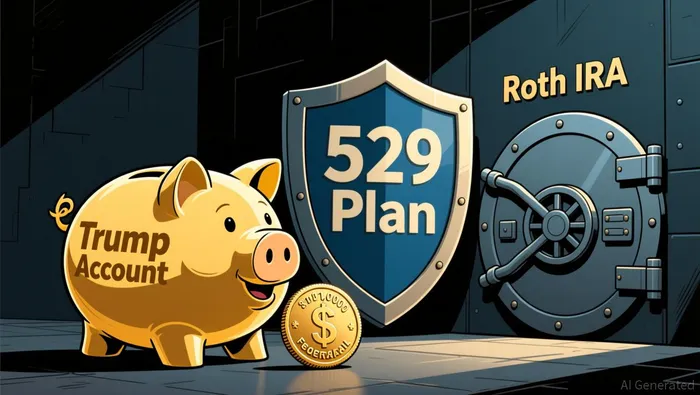
For children who have earned actual income from a job, a custodial Roth IRA remains the highest-value option. Contributions are limited to the child’s earned income or $7,500, whichever is lower, but the earnings grow tax-free and can be withdrawn penalty-free for first-home purchases. By contrast, the Trump Account requires no earned income to receive the seed, but once the seed is claimed, adding more money into the account yields diminishing returns compared to the tax advantages of a Roth or 529. Financial planners generally recommend that families claim the free $1,000 seed to secure the government's initial contribution, then direct any additional savings toward a 529 plan or a custodial Roth IRA to optimize their long-term tax efficiency.
What Is The Impact Of Trump Accounts On College Financial Aid?
One of the most critical, and often overlooked, aspects of the Trump Account is its profound impact on the Free Application for Federal Student Aid (FAFSA). As of September 10, 2026, the IRS has not issued specific guidance on how these accounts will be classified. However, prevailing expectations among financial planners are that the accounts will be treated similarly to UGMA or UTMA custodial accounts. This classification means the funds are assessed as student assets on the FAFSA at a punitive 20% assessment rate.
To put this in perspective, a parent-owned 529 plan is assessed at a maximum of 5.64% under current guidelines. This discrepancy creates a massive difference in aid eligibility. For example, a $30,000 balance in a student-owned asset would reduce financial aid eligibility by approximately $6,000 annually. The same $30,000 balance in a parent-owned 529 would reduce eligibility by only about $1,700. For families that expect to qualify for need-based aid, holding significant balances in a Trump Account could effectively erase hundreds of thousands of dollars in potential financial aid over four years of college. Consequently, the strategic imperative is to cap the Trump Account at the initial seed and house the bulk of educational savings in a parent-owned 529 plan to protect aid eligibility.
Are There Any Recent Corporate Developments Or Market Updates?
Despite the structural limitations of the Trump Account for ongoing funding, recent corporate developments have injected new momentum into the program. Delta Air Lines announced that it will match the federal government's $1,000 seed contribution for Trump Accounts opened for eligible employees' children. This corporate match effectively doubles the initial federal gift, providing an immediate 100% return on the government's seed.
Delta's commitment is part of a broader $18 billion employee compensation and benefits plan, which includes profit-sharing and base-pay increases. While the corporate match is a substantial benefit that enhances the account's immediate value, investors must remember that the match is subject to the same ordinary income tax upon withdrawal as the federal seed. The account remains a tax-deferred investment vehicle with strict liquidity restrictions. For Delta employees, capturing the match is a no-brainer, but it does not change the fundamental tax and aid assessment disadvantages of the account structure compared to other savings vehicles.
What Should Investors Watch For Next?
As the Trump Account matures, investors and policymakers will be closely monitoring the IRS's eventual guidance on FAFSA classifications. If the IRS formally rules that the accounts are treated as student assets, the negative impact on financial aid could deter families from making voluntary contributions beyond the initial seed. Conversely, if a legislative carve-out is established to treat the accounts similarly to 529 plans for aid purposes, the account's utility would increase dramatically.
For now, the Trump Account serves as a forced savings mechanism with a modest government subsidy. Its value lies in the initial seed and the potential for corporate matches, such as the one announced by Delta. However, for long-term education planning and tax optimization, the established superiority of 529 plans and custodial Roth IRAs remains unchanged. Families should approach the Trump Account as a starting line, not a finish line, ensuring that their broader financial strategy aligns with their specific goals for tax efficiency and college affordability.

Stay ahead of the market.
Get curated U.S. market news, insights and key dates delivered to your inbox.


AInvest
PRO
AInvest
PRO




Comments
No comments yet