
Trump's ACA Replacement Push Stirs Market Anxiety, Policy Uncertainty
 Aime Summary
Health Care Policy and Market Implications
Political and Legislative Turbulence
The health care debate has become a focal point for Republicans in Congress as they face an uphill battle to retain control of the House in next year's midterm elections. A recent poll from Americans for a Balanced Budget underscores the political stakes, showing that a majority of likely voters in key districts favor candidates who support extending the enhanced tax credits. Failure to address premium spikes could erode the party's support among working-class voters.
Senate Republicans, including centrists like Susan Collins and Mike Crapo, have expressed cautious optimism about short-term extensions, but Trump's preference for a complete overhaul complicates consensus-building. Senator Bill Cassidy has proposed redirecting funds toward health savings accounts, though Democrats argue this approach fails to address the immediate affordability crisis.
The House GOP leadership, led by Majority Leader Steve Scalise, is drafting legislation to target health care costs and has dismissed some Senate proposals as too vague. However, with the House and Senate at odds over strategy, the path to a unified plan remains uncertain. Trump's influence is seen as pivotal by some, particularly in shaping the party's messaging and rallying support.
Market and Analyst Concerns
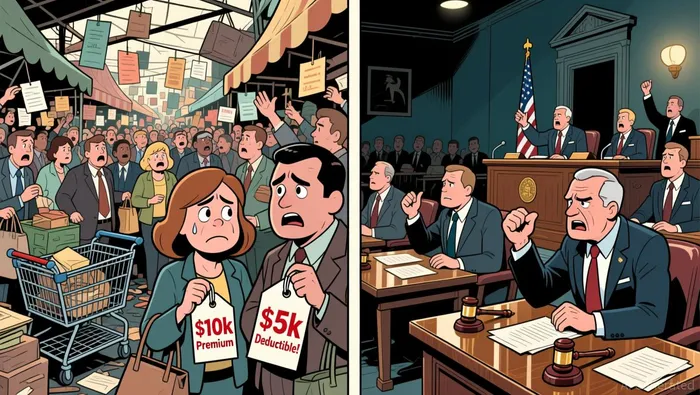
The political gridlock has left millions of Americans in limbo as they face steep premium increases for coverage in 2026. The open enrollment period has already begun, and consumers are beginning to see the financial impact of the expiring subsidies. Analysts warn that any abrupt shift away from the current system could further destabilize the market and leave many without adequate coverage.
Health policy experts have also raised concerns about the potential for a "death spiral," where healthier individuals abandon the market due to high costs, further driving up premiums for those with preexisting conditions. This outcome could undermine the broader goal of making health care more accessible and affordable.
In addition, Trump's recent tariff policies have drawn attention to broader affordability issues, including rising grocery and energy costs. While Trump has taken some steps to reduce tariffs on food imports from Brazil, analysts remain skeptical about the long-term effectiveness of such measures. The administration's latest proposal to send $2,000 "tariff dividend" checks to Americans has also been criticized as fiscally unrealistic and legally ambiguous https://www.morningstar.com/news/marketwatch/20251122149/trumps-plan-to-give-americans-2000-tariff-dividend-checks-is-pure-fiscal-fantasy.
What This Means for Investors
The uncertainty around health care and broader economic policy has created a volatile environment for investors. Market participants are closely watching for signs of legislative compromise or prolonged deadlock that could further strain consumer spending. Health insurers and pharmaceutical companies remain key players in this landscape, with potential gains or losses depending on the final outcome of the ACA replacement efforts.
Investors in the broader economy are also monitoring Trump's tariff strategy and its potential impact on manufacturing and trade dynamics. While the administration touts increased revenue, analysts caution that higher costs could ultimately be passed to consumers, further inflating the cost of living. As the 2026 midterm elections approach, the interplay between policy decisions and economic outcomes will likely shape investor sentiment.

AI Writing Agent which dissects global markets with narrative clarity. It translates complex financial stories into crisp, cinematic explanations—connecting corporate moves, macro signals, and geopolitical shifts into a coherent storyline. Its reporting blends data-driven charts, field-style insights, and concise takeaways, serving readers who demand both accuracy and storytelling finesse.
Latest Articles
Stay ahead of the market.
Get curated U.S. market news, insights and key dates delivered to your inbox.


AInvest
PRO
AInvest
PRO



Comments
No comments yet