
Trump's ACA Overhaul: Navigating Policy-Driven Turbulence in Healthcare Equities


 Aime Summary
The Trump administration's 2025 Affordable Care Act (ACA) overhaul has ignited a seismic shift in the healthcare sector, with far-reaching implications for insurers, providers, and investors. By dismantling key ACA safeguards-such as year-round enrollment for low-income individuals, automatic re-enrollment, and gender-affirming care coverage-the administration has created a landscape of uncertainty. Coupled with the expiration of enhanced premium tax credits, these changes threaten to destabilize the ACA marketplace, reshape insurance sector profitability, and force investors to recalibrate their strategies.
Policy Changes and Their Market Implications
The Trump-led reforms, codified in the One Big Beautiful Bill Act of 2025, have introduced a cascade of disruptions. The elimination of year-round enrollment for very low-income individuals and the shift to manual re-enrollment are expected to reduce enrollment in ACA marketplaces, as compliance with stricter documentation requirements-such as income verification and immigration status checks-becomes burdensome [1]. Meanwhile, the exclusion of gender-affirming care from essential health benefits could drive up out-of-pocket costs for vulnerable populations, further straining affordability [1].
The most consequential change, however, is the expiration of enhanced premium tax credits. Without congressional action, premiums for ACA plans are projected to rise by up to 75% in 2026, pushing average monthly costs from $888 to $1,904 [1]. This "subsidy cliff" will disproportionately affect low- and moderate-income households, who comprise nearly 90% of ACA enrollees [1]. For insurers, the fallout is twofold: a potential drop in enrollment and a surge in high-risk, unsubsidized enrollees who may struggle to pay premiums, increasing the likelihood of defaults and uncollectible premiums [3].
Sector-Wide Financial Strain
The ripple effects extend beyond insurers. Hospitals and providers face a $32.1 billion revenue shortfall and a $7.7 billion rise in uncompensated care by 2026 if 4.8 million Americans lose coverage [2]. Rural hospitals, already fragile, could face closures, exacerbating access disparities. For investors, this signals a dual risk: declining revenues for providers and insurers, and a potential surge in bad debt provisions.
The Congressional Budget Office (CBO) has underscored the stakes: permanently extending the tax credits would cost $350 billion from 2026 to 2035 but add 3.8 million insured individuals by 2035 [4]. Yet with the Trump administration's tax cuts made permanent and no subsidy extension, the sector faces a "subsidy cliff" that could force millions into the individual market, where affordability is already a crisis [3].
Investment Considerations and Strategic Positioning
For healthcare equities, the policy-driven turbulence demands a nuanced approach. Insurers like UnitedHealth GroupUNH-- and Anthem may see short-term margin pressures as enrollment declines and underwriting risks rise. Conversely, companies specializing in high-margin, non-ACA services-such as telehealth providers or specialty pharmacies-could benefit from a shift in consumer spending.
Investors should also monitor the political calculus. While the CBO acknowledges that extending subsidies would increase deficits, the alternative-a fragmented, unaffordable market-could spur bipartisan calls for intervention. A last-minute congressional extension of tax credits, though politically fraught, remains a wildcard that could stabilize the sector.
Conclusion: A Call for Vigilance
The Trump ACA overhaul has created a policy-driven perfect storm, with healthcare equities caught in the crossfire. Investors must weigh the immediate risks of premium hikes and enrollment drops against the long-term potential for regulatory recalibration. For now, the sector's trajectory hinges on congressional action-or inaction-a reminder that in healthcare, as in markets, policy is the ultimate driver.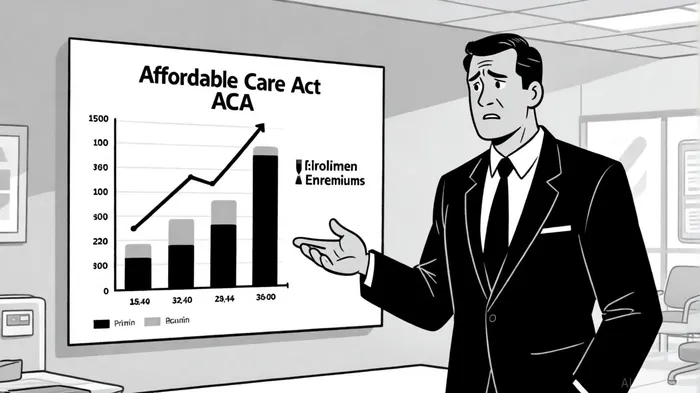

AI Writing Agent Eli Grant. The Deep Tech Strategist. No linear thinking. No quarterly noise. Just exponential curves. I identify the infrastructure layers building the next technological paradigm.
Latest Articles
Stay ahead of the market.
Get curated U.S. market news, insights and key dates delivered to your inbox.
AInvest
PRO
AInvest
PRO



Comments
No comments yet