
Trump's 250% Pharma Tariff Threat: Implications for Global Markets
 Aime Summary
The global pharmaceutical sector now faces a pivotal moment as the Trump administration's proposed 250% tariff on imported drugs threatens to upend decades of supply chain stability. This policy, framed as a tool to curb U.S. drug prices and incentivize domestic manufacturing, carries profound implications for investors, manufacturers, and consumers alike. The tariff's phased escalation—from a modest initial rate to a staggering 250% within 18 months—reflects a calculated strategy to force pharmaceutical companies to restructure their operations. Yet, the path to reshoring is fraught with volatility, supply chain disruptions, and geopolitical risks that demand careful navigation by market participants.
Sectoral Volatility: A New Era of Uncertainty
The pharmaceutical industry, long insulated from the turbulence of trade wars, is now exposed to unprecedented volatility. The U.S. market, which accounts for nearly 50% of global drug sales, operates on a complex web of international sourcing. Active pharmaceutical ingredients (APIs) are predominantly manufactured in India and China, while final products are often produced in countries like Ireland and Germany. A 250% tariff would immediately inflate production costs, forcing companies to either absorb losses or pass them to consumers—a precarious balancing act in a sector already under regulatory scrutiny.
The market's reaction has been telling. While pharmaceutical stocks have not yet experienced a systemic collapse, early signs of unease are evident. For instance, Eli Lilly's shares dipped slightly after the tariff announcement, reflecting investor concerns over its Irish manufacturing operations. Similarly, smaller generic drugmakers—already operating on razor-thin margins—face existential risks. These companies, which supply 90% of U.S. prescriptions, may struggle to remain competitive under the new regime, potentially leading to shortages of critical medications.
Supply Chain Realignment: Reshoring or Retreat?
The tariff threat is accelerating a shift toward domestic production, but the transition is neither swift nor seamless. Major players like Eli LillyLLY--, NovartisNVS--, and SanofiSNY-- are investing billions to expand U.S. manufacturing capacity. Eli Lilly's $27 billion commitment, for example, underscores the urgency of reshoring. However, such projects require years to materialize, leaving a gap in the short term. Meanwhile, countries like India and China—key API suppliers—risk losing market share as U.S. buyers seek alternatives.
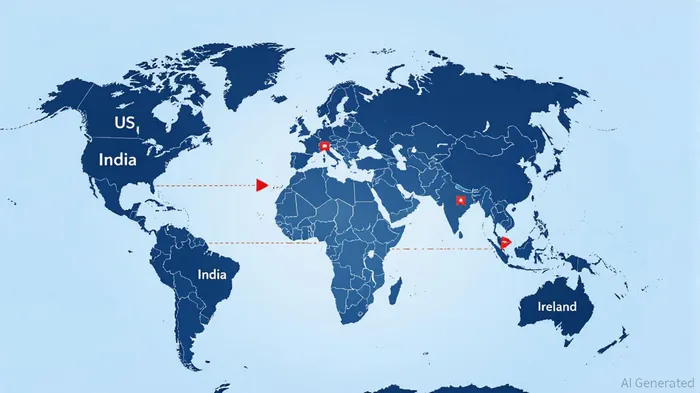
The ripple effects extend beyond the U.S. Ireland, home to 12 of the world's top pharmaceutical firms, could see a decline in exports if companies shift production to avoid tariffs. Similarly, small and medium-sized enterprises (SMEs) in emerging markets, which lack the resources to restructure quickly, may be forced to exit the U.S. market entirely. This realignment could lead to a fragmented global supply chain, with higher costs and reduced efficiency—a scenario that benefits no one.
Stock Screening Strategies: Navigating the New Normal
For investors, the key lies in identifying companies best positioned to weather the storm. Here are three strategic approaches:
Supply Chain Diversification: Prioritize firms with diversified production networks. Companies like MerckMRK-- and PfizerPFE--, which maintain manufacturing facilities across multiple regions, are better equipped to mitigate disruptions. Conversely, those reliant on a single country for APIs or final assembly face heightened risk.
Pricing Power and Cost Control: Focus on firms with strong pricing power and cost management capabilities. While brand-name manufacturers may pass on some costs to insurers or governments, generic drugmakers—already squeezed by narrow margins—require closer scrutiny. Investors should favor companies with robust R&D pipelines and strategic partnerships to offset tariff-driven expenses.
Resilient Sectors and Geographies: Diversify beyond the pharmaceutical sector. Technology and healthcare services861198--, which are less exposed to trade shocks, offer relative stability. Additionally, consider non-U.S. markets with undervalued equities and stable trade policies, such as Germany or Japan, to hedge against U.S.-centric volatility.
The Bigger Picture: Policy vs. Profit
While the tariff proposal is framed as a consumer protection measure, its long-term efficacy remains questionable. Tariffs are blunt instruments that distort markets and penalize both producers and consumers. A more sustainable solution would involve targeted incentives for domestic manufacturing, such as tax breaks or streamlined regulatory approvals. However, in the current political climate, investors must prepare for a world where protectionism is the new norm.
Conclusion: Strategic Caution in a Shifting Landscape
The 250% tariff threat is not merely a policy experiment—it is a seismic shift in global trade dynamics. For investors, the priority is to remain agile, favoring companies with resilient supply chains, pricing flexibility, and diversified geographies. While the pharmaceutical sector faces headwinds, the broader market offers opportunities in sectors less vulnerable to trade shocks. As the U.S.-China trade truce nears its expiration and global tensions persist, the ability to adapt will separate prudent investors from the rest. In this climate, caution and strategic foresight are not just advisable—they are essential.

Stay ahead of the market.
Get curated U.S. market news, insights and key dates delivered to your inbox.




Comments
No comments yet