
Trump's 25% Auto Tariff to Slow Japan, South Korea GDP Growth by 0.2-0.5%
President Trump's announcement of a 25% tariff on all foreign-made automobiles and auto parts is set to have profound implications for the Asia-Pacific region. The tariff, effective from April 2, 2025, is anticipated to decelerate the GDP growth of Japan and South Korea, two of the region's leading economies, by 0.2 to 0.5 percentage points. These countries are particularly exposed due to their significant automotive exports to the United States, which constitute 6% of Japan's total exports and 4% of South Korea's total exports.
The impact of these tariffs is expected to reverberate throughout the region, given the intricate and extensive supply chains in the automotive industry. Analysts from Moody'sMCO-- have cautioned that the tariffs could inflict substantial damage on the regional economy. The automotive manufacturing supply chain is complex and spans multiple countries, meaning that any disruption in one part of the chain can have widespread effects.
The tariffs are part of a broader initiative by the Trump administration to stimulate domestic automotive production and encourage companies to relocate more of their manufacturing operations to the United States. However, the precise details of the tariff rates and the scope of the measures, including any potential exemptions, remain unclear. This uncertainty exacerbates economic volatility and makes it challenging for businesses to plan for the future.
The automotive industry is a vital component of the economies in the Asia-Pacific region, and any disruption to this sector could have far-reaching consequences. The tariffs are likely to increase production costs for automakers, which could result in higher prices for consumers. Additionally, the tariffs could prompt automakers to reassess their supply chain strategies, potentially leading to a shift in manufacturing locations.
The economic impact of the tariffs is not confined to the automotive sector. The ripple effects could extend to other industries, including logistics, technology, and finance. The tariffs could also affect trade relations between the United States and its allies in the region, potentially leading to retaliatory measures and further escalating trade tensions.
In summary, the imposition of a 25% tariff on non-U.S.-made automobiles by President Trump is expected to have significant economic repercussions across the Asia-Pacific region. The tariffs are likely to slow down GDP growth in Japan and South Korea, disrupt supply chains, and increase production costs for automakers. The broader economic impact could extend to other industries and affect trade relations between the United States and its allies in the region. 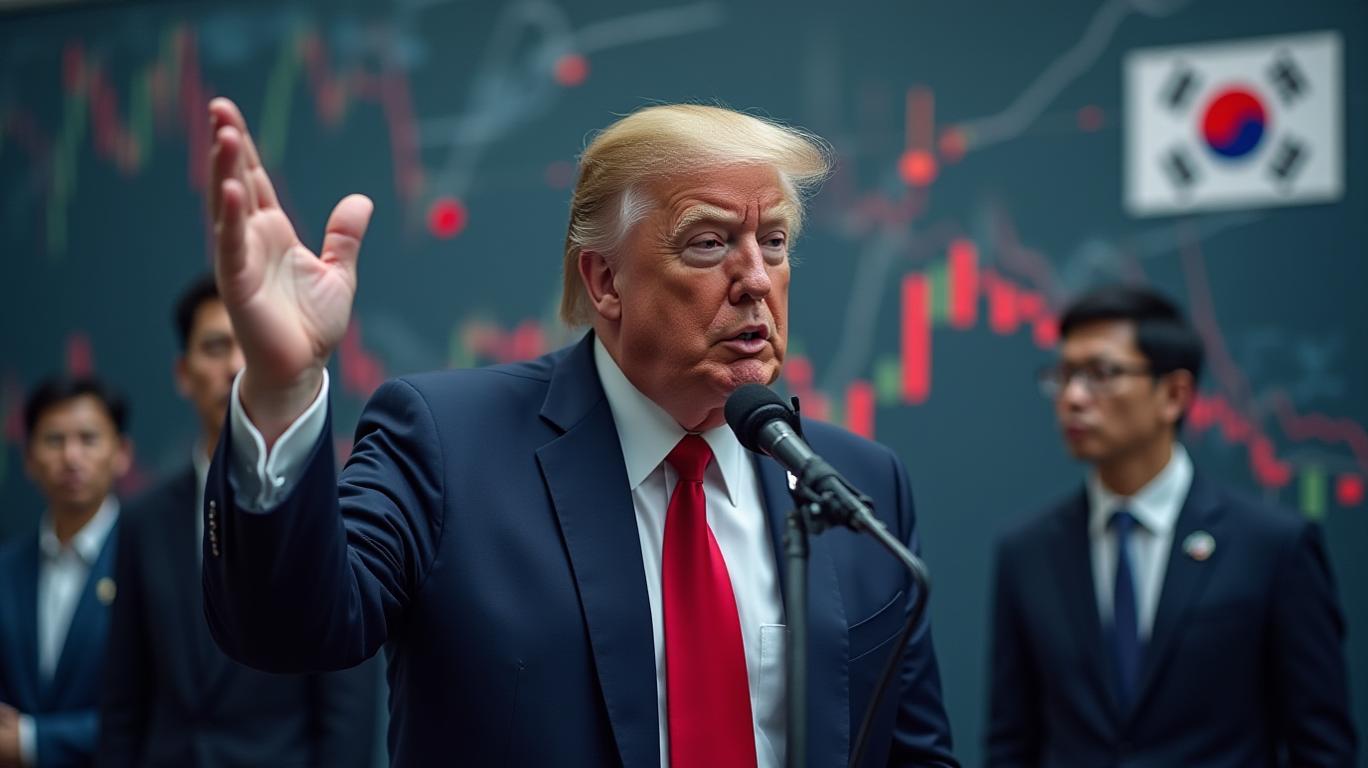

Stay ahead of the market.
Get curated U.S. market news, insights and key dates delivered to your inbox.
AInvest
PRO
AInvest
PRO



Comments
No comments yet