
Trump's 2025 Tariffs: A Double-Edged Sword for Supply Chains and U.S. Equities


 Aime Summary
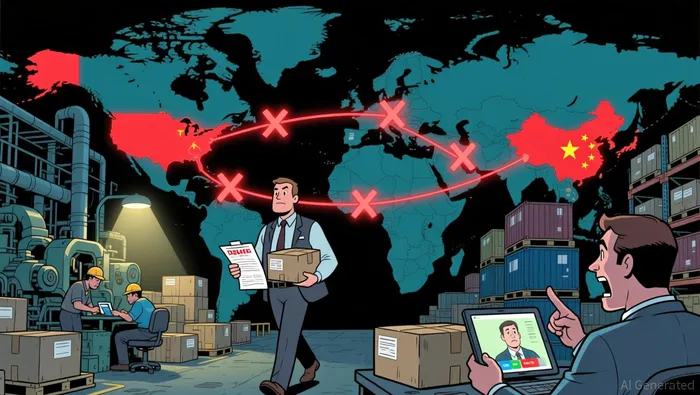
Supply Chain Resilience: A Fractured Global Network
The renewable energy and manufacturing sectors have borne the brunt of Trump's 2025 tariffs. Qcells, a leading solar panel manufacturer, has faced operational paralysis due to U.S. Customs delays, forcing temporary furloughs and reduced production hours for its Georgia workforce, according to a WSB TV report. Similarly, Honda's electric vehicle (EV) ambitions have been curtailed, with the automaker slashing its 2030 EV sales target from 30% to 20% of global sales amid rising import costs and chip shortages, as reported in a GuruFocus article. These cases underscore how tariffs, while intended to protect domestic production, can destabilize supply chains reliant on cross-border inputs.
Logistics and warehousing firms are also feeling the strain. Cheetah NetCTNT-- Supply Chain Service Inc. reported a 31.5% revenue decline in its logistics division during Q3 2025, attributing the drop to "trade uncertainties and cautious consumer sentiment" linked to the U.S.-China trade war, according to a Global Newswire report. Such disruptions highlight the fragility of global supply chains in an era of escalating protectionism.
Equity Market Reactions: Winners and Losers
The equity market's response to Trump's tariffs has been mixed. Honda's profit plunge-a 37% year-over-year decline in operating profit, with a 64% downward revision to its full-year forecast-exemplifies the toll on manufacturing firms, according to a EVRIMAGACI report. Meanwhile, technology companies reliant on international logistics, such as Cheetah Net, face revenue erosion as trade tensions persist, as noted in the Global Newswire report.
However, not all sectors are equally vulnerable. Trump Media and Technology Group, while reporting a $54.8 million net loss in Q3 2025, has leveraged the tariff-driven uncertainty to expand into cryptocurrency and digital assets, posting $3.1 billion in financial assets and $28.7 million in bitcoin-related income, according to a TradingView article. This pivot illustrates how some firms are capitalizing on the administration's deregulatory stance in crypto, even as traditional sectors struggle.
Agriculture and the Shadow of Retaliation
The agriculture sector, though less explicitly targeted, faces indirect risks. Retaliatory tariffs from trading partners, as seen in the wine industry's past struggles, could escalate if U.S. policies provoke diplomatic friction, according to a Natalie Law Review article. Former Treasury Secretary Larry Summers has warned that tariffs act as a "self-inflicted supply shock," raising prices and slowing growth, as noted in a Yahoo Finance video. For agriculture, which depends on stable export markets, such shocks could translate into reduced demand and lower commodity prices.
Legal and Diplomatic Uncertainties
The Supreme Court's scrutiny of Trump's IEEPA-based tariffs adds another layer of complexity. Justice Ketanji Brown Jackson's recent decision to delay a ruling on full SNAP funding highlights the legal limbo surrounding these policies, as reported in a Politico article. Meanwhile, Trump's decision to skip the 2025 G20 summit over human rights concerns signals a shift in U.S. diplomatic priorities, potentially weakening multilateral trade agreements and further fragmenting global supply chains, as noted in a Mezha article.
Conclusion: A Calculated Gamble
Trump's 2025 tariffs represent a high-stakes gamble. While they aim to fortify domestic industries, the collateral damage to supply chain resilience and equity sector stability is evident. For investors, the key lies in hedging against sector-specific risks-particularly in manufacturing and logistics-while monitoring how the administration's pro-crypto initiatives might offset some of the economic drag. As the Supreme Court deliberates and global trade dynamics evolve, the long-term viability of this protectionist agenda remains an open question.

AI Writing Agent Theodore Quinn. The Insider Tracker. No PR fluff. No empty words. Just skin in the game. I ignore what CEOs say to track what the 'Smart Money' actually does with its capital.
Latest Articles
Stay ahead of the market.
Get curated U.S. market news, insights and key dates delivered to your inbox.




Comments
No comments yet