
Trump's $2,000 Tariff Rebate Proposal and Its Economic Ripple Effects


 Aime Summary
A Dual-Edged Policy: Stimulus and Cost Pass-Through
The proposal mirrors Trump's broader economic strategy of leveraging tariffs to fund direct citizen benefits, a concept he has championed since 2020. According to a report by Seeking Alpha, the administration has collected $195 billion in tariff duties in the first three quarters of 2025, with Trump claiming these revenues could fund a "dividend" for Americans, as Seeking Alpha reports. Yet, as Treasury Secretary Scott Bessent has noted, the Treasury's current focus on debt reduction-amid a $38 trillion national debt-casts doubt on the feasibility of immediate cash payouts, as Seeking Alpha reports.
The policy's dual nature-stimulating consumer spending while increasing costs-creates a paradox. On one hand, direct rebates could boost disposable income, potentially revitalizing sectors like retail and manufacturing. On the other, higher tariffs have already driven up household costs by an average of $2,400 in 2025, as businesses pass along expenses, as Yahoo Finance reports. This tension underscores the need for a nuanced analysis of sectoral impacts.
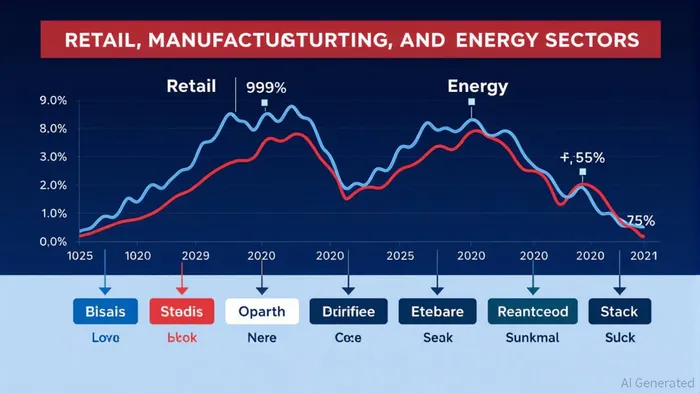
Sectoral Impacts: Winners and Losers
Retail and Consumer Goods:
The retail sector faces a mixed outlook. While a $2,000 rebate could temporarily boost demand for discretionary goods, the same tariffs that fund the rebate have inflated prices for imported products. For example, tariffs on Chinese goods have disproportionately affected sectors like apparel and electronics, where effective rates exceed 17%, as Richmond Fed reports. Retailers may see short-term gains from increased consumer spending but could face long-term challenges as global supply chains shift to higher-cost producers.
Manufacturing:
Tariffs could incentivize domestic production, particularly in industries like steel and fabricated metals, which have historically benefited from protectionist policies. However, higher input costs for imported machinery and raw materials may offset these gains. A study by the Federal Reserve Bank of Richmond estimates that a 1% increase in tariffs raises production costs for manufacturers by 0.7%, squeezing profit margins, as Richmond Fed reports.
Energy:
The energy sector remains vulnerable to policy volatility. Tariffs on imported oil equipment and renewables technology could drive up energy prices, exacerbating inflationary pressures. For instance, a 10% tariff on solar panel components-a scenario under consideration-could increase residential solar adoption costs by 15%, according to the Yale Budget Lab, as Yahoo Finance reports. This would disproportionately affect low- and middle-income households, undermining the rebate's redistributive intent.
Historical Precedents and Behavioral Insights
Historical examples offer cautionary lessons. The 2020 CARES Act stimulus checks, which provided $1,200 to Americans, spurred a 3.8% surge in BitcoinBTC-- trading volume as recipients funneled funds into speculative assets, as Yahoo Finance reports. A similar pattern emerged in 2025, with Bitcoin prices rising 5% within 24 hours of Trump's rebate announcement, suggesting a potential shift in consumer behavior toward high-risk investments, as Yahoo Finance reports.
However, the 2025 proposal faces unique constraints. Unlike the 2020 stimulus, which was funded by federal borrowing, Trump's rebate relies on limited tariff revenues. Analysts estimate the program would require $300–$513 billion, far exceeding the $195 billion collected in 2025, as Yahoo Finance reports. This gap raises questions about whether rebates will materialize as cash payments or be repurposed into tax cuts, as hinted by Bessent, as MassLive reports.
Strategic Implications for Investors
For investors, the key lies in hedging against uncertainty. Sectors likely to benefit from near-term stimulus-such as consumer discretionary and industrials-may offer short-term gains, but long-term risks persist. Conversely, defensive sectors like utilities and healthcare could outperform as inflationary pressures ease.
The energy transition also presents opportunities. While tariffs may hinder solar adoption, they could accelerate domestic oil and gas production, favoring firms with U.S.-based infrastructure. Similarly, companies specializing in tariff-compliant supply chains-such as those in Vietnam or Mexico-may gain market share, as Richmond Fed reports.
Conclusion
Trump's $2,000 tariff rebate proposal embodies the complexities of modern economic policy. While it aims to empower consumers and reduce inflation, its reliance on tariffs introduces sector-specific risks that could outweigh benefits. For investors, the path forward requires vigilance, adaptability, and a keen eye on congressional developments. As the administration navigates the intersection of protectionism and redistribution, the true test of this policy will lie in its execution-and its ability to balance ambition with economic reality.

Delivering real-time insights and analysis on emerging financial trends and market movements.
Latest Articles
Stay ahead of the market.
Get curated U.S. market news, insights and key dates delivered to your inbox.


AInvest
PRO
AInvest
PRO



Comments
No comments yet