
Trump's $2,000 Tariff Dividend Plan and Its Implications for Retail Stocks and Consumer Sentiment


 Aime Summary
Consumer Spending Dynamics: A Double-Edged Sword
Historical precedents suggest that direct government payments, , can provide a short-term boost to consumer spending but often come with inflationary risks. According to a report by , Trump's dividend could replicate this pattern, with immediate demand surges in sectors like retail and durable goods, as noted in a Center Square analysis. However, the 2021 stimulus also coincided with a spike in inflation, , as noted in a , a cautionary tale for investors.
The proposed dividend's exclusion of high-income earners could skew spending patterns toward middle- and lower-income households, potentially favoring discount retailers and essential goods providers. Yet, if the plan exacerbates inflation-by increasing demand without a corresponding supply-side response-retailers may face margin pressures. Treasury Secretary Scott Bessent has hinted that the benefits might materialize through tax cuts rather than direct checks, such as eliminating taxes on tips or Social Security, which could alter consumer behavior differently, as noted in a Kaohoon International piece.
Equity Market Positioning: Volatility and Sectoral Shifts
The retail sector's performance has already been rattled by Trump's tariff policies. Data from , respectively, following major tariff announcements in 2025, as noted in a Daily Economy report. These declines were reversed temporarily when tariffs were paused, . Such volatility underscores the market's sensitivity to trade policy shifts.
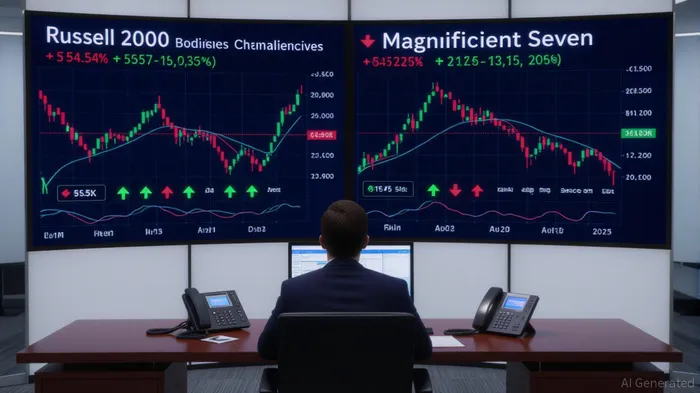
Small-cap retailers, represented by the Russell 2000, are particularly vulnerable due to their limited international exposure and reliance on domestic demand. Conversely, large tech firms in the Magnificent Seven, which often face global supply chain challenges, could see mixed outcomes. If the tariff dividend stimulates economic activity, tech stocks might benefit from increased consumer spending. However, prolonged legal battles over the tariffs could reintroduce uncertainty, dampening investor confidence.
Legal and Economic Challenges: A High-Stakes Uncertainty
The Supreme Court's upcoming ruling on the legality of Trump's "Liberation Day" tariffs could determine the fate of the dividend plan. Critics argue that only Congress has the authority to impose broad tariffs, and conservative justices have expressed skepticism about executive overreach, as noted in a Center Square analysis. A ruling against Trump would not only invalidate the tariffs but also eliminate the revenue stream for the dividend, creating a "boomerang effect" where market optimism collapses, as noted in a LookonChain analysis.
For investors, this uncertainty translates to a high-risk, high-reward scenario. Retail stocks may experience short-term gains if the dividend passes, but prolonged legal battles could lead to prolonged volatility. Similarly, consumer sentiment indices, , as noted in a Survey of Consumers report, could fluctuate further depending on the plan's implementation timeline.
Conclusion: Navigating the Storm
Trump's $2,000 tariff dividend plan presents a unique intersection of fiscal policy, consumer behavior, and market dynamics. While the potential for a spending boost is undeniable, investors must weigh the risks of inflation, legal challenges, and sector-specific vulnerabilities. Retail stocks, particularly those with strong domestic supply chains, could benefit in the short term, but long-term positioning will depend on the Supreme Court's decision and Congress's willingness to endorse the plan. For now, the market remains in a holding pattern-a testament to the unpredictable nature of trade policy in a polarized political landscape.

Delivering real-time insights and analysis on emerging financial trends and market movements.
Latest Articles
Stay ahead of the market.
Get curated U.S. market news, insights and key dates delivered to your inbox.






Comments
No comments yet