
Trump's $2,000 Tariff Dividend: Implications for Market Sentiment and Consumer Spending in 2025


 Aime Summary
Inflationary Pressures and Consumer Spending
Tariffs, by design, increase the cost of imported goods, which historically have translated into higher consumer prices. According to a Federal Reserve Bank of San Francisco report, . , the highest since 1909, . While Trump touts tariffs as a tool to "re-balance trade," critics argue that the regressive nature of these policies disproportionately burdens low-income households, whose spending is more sensitive to price shocks.
The proposed dividend aims to offset these costs, but its efficacy hinges on the scale of tariff revenue. , though economists caution that net revenue is lower due to reduced tax revenues elsewhere in the economy. If the dividend fails to materialize, inflationary pressures could persist, forcing the Federal Reserve into a tighter monetary policy stance.
Fiscal Policy and Legal Risks
The legality of Trump's tariff authority under the (IEEPA) is under scrutiny at the Supreme Court. Opponents, including former Acting U.S. Solicitor General , argue that IEEPA does not authorize the president to impose tariffs for revenue generation, a power reserved for Congress. A ruling against the administration could invalidate the tariff base funding the dividend, creating fiscal uncertainty.
Even if the policy survives legal challenges, its implementation requires congressional approval. The current federal government shutdown has stalled legislative progress, and political gridlock could delay or dilute the proposal. For investors, this uncertainty complicates long-term planning, particularly in sectors reliant on stable trade policies.
Sectoral Impacts and Investor Behavior
Retail and Manufacturing: Tariffs on intermediary goods-17% of U.S. imports-threaten to disrupt and inflate production costs. Retailers face margin compression as they pass on higher input costs to consumers, while manufacturers may see short-term gains from domestic demand but face long-term risks from global supply chain fragmentation. Investors are advised to favor quality bonds and alternatives over cyclical equities in this environment.
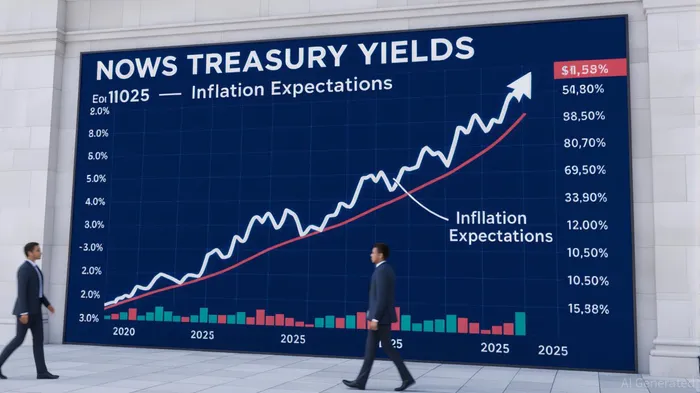
Treasury Markets. If the dividend proposal falters, , squeezing corporate borrowing costs and municipal bond markets. However, a successful payout might temporarily ease inflationary fears, offering a reprieve for Treasuries.
Strategic Asset Allocation:
- Defensive Sectors: Overweight utilities and consumer staples, which are less sensitive to trade volatility.
- Alternatives: Gold and real assets (e.g., ) could hedge against inflation and currency devaluation risks.
- International Exposure: Reduce large-cap tech holdings and rebalance into higher-yielding international equities, particularly in markets less exposed to U.S. tariffs.
Conclusion
Trump's tariff dividend represents a high-stakes gamble for the U.S. economy. While it aims to reward citizens with trade-generated revenue, its success depends on navigating legal, political, and economic headwinds. For investors, the key lies in balancing exposure to sectors likely to benefit from domestic manufacturing revival with hedges against inflation and policy uncertainty. As the Supreme Court deliberates and Congress debates, strategic asset allocation must prioritize flexibility and risk mitigation.

Delivering real-time insights and analysis on emerging financial trends and market movements.
Latest Articles
Stay ahead of the market.
Get curated U.S. market news, insights and key dates delivered to your inbox.


AInvest
PRO
AInvest
PRO



Comments
No comments yet