
Trump's $2,000 Tariff Dividend and Its Implications for Equity Markets


 Aime Summary
Market Volatility: A Double-Edged Sword
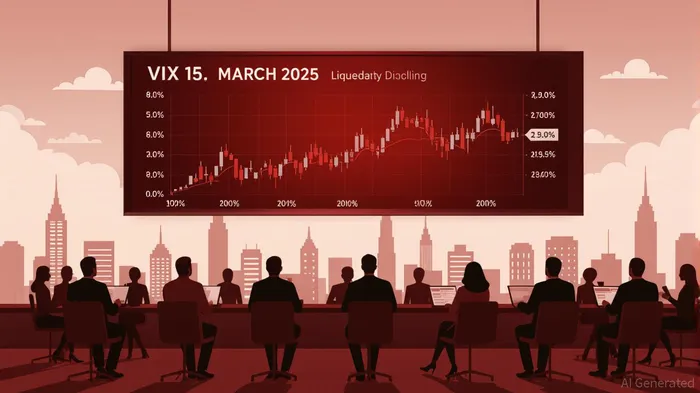
The reintroduction of aggressive tariff policies has reignited debates about their impact on equity market stability. According to a report by Bloomberg Law, the U.S. administration's April 2025 reciprocal tariff plan-tying rates directly to bilateral trade deficits-triggered a sharp rise in market volatility. The Cboe Volatility Index (VIX) surged to 25 in March 2025, reflecting heightened fears of trade policy uncertainty and retaliatory measures from global partners, as a Bloomberg Law analysis noted. This volatility is exacerbated by the unpredictability of tariff announcements, which have historically led to liquidity deterioration, particularly in sectors reliant on global supply chains, as the analysis further observed.
The legal challenges to Trump's use of emergency powers under the International Emergency Economic Powers Act (IEEPA) further complicate the outlook. A Supreme Court review of the tariffs' constitutionality could either validate or dismantle the policy framework, creating a "black swan" risk for markets, as the Bloomberg Law analysis noted. Such uncertainty has already prompted investors to hedge against potential disruptions, with defensive sectors like utilities and healthcare outperforming cyclical industries.
Sector Rotation: Winners and Losers in a Protectionist Climate
Tariff policies are reshaping sector dynamics, with clear winners and losers emerging. The Yale Budget Lab reports that the average effective tariff rate has risen from 2.4% at the start of 2024 to 11.5% by August 2025, driving up core goods prices by 1.9%, as a Yale Budget Lab report found. Sectors such as manufacturing, agriculture, and energy stand to benefit from reduced foreign competition, while import-dependent industries like technology and retail face headwinds.
For example, tariffs on electronics and appliances have pushed consumer prices higher, squeezing margins for retailers and forcing companies to absorb costs or pass them on to consumers, as the Yale Budget Lab report observed. Conversely, domestic manufacturers of window coverings, appliances, and machinery have seen renewed demand, bolstering their stock valuations. This sector rotation mirrors the 2018-2019 trade war with China, when industrial and materials sectors outperformed as investors bet on a "reshoring" boom, as a Bloomberg Law analysis noted.
Retail Investor Behavior: Caution and Contrarian Bets
Retail investor behavior has grown increasingly cautious in this high-deficit, tariff-driven environment. Data from the Yale Budget Lab indicates that the S&P 500 rebounded nearly 10% since December 2024, suggesting that concerns about long-term profitability from tariffs have not yet dominated market pricing, as a Yale Budget Lab report found. However, individual investors are favoring cash positions and safe-haven assets like gold and Treasury bonds, reflecting a flight to safety amid geopolitical and economic uncertainties, as the report noted.
The weakening U.S. dollar-down over 7% since December 2024-has further complicated investor strategies, as a Bloomberg Law analysis observed. A weaker dollar raises import costs, which could dampen consumer spending and corporate earnings. Yet, some retail investors are betting on a "Trump trade," anticipating that protectionist policies will eventually boost domestic industries and inflation-linked assets. This duality underscores the fragmented nature of retail investor sentiment, with some embracing the policy's potential while others remain skeptical of its sustainability.
Legal and Fiscal Risks: A Looming Overhang
The feasibility of the $2,000 tariff dividend itself is under scrutiny. Treasury Secretary Scott Bessent has clarified that the dividend could materialize through tax cuts rather than direct payments, emphasizing that the primary goal of tariffs is to rebalance trade, not fund rebates, as a Just Security analysis noted. However, critics argue that the net revenue from tariffs-estimated at $3.3 trillion over a decade by the Congressional Budget Office-falls short of Trump's proposed payouts, potentially exacerbating the national debt, as the Just Security analysis noted.
Legal challenges add another layer of risk. If the Supreme Court rules against the tariffs, the administration may face a fiscal shortfall, forcing difficult choices between scaling back the dividend or increasing borrowing-a move that could trigger higher interest rates and further market turbulence, as a UC Riverside analysis observed.
Conclusion: Navigating Uncertainty in a High-Deficit World
Trump's $2,000 tariff dividend represents a bold but precarious experiment in economic policy. While the initiative aims to bolster domestic manufacturing and reward middle-class households, its success hinges on resolving legal ambiguities, managing inflationary pressures, and stabilizing investor confidence. For equity markets, the path forward will likely involve continued volatility, sector-specific rotations, and a cautious approach from retail investors. As the November 2025 elections approach, the interplay of policy, law, and market forces will remain a critical determinant of economic outcomes.

Delivering real-time insights and analysis on emerging financial trends and market movements.
Latest Articles
Stay ahead of the market.
Get curated U.S. market news, insights and key dates delivered to your inbox.






Comments
No comments yet