
Trump's $2,000 Tariff Dividend: Implications for Consumer Spending and Market Volatility


 Aime Summary
Policy Structure and Funding Mechanisms: A Legal and Fiscal Quagmire
's tariff strategy hinges on leveraging trade barriers to generate revenue, , according to the Coinotag analysis. The administration frames this as a tool to reduce the U.S. trade deficit and fund domestic priorities, but the Supreme Court's ongoing review of the legality of emergency tariff powers introduces a wildcard. , according to the Coinotag analysis, destabilizing both fiscal planning and market confidence.
The dividend's structure further complicates its economic impact. Unlike direct stimulus checks, . However, the indirect nature of these benefits limits their immediate stimulative effect, creating a lag between policy implementation and consumer response.
Historical Precedents: Tariffs, Inflation, and Market Volatility
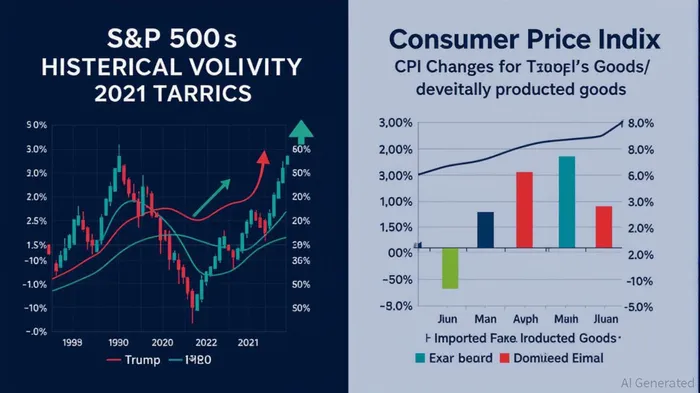
During Trump's first term (2017–2021), tariffs on Chinese goods triggered retaliatory measures and supply chain disruptions, contributing to heightened market volatility, according to a Balance Money report. The S&P 500 experienced pronounced swings as investors grappled with trade war uncertainties, while consumer prices for imported goods rose sharply. Despite Trump's claims of economic nationalism boosting domestic manufacturing, the policy also led to higher costs for American businesses reliant on global supply chains, according to the Balance Money report.
The 2025 iteration of this strategy appears to amplify these dynamics. , for instance, threaten to disrupt pharmaceutical and luxury sectors, while delayed Section 301 measures against China suggest a more calibrated approach to trade tensions. Yet, the absence of a clear timeline for resolving these disputes leaves markets in limbo, , according to a Cointelegraph article.
Strategic Asset Allocation: Navigating Policy-Driven Uncertainty
For investors, the interplay between Trump's tariff policies and consumer behavior demands a nuanced approach to asset allocation. Sectors poised to benefit from protectionism-such as domestic manufacturing, agriculture, and rare earth minerals-could see short-term gains, , according to a . Conversely, industries exposed to retaliatory tariffs, including tech and pharmaceuticals, may face headwinds.
The dividend's potential to boost consumer spending adds another layer of complexity. If tax incentives materialize, . However, the delayed legal resolution of tariff challenges introduces a risk of abrupt market corrections, . Cryptocurrencies, meanwhile, remain a barometer of macroeconomic anxiety, , according to the Cointelegraph article.
Conclusion: Balancing Geopolitical Risks and Fiscal Experimentation
. While the administration's emphasis on tax cuts over direct payments may mitigate inflationary pressures, the policy's legal fragility and geopolitical ramifications create a volatile backdrop for markets. Investors must weigh the potential for sector-specific booms against the broader risks of trade wars and judicial interventions. In this environment, a diversified portfolio with exposure to both cyclical and defensive assets-coupled with close monitoring of Supreme Court rulings and trade negotiations-offers the most prudent path forward.

Delivering real-time insights and analysis on emerging financial trends and market movements.
Latest Articles
Stay ahead of the market.
Get curated U.S. market news, insights and key dates delivered to your inbox.






Comments
No comments yet