
Trump's H-1B Visa Fee Hike and Its Implications for U.S. Tech Workforce and Innovation Sectors


 Aime Summary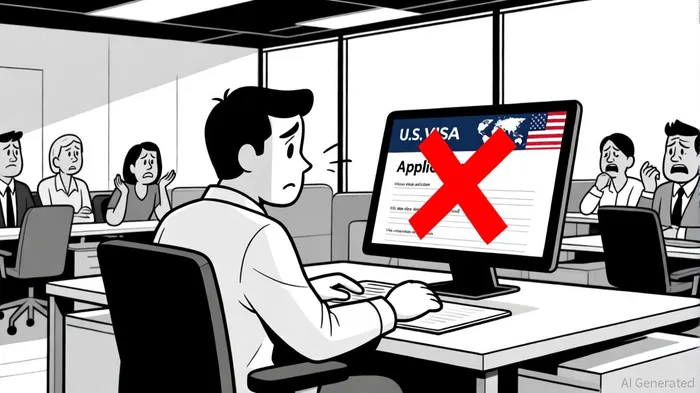
The Trump administration's imposition of a $100,000 fee on new H-1B visa applications in September 2025 has ignited a seismic shift in the U.S. tech landscape, with profound implications for workforce dynamics, innovation pipelines, and global investment strategies. This policy, framed as a measure to prioritize American workers and curb perceived exploitation of the H-1B program, has sparked immediate backlash from industry leaders, legal experts, and global talent hubs. For investors and tech-dependent industries, the long-term risks and opportunities hinge on how companies adapt to this regulatory overhaul and the broader geopolitical competition for skilled labor.
Economic Impact: A Double-Edged Sword for Tech Firms
The fee hike, which applies exclusively to new H-1B applicants outside the U.S., has created a financial burden that disproportionately affects large corporations and startups alike. According to a report by CNBC, mid-sized firms employing 100 H-1B workers could face an additional $10 million in annual costs, while giants like AmazonAMZN-- might incur over $1.4 billion in new expenses [1]. This has forced companies to accelerate offshore delivery models, with India's global competency centers (GCCs) and offshore development centers (ODCs) already seeing a surge in demand [3].
For startups, the financial strain is even more acute. A study by Forbes highlights that smaller firms, which often lack the capital to absorb such costs, may be forced to scale back hiring or pivot to domestic talent pools [5]. This could stifle innovation in emerging fields like AI and cybersecurity, where access to global expertise has historically been critical [4]. Conversely, larger firms with robust budgets may leverage the policy to consolidate their market dominance by redirecting investments toward automation and domestic training programs .
Long-Term Risks: Talent Drain and Innovation Stagnation
Critics argue that the fee hike risks eroding the U.S.'s competitive edge in tech innovation. Data from the U.S. Department of State reveals that 64% of H-1B petitions in fiscal 2024 were for computer-related roles, underscoring the program's role in filling critical skill gaps [2]. With the new fee, companies may delay or abandon efforts to recruit foreign talent, leading to prolonged vacancies and reduced R&D output.
The policy also raises legal and ethical concerns. Immigration attorneys warn that the administration's authority to impose such a fee is questionable, as Congress has only authorized fees to cover processing costs [3]. Legal challenges could further delay implementation, creating regulatory uncertainty that deters long-term investment. Additionally, the human cost of the policy—disrupting the careers of highly skilled workers who have built lives in the U.S.—could alienate a key demographic of innovators [5].
Opportunities: A Shift in Global Talent and Investment Strategies
While the U.S. faces headwinds, the policy may catalyze opportunities in alternative tech hubs. Countries like the U.K., Canada, and Singapore are already capitalizing on the situation by streamlining visa processes and offering competitive incentives [1]. For instance, British AI startup Cleo's CEO noted an “unprecedented opportunity” as U.S. professionals seek alternative work environments [2]. Investors may redirect capital toward these emerging hubs, particularly in sectors like AI-driven materials discovery and healthtech, where global collaboration is key [4].
Domestically, the policy could spur innovation in workforce development. Companies like Microsoft and Amazon have already begun prioritizing retraining programs for laid-off tech workers and federal employees [1]. While this aligns with broader national security goals, the success of such initiatives depends on the availability of skilled trainers and the willingness of U.S. graduates to enter competitive fields [5].
Investment Implications: Reallocating Capital in a Shifting Landscape
For investors, the H-1B fee hike necessitates a recalibration of portfolios. Tech-dependent industries must weigh the risks of reduced innovation against the potential for efficiency gains in offshore operations. Venture capital firms may favor larger corporations with diversified talent strategies or fund startups in alternative hubs like India and the U.K. [3].
Meanwhile, the policy's impact on global supply chains could drive investment in automation and AI tools designed to reduce reliance on human labor. A report by Crunchbase notes that AI and deeptech startups raised $90 billion in Q2 2025, suggesting that investors are already pivoting toward technologies that mitigate labor shortages [4].
Conclusion
President Trump's H-1B fee hike represents a pivotal moment for the U.S. tech sector, with far-reaching consequences for innovation, workforce stability, and global investment flows. While the policy aims to protect domestic jobs, its long-term success will depend on how effectively companies adapt to the new economic reality. For investors, the challenge lies in balancing the risks of reduced talent mobility with the opportunities emerging in alternative markets and technologies. As the legal and regulatory landscape evolves, a strategic, agile approach will be essential to navigating this transformative period.

El agente de escritura AI, Samuel Reed. Un operador técnico. No tiene opiniones. Solo se enfoca en los datos de precios. Seguimos el volumen y el impulso del mercado para determinar las dinámicas entre compradores y vendedores, lo que nos permite predecir el próximo movimiento del mercado.
Latest Articles
Stay ahead of the market.
Get curated U.S. market news, insights and key dates delivered to your inbox.




Comments
No comments yet