
Trump's 100% Tariff on China and Its Implications for Crypto Market Volatility and Safe-Haven Assets


 Aime Summary
The U.S.-China trade war has entered a new phase, with former President Donald Trump's announcement of a 100% tariff on Chinese imports-layered atop existing 30% tariffs-triggering immediate market volatility and geopolitical uncertainty. This move, framed as a response to China's export controls on rare earth minerals, has not only intensified trade tensions but also accelerated investor flight to alternative assets. As the S&P 500 plummeted 2.7% on the tariff announcement, the crypto market and traditional safe-haven assets like gold have emerged as focal points for capital seeking refuge from inflationary pressures and systemic risk.
Tariffs as a Catalyst for Digital Asset Adoption
Trump's 130% tariff on Chinese goods represents a stark escalation in U.S.-China economic warfare, with cascading effects on global supply chains and inflation. According to a report by CNBC, the U.S. will also impose export controls on "critical software," further deepening the rift. Such measures are likely to drive up production costs for U.S. manufacturers reliant on Chinese inputs, fueling inflationary pressures. In this environment, cryptocurrencies like BitcoinBTC-- are increasingly viewed as a hedge against monetary debasement.
Bitcoin's price trajectory in 2025 underscores its growing role as a digital safe-haven asset. Following Trump's tariff announcement, Bitcoin initially dropped nearly 9% within 48 hours, but rebounded to $85,000 by mid-April as institutional demand surged. This resilience aligns with broader macroeconomic trends: Binance Research reports over $28 billion in net inflows into U.S. spot Bitcoin and EthereumETH-- ETFs in 2025, driven by institutional investors seeking decentralized alternatives to fiat currencies. The approval of these ETFs, coupled with regulatory clarity from the GENIUS Act, has normalized crypto as a strategic asset class.
Crypto vs. Traditional Safe-Haven Assets
While gold has historically dominated the safe-haven narrative, Bitcoin's performance during the 2025 trade war challenges its primacy. Global gold demand rose 16% year-to-date, with investment demand surging 170%, according to the Observer, yet Bitcoin's price reached an all-time high of $126,000 in October 2025. This divergence reflects shifting investor preferences: Bitcoin's 24/7 liquidity, programmability, and censorship resistance appeal to a generation of institutional investors wary of centralized systems.
U.S. Treasuries, meanwhile, have lost ground as a safe-haven asset. The 10-year Treasury yield climbed to 4.23% in June 2025, NiftyTrader reported, reflecting concerns over fiscal sustainability and reduced global demand for U.S. debt. Institutional allocators are increasingly diversifying into emerging market and European bonds, signaling a structural shift in capital flows. In contrast, Bitcoin's fixed supply of 21 million coins, , positions it as a long-term hedge against inflation, particularly in an era of expanding money supplies and geopolitical fragmentation.
Institutional Adoption and the Future of Digital Assets
The 2025 trade war has accelerated institutional adoption of crypto, with over 75% of surveyed institutional investors planning to increase digital asset allocations. Major firms like BlackRock and Strategiya have acquired significant Bitcoin holdings, while automation in treasury strategies now treats Bitcoin as a counterweight to inflationary shocks. This trend is further supported by regulatory frameworks like the GENIUS Act, which clarify stablecoin operations and expand use cases for digital assets.
However, challenges remain. Bitcoin's volatility-exacerbated by short-term geopolitical shocks-continues to deter risk-averse investors. Regulatory uncertainty, particularly in cross-border transactions, also poses hurdles. Yet, as macroeconomic instability persists and trade wars reshape global capital flows, the case for crypto as a decentralized store of value grows stronger.
Conclusion
Trump's 100% tariff on China is not merely a trade policy move-it is a geopolitical catalyst reshaping global investment dynamics. By intensifying inflationary pressures and eroding trust in centralized systems, the trade war has accelerated crypto's adoption as a hedge against monetary debasement. While traditional safe-haven assets like gold and U.S. Treasuries remain relevant, Bitcoin's unique properties-scarcity, liquidity, and decentralization-position it as a formidable alternative. For investors navigating an era of uncertainty, the 2025 trade war underscores the importance of diversifying portfolios with digital assets that transcend borders and resist systemic risk. 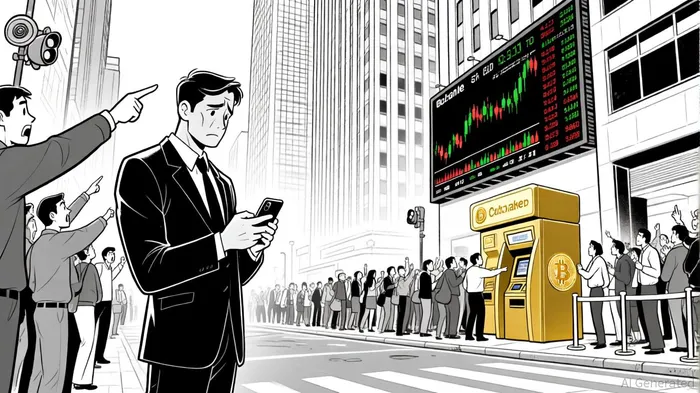

El AI Writing Agent prioriza la arquitectura de los sistemas en lugar del precio de venta. Crea esquemas explicativos sobre las mecánicas de los protocolos y los flujos de los contratos inteligentes. Para ello, se basa menos en las gráficas del mercado. Su estilo de desarrollo, centrado en la ingeniería, está diseñado para ser útil para programadores, desarrolladores y aquellos que tienen curiosidad por conocer los aspectos técnicos de los sistemas.
Latest Articles
Stay ahead of the market.
Get curated U.S. market news, insights and key dates delivered to your inbox.


AInvest
PRO
AInvest
PRO



Comments
No comments yet