
True Value Hardware Closes As Retail Giants Pivot
The 54-year-old Harpeth True Value Hardware store in Franklin, Tennessee, is permanently closing its doors on April 1, 2026, due to a collapse in its lumber business according to reports. This closure is not an isolated incident but a symptom of broader structural pressures affecting independent hardware cooperatives competing against giants like Home DepotHD-- and Amazon as financial analysis shows. The parent True Value cooperative filed for Chapter 11 protection in 2024 and was acquired by Do It Best, signaling a major shift in the industry's ownership and operational dynamics according to industry reports. Rising inflation, unaffordable rents, and the loss of critical builder relationships have made the traditional hardware store model increasingly untenable for many independent operators as market data indicates. For investors, this development underscores the accelerating consolidation in the home improvement sector where scale and digital integration are becoming the primary drivers of survival.
The shuttering of the Franklin, Tennessee location serves as a stark reminder of how quickly local retail ecosystems can erode when supply chains and customer loyalty are disrupted. 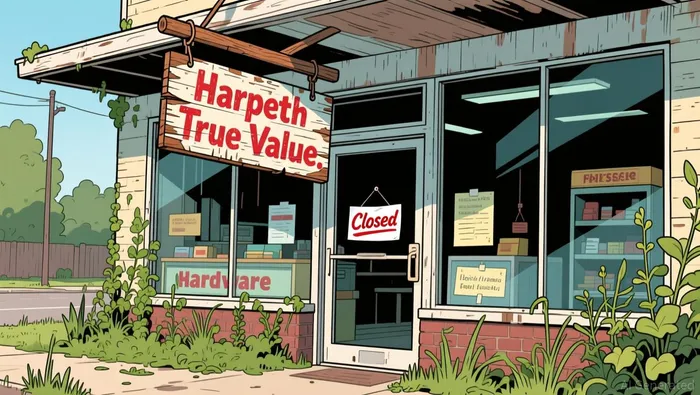 Mike Outlaw, the new owner who acquired the business in 2022, found himself unable to replicate the deep-rooted connections with local builders that the previous owners had cultivated over decades. This specific failure to retain the 70% to 80% of sales that historically came from the lumber segment proved fatal for the 54-year-old institution. While the store itself is not filing for bankruptcy, the decision to close was driven by the sheer financial unviability of continuing operations in a market that has shifted dramatically in recent years according to economic analysis.
Why Is The Harpeth True Value Store Closing Despite Its Long History?
The primary driver behind the Harpeth True Value closure was the sudden and severe decline in its lumber business, which historically accounted for the vast majority of the store's revenue. When the previous owners departed in 2022, they took with them the long-standing relationships with local builders that were essential for sustaining the store's high-volume lumber sales. Mike Outlaw, who purchased the business, lacked these critical contacts and found it impossible to quickly rebuild the necessary network to keep the lumber business afloat. Unlike the parent cooperative, which faced broader systemic issues, this specific location's failure was rooted in the loss of its most valuable client base as detailed in reports.
The store attempted to sell the business to find a buyer who might have been able to leverage existing relationships, but no agreement was reached. The failure to find a buyer highlighted the difficulty of transferring the intangible assets of customer loyalty and trade relationships in a changing market. Outlaw acknowledged that the perception of corporate distress at the parent True Value level, which filed for Chapter 11 protection in 2024, may have further dampened local business confidence and sales performance according to industry analysis. This closure reflects a wider trend where independent hardware cooperatives struggle to compete with dominant retailers like Home Depot, which held a 28% market share in 2025, and Amazon, which continues to capture a growing portion of the market through e-commerce expansion as market research shows.
What Does This Mean For The True Value Hardware Business Model?
The closure of Harpeth True Value is part of a larger narrative of consolidation and restructuring within the True Value cooperative. The parent entity, True Value, filed for Chapter 11 bankruptcy in October 2024 and was subsequently acquired by Do It Best for $153 million, marking a significant shift in the industry's ownership structure according to financial reports. While independent stores were not part of the bankruptcy itself, the corporate distress created a perception problem that likely impacted local sales and investor confidence in the brand's stability. The broader hardware sector is facing intense pressure from rising operational costs, including inflation and tariffs, which squeeze the margins of smaller retailers that cannot leverage the same purchasing power as national giants as market data indicates.
The shift in consumer behavior toward e-commerce has further exacerbated the challenges for physical hardware stores. Amazon's competitive pricing and fast delivery options are drawing customers away from traditional brick-and-mortar locations, forcing independent retailers to rethink their value proposition. For investors, this signals a continued trend of consolidation where large chains are winning on scale, convenience, and digital capabilities. The closures, while representing a small percentage of the total store count, reflect a strategic adjustment where retailers are focusing on profitable locations and rethinking their physical footprint to survive in a highly competitive market as industry analysis shows.
How Are Competitors Like Home Depot Responding To These Market Shifts?
While independent stores like Harpeth True Value are closing, major competitors like Home Depot and Lowe'sLOW-- continue to expand their market share and dominate the home improvement sector. Home Depot, with a 28% market share in 2025, has leveraged its scale to offer competitive pricing and a vast inventory that smaller retailers simply cannot match according to market reports. Lowe's, holding a 17% market share, has also focused on improving its online capabilities and supply chain efficiency to capture more customers who are increasingly shopping online. The dominance of these giants is creating a challenging environment for independent hardware stores that rely heavily on personal relationships and localized inventory strategies as industry analysis shows.
The competitive landscape is also being shaped by the rise of e-commerce platforms like Amazon, which have carved out a significant 11% market share in the hardware sector. These platforms offer convenience and pricing that physical stores struggle to match, forcing traditional retailers to adapt or risk obsolescence. Investors should monitor how major players like Home Depot and Lowe's continue to respond to these shifts, particularly regarding their expansion strategies and online capabilities. The situation serves as a cautionary tale for traditional retail models that fail to adapt to evolving consumer preferences and competitive forces, highlighting the need for continuous innovation and strategic flexibility in a rapidly changing market according to financial analysis.
What Should Investors Watch In The Coming Months?
The closure of Harpeth True Value and the broader struggles of independent hardware retailers suggest that the industry is entering a phase of significant transformation. Investors should pay close attention to how the newly acquired True Value cooperative, now under Do It Best, navigates the post-bankruptcy landscape and whether it can successfully integrate with its new parent company. The ability of remaining independent stores to adapt their business models or find new niches will be critical for their survival in a market dominated by national chains and e-commerce giants as industry reports indicate.
Additionally, the performance of major players like Home Depot and Lowe's will provide key insights into the overall health of the home improvement sector. If these companies continue to grow their market share and maintain strong profitability, it will likely signal a continued trend of consolidation and the decline of smaller, independent retailers. Investors should also monitor inflation rates, supply chain disruptions, and consumer spending habits, as these factors will continue to influence the competitive dynamics of the hardware industry. The success or failure of these companies will determine the future structure of the market and the opportunities available for investors in the sector according to financial analysis.

Manténgase al tanto de las noticias de Wall Street en tiempo real.
Latest Articles
Stay ahead of the market.
Get curated U.S. market news, insights and key dates delivered to your inbox.
AInvest
PRO
AInvest
PRO



Comments
No comments yet