
True Value Closures Highlight Retail Industry Pressures: What Investors Should Know
 Aime Summary
- Harpeth True Value Hardware, a 54-year-old store in Tennessee, will close permanently on April 1, 2026, due to a sharp decline in its lumber business, which represented 70-80% of its sales.
- True Value, now part of the Do It Best cooperative, , highlighting broader retail challenges including competition from Home DepotHD--, Lowe'sLOW--, and AmazonAMZN--.
- Independent hardware retailers are increasingly struggling to maintain profitability due to economic pressures, inflation, supply chain issues, and shifting consumer preferences toward online shopping.
Retailers like True Value are feeling the squeeze in 2026. Harpeth True Value Hardware, an independently owned True Value store in Franklin, Tennessee, is set to close its doors in early April. The decline of its lumber business—once the backbone of the store's operations—has made it increasingly difficult to remain competitive. The store's owner, , cited the loss of long-standing customer relationships and the failure to secure a new buyer as key reasons for the decision.
This development is not isolated. True Value as a brand has faced systemic challenges since its 2024 bankruptcy. The cooperative was acquired by Do It Best for $153 million, but independently owned stores like Harpeth True Value were not included in the deal. The broader hardware retail landscape has seen a consolidation of market share toward large chains like Home Depot and Lowe's, which benefit from scale, pricing power, and online convenience. Amazon's growing presence in home improvement is also reshaping customer expectations, putting further pressure on smaller players.
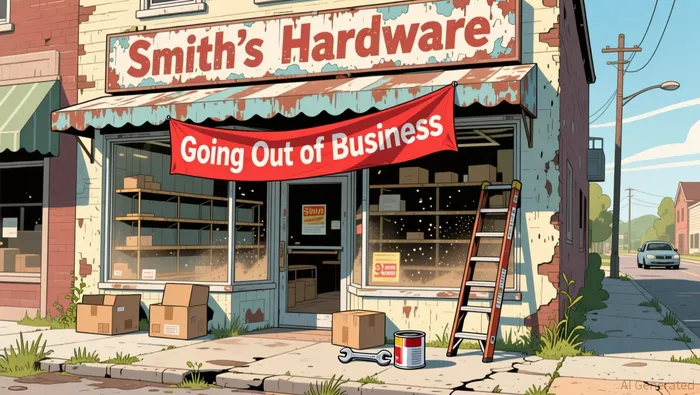
What Is Driving True Value Store Closures in 2026?
The story of Harpeth True Value Hardware reflects a larger trend in the retail sector. Independent hardware stores are struggling to compete with the convenience, pricing, and digital tools offered by larger rivals. For example, the lumber business is highly relationship-driven, and when longtime customers like builders and contractors left with the previous owners, Harpeth True Value lost a critical revenue stream. Even with efforts to sell the business, Outlaw was unable to find a buyer, signaling a lack of confidence in the model.
This is not just a local issue. The broader True Value network has faced financial difficulties. The cooperative filed for bankruptcy in 2024 and was acquired by Do It Best, which operates under a different business model. While Do It Best has shown some success in revitalizing the brand, the closures of independent locations like Harpeth True Value indicate that the model of small, locally owned True Value stores may not be sustainable in the current economic environment.
Why Is the Hardware Retail Sector Struggling in 2026?
The hardware retail sector is navigating a complex set of headwinds. Rising inflation has pushed up the cost of goods and rent, squeezing profit margins. Supply chain disruptions have also made it harder to maintain inventory levels and meet customer demand. At the same time, consumers are increasingly shifting toward online shopping for home improvement needs, where large retailers and e-commerce platforms dominate.
The retail landscape is further evolving with the rise of e-commerce in the home improvement space. Amazon's ability to offer competitive pricing, fast delivery, and a seamless shopping experience has made it a formidable competitor. For example, , a mid-tier apparel retailer, , as it shifts its focus to online sales. This trend mirrors what we are seeing in hardware retail: physical stores are being replaced by digital-first models.
Investors should watch for signs of adaptation in the hardware retail space. Will traditional retailers like Ace Hardware or Do It Best continue to support independent operators? How will the growing influence of Amazon and online marketplaces reshape the industry? These questions will become increasingly important as the sector adjusts to new consumer expectations and competitive dynamics.
What Can Investors Expect From the Retail Sector in 2026?
The retail sector in 2026 is marked by a continued shift toward digital and e-commerce. Companies that fail to adapt will face increasing pressure to close physical locations or pivot to new business models. For investors, this means that traditional brick-and-mortar retailers need to show clear value propositions—whether through exclusive products, superior customer service, or localized convenience—to remain competitive. For hardware retailers, the path forward may involve greater integration of digital tools, such as online order pickup, mobile apps, and personalized promotions. Retailers that can offer a hybrid model—combining the convenience of online shopping with the in-store experience—may have the best chance of success. Investors should monitor how these companies invest in technology and customer engagement as a key indicator of future performance.
In the coming months, we may see more store closures and strategic shifts in the hardware retail space. The fate of Harpeth True Value Hardware is not just a local event—it is a bellwether for the challenges facing small, independently owned retailers in an increasingly digital and competitive market.

Manténgase al tanto de las noticias de Wall Street en tiempo real.
Latest Articles
Stay ahead of the market.
Get curated U.S. market news, insights and key dates delivered to your inbox.
AInvest
PRO
AInvest
PRO



Comments
No comments yet