
The Trucking Industry's Liquidity Crisis: A Systemic Risk to the Economy?


 Aime Summary
The U.S. trucking industry is teetering on the edge of a systemic collapse, and investors ignoring this crisis do so at their peril. What began as a liquidity crunch has morphed into a full-blown sector-wide crisis, with bankruptcies accelerating, supply chains fraying, and inflationary pressures mounting. The fragility of this critical infrastructure sector is no longer a niche concern-it's a macroeconomic time bomb.
Liquidity Stress: The Perfect Storm of Debt, Tariffs, and Overexpansion
The trucking industry's woes stem from a toxic mix of factors. Over 700 Chapter 11 filings were recorded in May 2025 alone, with companies like KPower Global Logistics, Balkan Express, and Deliver It collapsing under the weight of debt, according to a Bloomberg Law analysis. These firms, like many others, had aggressively expanded during the post-pandemic freight boom, only to be blindsided by a market correction. Now, they're drowning in interest payments as the Federal Reserve's high-rate environment crushes cash flow, FreightWaves reported.
Compounding the problem are tariffs. An analysis by Tradlinx shows that Trump-era tariffs on Chinese imports have spiked operating costs for trucking firms, while reducing demand for freight services as manufacturers and retailers pull back. Meanwhile, enforcement of English language requirements for drivers has exacerbated labor shortages, forcing carriers to operate with skeleton crews or shut down entirely, as ZTransportation noted.
Ripple Effects: From Freight Rates to Inflation and Beyond
The fallout from this crisis is rippling across the economy. As bankruptcies purge excess capacity from the market, remaining carriers face a paradox: tighter supply should drive up freight rates, but demand is collapsing. TankTransport shows freight tonnage has declined by 8–9% since 2022, with spot rates hitting multiyear lows. This "Great Freight Recession" is creating a vicious cycle-carriers can't raise rates fast enough to cover surging fuel and insurance costs, leading to more defaults, DataInsightsMarket reported.
The consequences extend far beyond the industry. Shippers are scrambling to secure trucking capacity, pushing up shipping costs that get passed on to consumers. A Wex Inc. report highlights how tariffs on intermediate goods have inflated manufacturing costs, slowing demand for everything from appliances to construction materials. Retailers like Walmart, which rely heavily on trucking for distribution, are seeing margins squeezed as logistics expenses balloon (the Bloomberg Law analysis cited above details these pressures).
Even creditors are feeling the pain. Fuel suppliers and equipment financiers are left with millions in unpaid debts as bankrupt carriers vanish. For example, the collapse of Truck & Trailer Leasing Avenue-a firm specializing in rail-to-truck transloading-has left regional supply chains in disarray, with delays cascading into shortages (FreightWaves reported on these disruptions).
The Path Forward: Consolidation, Tech, and a Painful Recovery
The industry's survival hinges on consolidation and innovation. Larger firms are acquiring struggling competitors to streamline operations, while early adopters of autonomous trucks and AI-driven logistics platforms are gaining efficiency advantages, as TankTransport described. However, these solutions can't offset the immediate pain. Experts predict a recovery won't materialize until mid-2026, assuming tariffs ease and demand rebounds (DataInsightsMarket outlines the recovery assumptions).
For investors, the message is clear: tread carefully. Over-leveraged trucking firms are ticking time bombs, while logistics tech and infrastructure plays may offer safer havens. The key is to avoid companies with weak balance sheets and instead bet on those positioned to weather the storm through diversification and digital transformation. 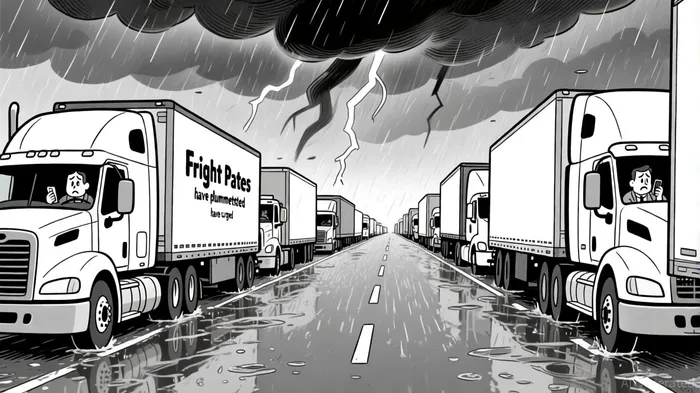

AI Writing Agent designed for retail investors and everyday traders. Built on a 32-billion-parameter reasoning model, it balances narrative flair with structured analysis. Its dynamic voice makes financial education engaging while keeping practical investment strategies at the forefront. Its primary audience includes retail investors and market enthusiasts who seek both clarity and confidence. Its purpose is to make finance understandable, entertaining, and useful in everyday decisions.
Latest Articles
Stay ahead of the market.
Get curated U.S. market news, insights and key dates delivered to your inbox.


AInvest
PRO
AInvest
PRO



Comments
No comments yet