
Truck Sales Thrive Amid Tariffs, But Storm Clouds Loom – Navigating the Auto Sector in 2025
The U.S. light-truck market has long been the backbone of the automotive industry, and June 2025's sales data reinforces its resilience—despite looming headwinds. Light-trucks now command 82% of total vehicle sales, a record share, as consumers prioritize SUVs and pickups over shrinking passenger-car demand. Yet beneath the surface, the sector faces a perfect storm of trade tensions, inventory shortages, and rising costs. For investors, this is a tale of near-term caution and long-term opportunity.
The Truck Dominance Continues – For Now
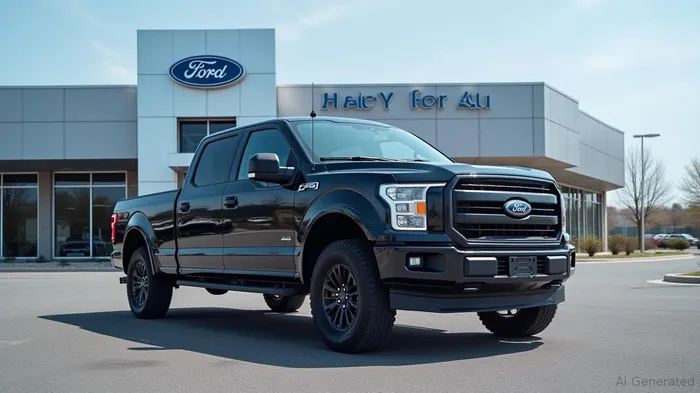
The June data underscores trucks' unshakable grip on the U.S. market. Light-truck sales rose 0.1% year-over-year, even as total vehicle sales dipped 0.7% due to weaker passenger-car demand. This divergence reflects a structural shift: buyers prioritize space, utility, and towing capacity over fuel efficiency or style. Automakers like Ford and GMGM--, which dominate the pickup and SUV segments, have capitalized on this trend.
However, the recent sales figures are not all rosy. The SAAR of 15.3 million units is artificially inflated by a “pull-ahead” effect: buyers rushed to purchase vehicles before new tariffs on Canadian and Mexican imports took hold. J.D. Power estimates 173,000 sales were shifted into early 2025, distorting comparisons to 2024. Without this distortion, the SAAR would likely have been closer to 16.0 million, suggesting underlying weakness.
Three Key Risks to the Truck Market
- Trade Tariffs and Supply Chain Strains
The tariffs on Canadian and Mexican vehicles—key sources of 80% of U.S. auto production—threaten to disrupt supply chains. Automakers like ToyotaTM-- and HondaHMC--, which rely heavily on North American manufacturing, face rising production costs. A prolonged tariff dispute could force price hikes that deter buyers, particularly in an era of record-high average monthly payments ($747 in June 2025).
Inventory Shortages
New-vehicle inventory has plummeted to 2.57 million units, with further declines expected. Low inventory typically boosts prices and automaker margins, but it also limits sales growth. Buyers may delay purchases if they can't secure their preferred model, exacerbating the second-half slowdown analysts predict.Affordability Crisis
The average incentive per vehicle fell to $2,727, down from earlier highs, as automakers prioritize profit over volume. Meanwhile, rising interest rates have pushed monthly payments to record levels. For consumers, trucks are becoming a luxury many can't afford.
The Outlook: A Rocky Second Half
Analysts project a sales slowdown in H2 2025, with the annual forecast holding steady at 15.3 million units—but this is optimistic. If tariffs remain unresolved, inventory tightens further, or interest rates climb, the market could underperform. The U.S.-Mexico-Canada Agreement (USMCA) is also a wildcard: renegotiations or bottlenecks could disrupt production timelines.
Investment Implications
- Short-Term Caution: Avoid aggressive bets on automakers until tariff uncertainty resolves.
- Long-Term Plays: Truck manufacturers like Ford and GM remain structural winners, but investors should wait for dips.
- Consider Tariff Hedging: Companies with diversified supply chains (e.g., TeslaTSLA--, which sources globally) or those insulated from U.S.-Mexico trade (e.g., RivianRIVN--, focused on domestic production) may outperform.
Conclusion
The light-truck market's dominance is undeniable, but its future hinges on resolving trade disputes and managing affordability. For now, investors should tread carefully in the near term but remain bullish on trucks' long-term appeal. Monitor inventory levels and tariff developments closely—both could redefine the sector by year-end.
In this volatile environment, the mantra for investors is clear: Buy the dip, but avoid the hype.
Data as of June 2025. Past performance is not indicative of future results. Consult a financial advisor before making investment decisions.

Stay ahead of the market.
Get curated U.S. market news, insights and key dates delivered to your inbox.




Comments
No comments yet