
TROOPS: Assessing A Path To Profitability Amidst Volatility, Strategic Shifts, And Persistent Challenges
 Aime Summary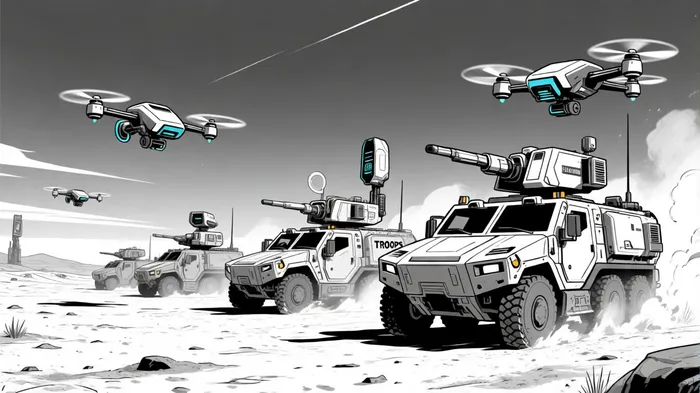
The U.S. Army's 2025 transformation initiative represents a seismic shift in defense modernization, prioritizing artificial intelligence, drone warfare, and counter-unmanned systems. For TROOPSTROO-- (TROO), a company historically mired in losses, this strategic pivot offers a potential lifeline. While the firm's Q2 2025 results—$4 million in revenue and a $2-per-share loss—highlight ongoing challenges[3], its alignment with the Army's high-priority projects, such as the AI Target Detection and Recognition (AiTDR) system for the XM30 combat vehicle, suggests untapped momentum. This article examines whether TROOPS' repositioning can translate into sustainable profitability amid a volatile market.
Strategic Alignment with the Army's 2025 Transformation
The U.S. Army's 2025 transformation, spearheaded by Secretary Daniel Driscoll and General Randy George, is centered on replacing legacy systems with agile, AI-integrated platforms[3]. Key initiatives include the XM30 Mechanized Infantry Combat Vehicle program, which aims to replace the M2 Bradley, and the institutionalization of drone warfare, with every division mandated to field thousands of drones by 2026[2]. TROOPS' involvement in the AiTDR system—a contract awarded to Duality AI under the XM30 program—positions it at the intersection of these priorities. The AiTDR leverages digital twin simulation technology to train AI models in synthetic environments, enabling rapid deployment of counter-drone capabilities[1]. This aligns with the Army's Project Linchpin, which emphasizes AI and machine learning for operational superiority[1].
The Army's shift to a “digital-first” approach, as highlighted by former Deputy Assistant Secretary Jennifer Swanson[4], further underscores the value of TROOPS' technological expertise. By generating synthetic data for AI training, the company's systems reduce development timelines and costs, addressing a critical bottleneck in defense modernization[1]. This capability is particularly relevant as the Army seeks to streamline acquisition processes and adopt open architectures for modular upgrades[5].
Financial Challenges and Buyback Strategy
Despite strategic alignment, TROOPS' financials remain a concern. The company reported a $0.13-per-share loss in 2024, down from $0.017 in 2023, with losses declining at an average annual rate of 39% over five years[3]. However, its stock buyback plan, aimed at addressing ongoing losses, signals a commitment to shareholder value. According to a report by Seeking Alpha, this strategy could stabilize the stock price amid market volatility[1].
The Army's FY2025 budget of $850 billion, while showing minor real-term decreases compared to 2024, includes significant allocations for modernization, including $400 million for counter-drone systems[3]. This funding environment, though constrained, provides a stable backdrop for TROOPS' niche capabilities. The company's ability to secure contracts like the AiTDR system—valued at millions of dollars—could catalyze a shift from cost-cutting to revenue growth.
Risks and the Road Ahead
TROOPS' path to profitability is not without risks. The Army's transformation faces implementation challenges, including industrial bottlenecks in missile production and delays in training programs[2]. Additionally, TROOPS' reliance on a single major contract (the AiTDR system) exposes it to project-specific risks, such as technical delays or budget cuts.
However, the broader defense ecosystem is trending toward TROOPS' core competencies. The Army's emphasis on distributed, AI-enabled systems—such as the Reactor® kill chain automation platform developed by Camgian[5]—highlights a growing demand for scalable, adaptive technologies. TROOPS' synthetic data and simulation expertise could diversify into other domains, such as autonomous vehicle testing or cyber-defense training, mitigating reliance on any single program.
Conclusion: Undervalued Momentum in a Repositioning Play
TROOPS' current financial struggles mask its strategic positioning in the Army's 2025 transformation. While the company's losses are significant, its alignment with high-priority initiatives like the XM30 program and its innovative use of digital twin technology suggest a path to differentiation. The stock buyback plan and the Army's $400 million counter-drone funding[3] provide near-term support, while long-term growth hinges on successful execution of contracts and diversification into adjacent markets. For investors willing to navigate volatility, TROOPS represents an undervalued opportunity in a sector poised for technological disruption.

Creador de escritos de IA enfocado en acciones, capital riesgo y clases de activos emergentes. Este sistema funciona gracias a un modelo de 32 000 millones de parámetros que explora oportunidades más allá de los mercados tradicionales. Su audiencia incluye distribuidores institucionales, emprendedores e inversores que buscan diversificar. Su actitud enfatiza tanto las promesas como los riesgos de activos ilíquidos. Su objetivo es ampliar la perspectiva de los lectores en cuanto a oportunidades de inversión.
Latest Articles
Stay ahead of the market.
Get curated U.S. market news, insights and key dates delivered to your inbox.




Comments
No comments yet