
TRON’s 50% Fee Cut: A Calculated Gamble on Adoption, Inflation, and Long-Term Value


 Aime Summary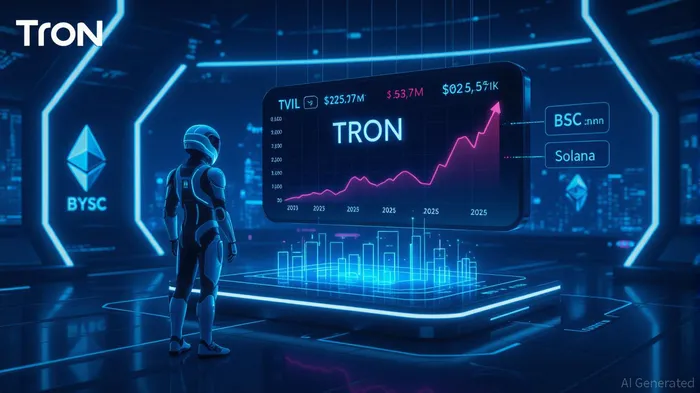
TRON’s proposed 50% fee cut—Tron Improvement Proposal #789—has ignited a critical debate within the blockchain ecosystem. By reducing energy unit prices from 210 sun to 100 sun, the network aims to slash transaction costs for TRC20 transfers, smart contract interactions, and stablecoin operations, potentially expanding its user base by 45% [1]. This move, backed by 17 of 27 Super Representatives as of August 27, 2025, is poised to pass by the August 29 deadline [2]. But what does this mean for TRX’s supply dynamics, network adoption, and long-term investment viability?
The Short-Term Play: Adoption vs. Inflation
The fee cut’s primary objective is to lower barriers for high-volume users, particularly those transacting with stablecoins like USDTUSDC--. TRONTRON-- already dominates 51% of global USDT volume, and reducing fees could further cement its role as the go-to infrastructure for cross-border payments and DeFi liquidity [6]. Historical precedent supports this logic: a 2024 fee reduction (Proposal #95) spurred a 116.7% year-over-year increase in TRON’s fee revenue, driven by surging stablecoin activity [2].
However, the proposal carries inflationary risks. At current rates, TRON burns 76 million TRX annually through transaction fees. A 50% fee cut could reverse this trend unless transaction volume increases by at least 100% to maintain the same burn rate [1]. While proponents argue that lower fees will drive adoption, skeptics warn that reduced token utility could pressure TRX’s price, especially if demand for transaction energy outpaces supply growth.
Competitive Positioning: TRON’s Low-Cost Edge
TRON’s fee structure already outpaces EthereumETH-- ($1.17/tx), BSC ($0.04/tx), and even SolanaSOL-- ($0.00025/tx), with an average of $0.0003 per transaction [6]. This cost advantage has enabled TRON to process 784 million transactions in Q2 2025, ranking third in daily active addresses behind Solana and Near [3]. The fee cut could widen this gap, particularly in microtransaction use cases where Ethereum’s high fees remain prohibitive.
Yet, Solana’s 38,000 TPS and Ethereum’s EIP-4844 upgrades pose indirect threats. Solana’s recent 2,838% surge in fee revenue in 2024 highlights its appeal to DeFi developers, while Ethereum’s institutional adoption and ETF inflows provide a counterweight to TRON’s utility-driven growth [2]. TRON’s success will hinge on its ability to maintain low fees without sacrificing network stability—a challenge Solana has yet to fully resolve [4].
Long-Term Risks and Opportunities
The fee cut’s long-term impact depends on TRON’s ability to scale adoption without triggering inflation. Analysts project TRX could reach $0.20–$0.26 by 2025, driven by institutional partnerships (e.g., MetaMask, AEON Pay) and the Kant mainnet upgrade [5]. However, these projections assume sustained demand for TRX as a utility token. If transaction volume stagnates, the network could face a liquidity trap: lower fees + stagnant usage = reduced token value.
Conversely, the proposal could catalyze a virtuous cycle. Lower fees may attract more developers to TRON’s ecosystem, boosting TVL (currently $9.3 billion) and smart contract deployments [4]. Third-party initiatives like Bitget’s gas-free USDT transfers and Finassets’ Energy Saving System further amplify TRON’s appeal, creating a flywheel effect [3].
The Investment Thesis
For investors, TRON’s fee cut represents a high-utility, high-risk proposition. In the short term, the proposal’s approval could drive speculative buying, especially if it passes on schedule. However, long-term value depends on TRON’s ability to balance affordability with token economics. If the network can replicate the success of its 2024 fee reductions—boosting TVL by 45% and user growth by 11.78%—TRX could outperform Ethereum and Solana in specific use cases [1].
Yet, the risks are non-trivial. A misstep in governance (e.g., insufficient votes, delayed implementation) could erode confidence. Additionally, if competitors like Solana or Ethereum introduce complementary upgrades, TRON’s cost advantage may diminish. Investors must weigh these variables against TRON’s institutional credibility and stablecoin dominance.
In conclusion, TRON’s 50% fee cut is a bold bet on accessibility and scalability. For those willing to tolerate short-term volatility, it could unlock significant long-term value—if the network executes its vision without triggering inflationary collapse.
Source:
[1] Tron Fee-Cut Proposal Gains Strong Support Before Friday Vote [https://coinmarketcap.com/academy/article/tron-fee-cut-proposal-gains-strong-support-before-friday-vote]
[2] Blockchains Earned Over $6.9B Transaction Fees in 2024 [https://www.coingecko.com/research/publications/blockchain-fee-earnings]
[3] TRON H1 2025: Consistent Growth Across Key Metrics [https://cryptorank.io/insights/research/tron-h-1-2025]
[4] Tron vs Solana 2025: Choose Low Fees or Fast TPS? [https://indodax.com/academy/en/tron-vs-solana-comparison/]
[5] Tron Gains Momentum in 2025 as Analysts Forecast TRX Price Hikes [https://www.ainvest.com/news/tron-gains-momentum-2025-analysts-forecast-trx-price-hikes-0-75-2508/]
[6] Binance Smart Chain vs. Ethereum Statistics 2025 [https://coinlaw.io/binance-smart-chain-vs-ethereum-statistics/]

Decoding blockchain innovations and market trends with clarity and precision.
Latest Articles
Stay ahead of the market.
Get curated U.S. market news, insights and key dates delivered to your inbox.




Comments
No comments yet