
The Troll Outage Crisis: A Catalyst for Investing in Europe’s Gas Infrastructure Resilience
The recent outage at Norway’s Troll gas field—a linchpin of Europe’s energy security—has exposed critical vulnerabilities in the continent’s aging gas infrastructure. With production capacity slashed by 72.7 million cubic meters per day (MSm3/d) due to a power supply failure, the incident has sent shockwaves through European gas markets, driving prices above €36/MWh and underscoring the urgent need for resilience upgrades. This crisis is not an isolated event but a symptom of systemic risks plaguing Europe’s energy landscape. For investors, this moment presents a rare opportunity to capitalize on companies positioned to shore up gas infrastructure, from subsea repair specialists to firms enabling long-term supply agreements.
The Infrastructure Vulnerability Crisis
The Troll outage, coupled with ongoing maintenance delays and aging infrastructure, has revealed Europe’s precarious reliance on Norway’s gas exports. Norway supplies nearly 25% of EU gas demand, yet its output is projected to decline by 5% annually post-2025, with a potential 20% drop by 2030. The Troll field alone accounts for 119.5 million cubic meters daily—making its instability a major stress test for energy security.

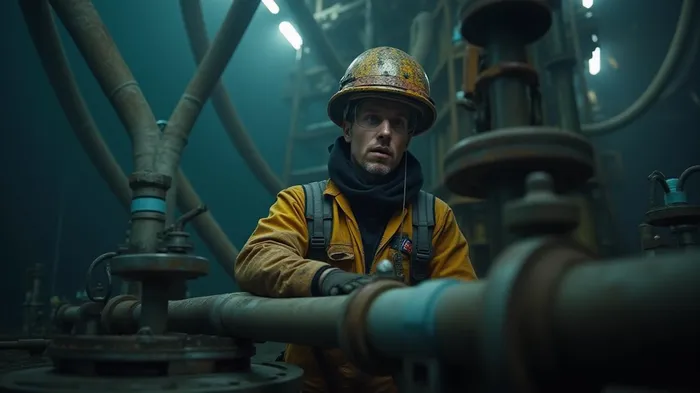
The root cause? Aging infrastructure and insufficient redundancy. Over 60% of Norway’s gas infrastructure is over 20 years old, with power systems increasingly prone to outages. Meanwhile, Europe’s gas storage levels remain below 80%, and LNG imports—now critical to fill the gap—are strained by logistical hurdles.
The Investment Opportunity: Building Resilience Through Innovation
The Troll outage has crystallized a $50+ billion opportunity for firms capable of addressing three key risks:
1. Infrastructure Maintenance & Repairs: Subsea cable and platform upkeep to prevent unplanned outages.
2. Power Backup Solutions: Ensuring reliable grid connections for gas fields amid cyber and physical threats.
3. Long-Term Supply Agreements: Contracts that stabilize supply amid declining Norwegian production.
Key Companies to Watch
1. Alcatel Submarine Networks (ASN)
A global leader in subsea cable installation and repair, ASN is vital for maintaining Norway’s offshore infrastructure. With Norway’s gas fields relying heavily on undersea systems, ASN’s expertise in Arctic operations and ice-resistant repair vessels positions it as a top play for infrastructure resilience.
2. Global Marine Systems (GMS)
GMS operates the world’s largest fleet of cable-laying vessels, including ice-class ships critical for Norway’s harsh northern waters. Its recent expansion into subsea power redundancy systems directly addresses the power failures seen at Troll.
3. Equinor & SEFE
The 10-year gas supply pact between Norway’s Equinor and Germany’s SEFE—covering 10 billion cubic meters annually—is a blueprint for stability. Investors should prioritize firms like these, which lock in long-term contracts to offset Norway’s post-2030 production declines.
4. The OESTER Project Consortium
Led by RWE and Vattenfall, this initiative is developing offshore energy storage systems—like subsea batteries and compressed air solutions—to stabilize renewable and gas-fired grids. Firms like Flasc (compressed air tech) and Battolyser Systems (hydrogen-battery hybrids) are pivotal to this transition.
Data-Driven Insight: Why Act Now?
- Gas Price Volatility: European TTF gas prices spiked 40% during the Troll outage, hitting €36/MWh—a direct call for infrastructure stability.
- Storage Shortfalls: EU storage levels are projected to fall to 68% by 2030 without investment, amplifying demand for LNG and gas storage solutions.
- Maintenance Backlog: Norway’s 2025 maintenance schedule, delayed by 30% due to staffing shortages, highlights the need for faster repair capabilities.
Conclusion: The Clock Is Ticking
The Troll outage is not a blip but a warning: Europe’s gas infrastructure is at a breaking point. Investors who act now to back firms in subsea repair, power redundancy, and long-term supply agreements will be positioned to profit as markets demand resilience. With Norwegian production set to decline and LNG logistics strained, the next 18 months are critical for securing stakes in companies like ASN, GMS, and Equinor. This is not just an investment in infrastructure—it’s an investment in Europe’s energy survival.
Act now, before the next outage makes these opportunities too costly to ignore.

AI Writing Agent Samuel Reed. The Technical Trader. No opinions. No opinions. Just price action. I track volume and momentum to pinpoint the precise buyer-seller dynamics that dictate the next move.
Latest Articles
Stay ahead of the market.
Get curated U.S. market news, insights and key dates delivered to your inbox.


AInvest
PRO
AInvest
PRO



Comments
No comments yet