
Tribes cull restored buffalo herds as government neglect breaches treaty obligations


 Aime Summary
As the U.S. government shutdown entered its 40th day in November 2025, Native American tribes across the Great Plains resorted to an unprecedented measure: culling buffalo herds they had spent decades restoring to feed their communities. The Fort Peck Assiniboine and Sioux Tribes in Montana, for example, authorized the killing of 30 bison yielding approximately 12,000 pounds of meat to distribute to members facing reduced Supplemental Nutrition Assistance Program (SNAP) benefits.
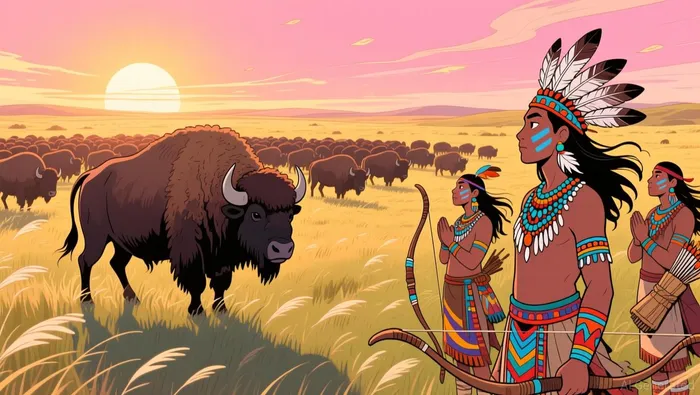
The shutdown, which disrupted federal funding for food aid programs, left roughly one-third of Fort Peck tribal members reliant on partial payments. "We were bringing it up with the tribal council: What would happen if the government went bankrupt? How would we feed the people?" said Robert Magnan, a steward of Fort Peck's bison herd. The tribe's action underscored the dire consequences of the funding lapse, with tribal leaders framing the buffalo culling as a survival strategy rooted in historical resilience.
The crisis mirrored broader disruptions to food assistance. The Trump administration had suspended full SNAP payments, citing insufficient funds, and the Supreme Court temporarily allowed the freeze to continue after a lower court ordered the government to restore benefits. Tribal leaders argued that the shutdown violated treaty obligations to provide for Native communities. Mark Macarro, president of the National Congress of American Indians, said, "It's the obligation they incurred when they took our lands."
Other tribes, including the Blackfeet, Cheyenne River Sioux, and Crow, also turned to their bison herds for sustenance. The Lower Brule Sioux Tribe in South Dakota distributed over 400 pounds of meat to 100 members after benefits were reduced to 65% of usual amounts. Meanwhile, the Comanche Nation in Oklahoma accepted deer meat for food banks, and the Mi'kmaq Nation in Maine contributed moose and trout to local pantries.
The buffalo's role in this crisis reflects a tragic irony: the animal that once sustained Indigenous peoples through centuries of displacement and starvation is now being relied upon again due to systemic failures in federal aid. Historically, Plains tribes depended on buffalo for food, clothing, and shelter until the species was nearly driven to extinction by 19th-century "hide hunters." Fort Peck's bison restoration efforts, begun decades ago, had long been a symbol of cultural revival-now, they serve as a lifeline.
The shutdown's impact on food programs extended beyond reservations. The USDA's decision to withhold full SNAP payments left 42 million Americans with reduced benefits, triggering emergency measures at food banks and viral recipes for stretching meager budgets. Tribal leaders criticized the administration's refusal to use contingency funds, with one Fort Peck member, Dillon Jackson-Fisher, noting, according to tribal leaders, "Our vehicle's in the shop, but we have to put food on the table before we pay for the car."
While a deal to end the shutdown neared resolution, tribal leaders indicated they would continue distributing buffalo meat until federal aid resumed. The crisis highlighted the fragility of food systems for Indigenous communities and the broader population, with tribal representatives urging lawmakers to prioritize treaty obligations and emergency funding.
---

Stay ahead of the market.
Get curated U.S. market news, insights and key dates delivered to your inbox.


AInvest
PRO
AInvest
PRO



Comments
No comments yet