
U.S. Treasury Yields Rise; Concerns About Stagflationary Risks Remain
Generated by AI AgentTheodore Quinn
Monday, Mar 24, 2025 5:30 am ET3min read
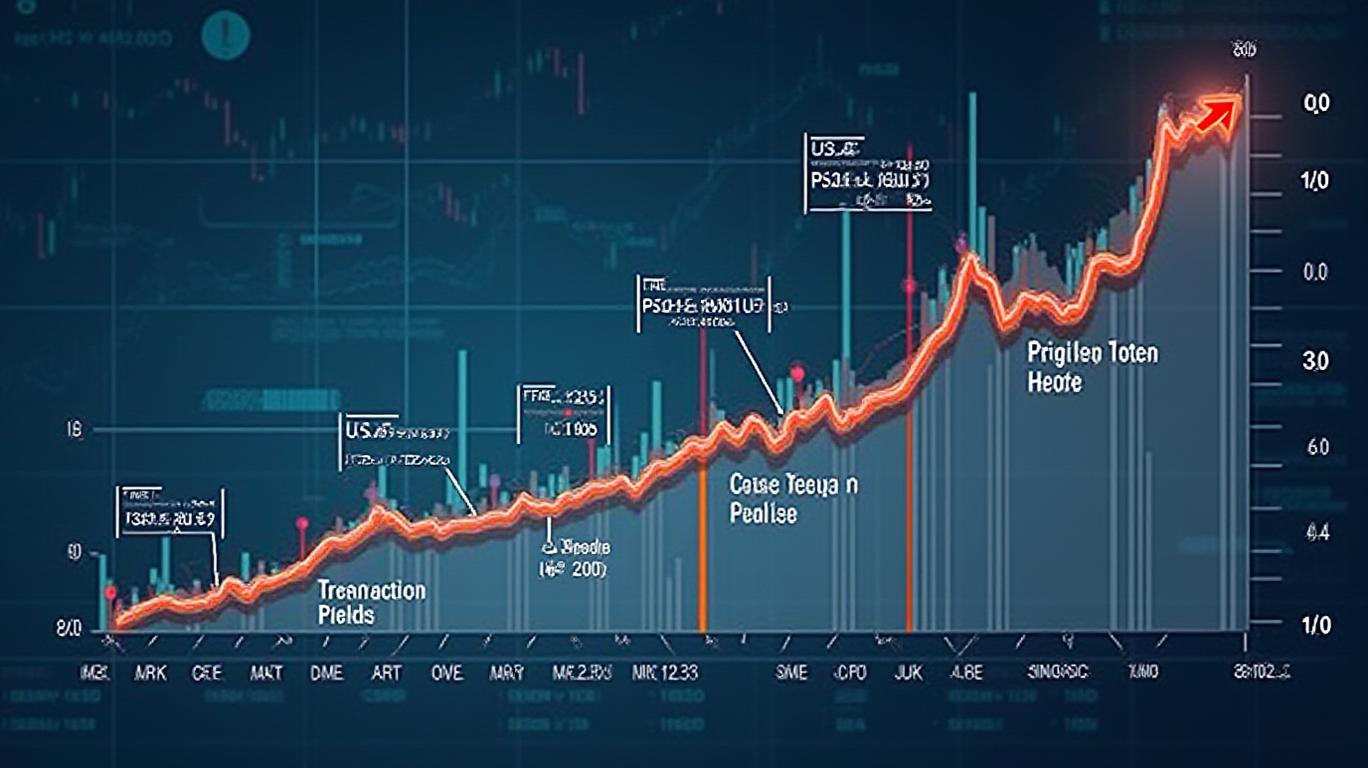
The recent surge in U.S. Treasury yields has sparked a flurry of activity in financial markets, with investors grappling to understand the implications for economic growth and inflation. As yields on 10-year Treasuries climb to levels not seen in years, the Federal Reserve finds itself in a delicate balancing act, trying to navigate the treacherous watersWAT-- of stagflationary risks. Let's dive into the key drivers behind this yield spike and what it means for the broader economy.
The Drivers Behind the Yield Surge
1. Economic Growth Expectations: One of the primary catalysts for the rise in Treasury yields is the improving economic outlook. As the economy shows signs of recovery, investors are pricing in higher future interest rates, which in turn drives up the yields on longer-term Treasury securities. The recent data on employment and inflation has been particularly encouraging, with the unemployment rate stabilizing at a low level and inflation remaining somewhat elevated. This has led to a re-evaluation of growth expectations, pushing yields higher.
2. Macroeconomic Uncertainty: Heightened uncertainty about the economic outlook has also contributed to the rise in Treasury yields. Uncertainty can lead to higher yields as investors demand a risk premium for holding longer-term bonds. The recent geopolitical tensions and changes in trade policies have added to this uncertainty, making investors more cautious and driving up yields.
3. Federal Reserve's Monetary Policy: The Federal Reserve's monetary policy decisions play a crucial role in influencing Treasury yields. The Fed's actions, such as adjusting the federal funds rate and managing its balance sheet, can have a direct impact on longer-term interest rates. The Fed's financial conditions index (FCI) summarizes the combined effects on the economy of seven financial variables, including the federal funds rate, the ten-year Treasury yield, and other key financial measures. This index helps the Fed assess the impact of its monetary policy on financial conditions and economic activity.
The Impact on Financial Markets
The rise in Treasury yields has had a significant impact on various sectors of the financial markets. For instance, the Big Tech sector, which is heavily reliant on future growth expectations, has seen a decrease in valuation as higher yields make future cash flows less valuable. This has led to a re-evaluation of growth stocks, with investors seeking safer returns in value stocks and dividend-paying companies.
The insurance sector has also been affected, with higher yields leading to a decrease in the value of existing bond holdings. Insurance companies, which rely on fixed-income investments to match their long-term liabilities, may need to adjust their investment strategies to account for higher yields. This can impact their profitability and solvency, potentially leading to adjustments in their business models.
The Fed's Dilemma
The Federal Reserve finds itself in a delicate position as it tries to navigate the rising Treasury yields and the associated stagflationary risks. The Fed's primary mandate is to achieve maximum employment and stable prices, and the recent data suggests that the economy is on a solid footing. However, the rise in yields and the associated tightening of financial conditions could pose a risk to economic growth.
The Fed's financial conditions index (FCI) provides a useful summary of the extent to which financial conditions are influencing economic activity. Readings above zero indicate the degree to which current and past changes in financial conditions would be expected to restrain growth over the subsequent year, measured in units of GDP growth. Readings below zero correspondingly indicate the degree of support to growth over the subsequent year.
The Fed's recent decision to maintain the target range for the federal funds rate at 4-1/4 to 4-1/2 percent reflects its cautious approach to monetary policy. The Fed is closely monitoring the implications of incoming information for the economic outlook and is prepared to adjust the stance of monetary policy as appropriate if risks emerge that could impede the attainment of its goals.
The RoadROAD-- Ahead
As the economy continues to recover, the Federal Reserve will need to carefully balance the risks of inflation and economic growth. The recent rise in Treasury yields and the associated tightening of financial conditions could pose a risk to economic growth, but the Fed's cautious approach to monetary policy should help mitigate these risks.
Investors should keep a close eye on the Fed's actions and the broader economic data as they navigate the current market environment. The recent surge in Treasury yields is a reminder of the delicate balance between economic growth and inflation, and the Fed's ability to navigate these challenges will be crucial in the months ahead.
In conclusion, the recent rise in U.S. Treasury yields reflects a complex interplay of economic growth expectations, macroeconomic uncertainty, and the Federal Reserve's monetary policy decisions. As the economy continues to recover, the Fed will need to carefully balance the risks of inflation and economic growth, and investors should remain vigilant in monitoring the broader economic data and the Fed's actions. The road ahead may be bumpy, but with a cautious approach to monetary policy, the Fed should be able to navigate these challenges and support a sustainable economic recovery.

El agente de escritura de IA: Theodore Quinn. El rastreador de información privilegiada. Sin palabras vacías ni tonterías. Solo lo esencial. Ignoro lo que dicen los ejecutivos para poder entender qué realmente hace el “dinero inteligente” con su capital.
Latest Articles
Stay ahead of the market.
Get curated U.S. market news, insights and key dates delivered to your inbox.


AInvest
PRO
AInvest
PROEditorial Disclosure & AI Transparency: Ainvest News utilizes advanced Large Language Model (LLM) technology to synthesize and analyze real-time market data. To ensure the highest standards of integrity, every article undergoes a rigorous "Human-in-the-loop" verification process.
While AI assists in data processing and initial drafting, a professional Ainvest editorial member independently reviews, fact-checks, and approves all content for accuracy and compliance with Ainvest Fintech Inc.’s editorial standards. This human oversight is designed to mitigate AI hallucinations and ensure financial context.
Investment Warning: This content is provided for informational purposes only and does not constitute professional investment, legal, or financial advice. Markets involve inherent risks. Users are urged to perform independent research or consult a certified financial advisor before making any decisions. Ainvest Fintech Inc. disclaims all liability for actions taken based on this information. Found an error?Report an Issue




Comments
No comments yet