
U.S. Treasury Yield Volatility in a Stagnant Rate Environment
 Aime Summary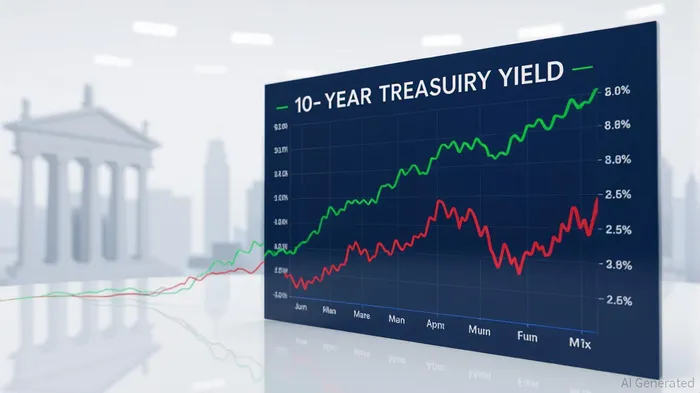
The U.S. Treasury market in 2025 has become a battleground for macroeconomic forces, where policy uncertainty, fiscal expansion, and shifting inflation expectations collide to create unprecedented volatility. As investors grapple with a stagnant rate environment—where central banks remain constrained by inflationary headwinds—the bond market has emerged as a barometer of risk and reward. The recent surge in Treasury yield volatility, driven by political and economic crosscurrents, demands a nuanced understanding of how bond signals can inform portfolio strategy in a world of mixed data and divergent outcomes.
The Drivers of Volatility: Policy Uncertainty and Fiscal Leverage
The first half of 2025 witnessed a perfect storm of policy-driven turbulence. The announcement of broad tariffs by President Donald Trump on April 2 sent shockwaves through global markets, triggering a 47-basis-point jump in the 10-year Treasury yield within a week. This spike was not merely a reaction to trade policy but a reflection of the term premium—a measure of risk compensation demanded by investors for holding long-term bonds—reaching its highest level in over a decade.
The term premium's ascent underscores a critical shift: investors are pricing in prolonged uncertainty about inflation, fiscal sustainability, and global supply chains. A proposed $3–4 trillion tax-and-spending bill, aimed at stimulating growth through deregulation and tax cuts, has further exacerbated concerns about the debt-to-GDP trajectory. While historical correlations between deficits and yields are weak, the sheer scale of Treasury issuance required to fund these policies has created a self-fulfilling dynamic. As demand for safe-haven assets wanes amid trade war fears, yields rise, amplifying the cost of borrowing and deepening fiscal vulnerabilities.
Mixed Inflation Signals and the Resilience of the Real Economy
Amid this volatility, inflation data has painted a mixed picture. The headline CPI stabilized at 2.4% in Q2 2025, down from 2.6% in Q1, with core services and housing inflation normalizing to pre-pandemic levels. However, energy prices have introduced a wildcard element, surging 0.2% monthly in Q2 after a Q1 decline. This volatility highlights the fragility of inflation expectations, which remain stubbornly anchored near 2.5–3.0%, well above the Federal Reserve's 2% target.
The real economy, meanwhile, has shown surprising resilience. GDP rebounded to 2.3% growth in Q2 after a 0.5% contraction in Q1, driven by capital expenditures and the One Big Beautiful Act's retroactive provisions. Labor markets remain robust, with 150,000 monthly job gains and a 4.2% unemployment rate. Yet this strength is juxtaposed with caution in consumer and business spending. Real consumer spending slowed in Q1, and business investment in structures is projected to decline in 2026, signaling a potential drag on long-term growth.
Navigating the Paradox: A Steepening Curve in a Stagnant Rate Environment
The steepening yield curve—a rare phenomenon in a low-growth environment—has become a focal point for investors. Typically, a steep curve signals optimism about economic recovery, but in 2025, it reflects a more complex interplay:
1. Term Premium Dynamics: Long-term yields have risen not just due to inflation expectations but also as investors demand higher compensation for policy and geopolitical risks.
2. Fiscal Pressure: The anticipated $3–4 trillion deficit expansion has increased the supply of Treasuries, pushing yields higher even as short-term rates remain anchored by central bank policy.
3. Global Capital Flows: A 7% decline in the U.S. dollar during the trade war has diverted capital toward non-dollar assets, reducing demand for Treasuries and further pressuring yields.
This dynamic creates a paradox: while the Fed may eventually cut rates in 2026, long-term yields remain elevated due to fiscal and policy headwinds. The result is a yield curve that steepens not from growth optimism but from risk aversion—a signal that traditional duration strategies may need to be recalibrated.
Investment Implications: Balancing Risk and Reward
For investors, the current environment demands a dual approach:
1. Duration Flexibility: Given the elevated term premium, holding long-duration bonds carries outsized risk. However, tactical tilts toward intermediate-term Treasuries or inflation-linked TIPS could hedge against both inflation and yield volatility.
2. Diversification Across Asset Classes: The U.S. Treasury market's traditional role as a diversifier has been temporarily disrupted, but its long-term value remains intact. Pairing Treasuries with non-correlated assets like gold or international bonds could enhance risk-adjusted returns.
3. Monitoring Policy Catalysts: The trajectory of trade negotiations (e.g., USMCA progress with Canada/Mexico) and fiscal bill implementation will be critical. A resolution in trade tensions could ease yields, while a hardening of tariffs could reignite inflation and push yields higher.
Conclusion: A New Normal for Treasury Volatility
The U.S. Treasury market in 2025 is no longer a passive indicator of economic health but an active participant in shaping investor sentiment. The interplay of policy-driven volatility, mixed inflation data, and a resilient yet cautious real economy has created a landscape where traditional signals are less reliable. For investors, the key lies in embracing flexibility—leveraging the steepening yield curve's upside while hedging against its risks through strategic diversification.
As the second half of 2025 unfolds, the bond market will remain a critical lens through which to view the broader economy. The path forward is uncertain, but one thing is clear: in a stagnant rate environment, the most successful investors will be those who adapt to volatility, not fear it.

Delivering real-time insights and analysis on emerging financial trends and market movements.
Latest Articles
Stay ahead of the market.
Get curated U.S. market news, insights and key dates delivered to your inbox.






Comments
No comments yet