
Treasury Yield Volatility and Its Implications for Fixed-Income Strategies in a Politicized Fed Environment
The Federal Reserve's independence has long been a pillar of global financial stability, but President Donald Trump's relentless public criticism of Chair Jerome Powell has introduced unprecedented uncertainty into the bond market. From threats to fire Powell to demands for immediate rate cuts, Trump's actions have fueled volatility in Treasury yields—creating both risks and opportunities for fixed-income investors. This article explores how politicization of the Fed is reshaping Treasury markets and outlines strategies to navigate the turbulence.
The Fed Under Siege: How Trump's Tactics Are Disrupting Yields
Trump's attacks on the Fed have sent shockwaves through markets. In April 2025, his threats to replace Powell before his term ended sparked a 20-basis-point drop in the 10-year Treasury yield—a sharp swing reflecting investor anxiety over fiscal dominance and central bank credibility.
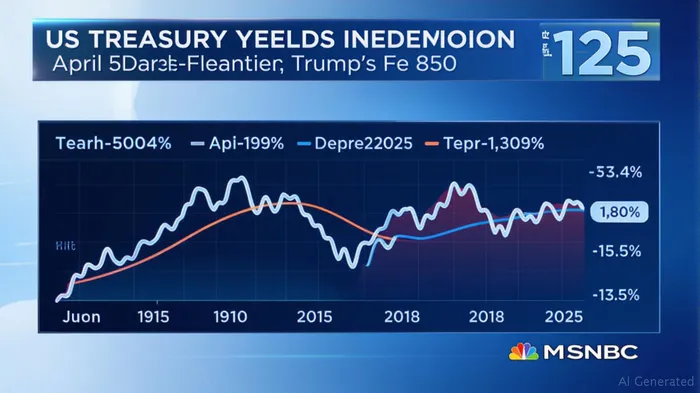
The Fed's independence is under legal and structural guard: the Supreme Court has affirmed its constitutional protection from presidential dismissal, and its 12-member Federal Open Market Committee (FOMC) requires consensus for policy shifts. Yet markets are pricing in the risk of erosion—exemplified by the dollar's 10% decline in early 2025 and intermittent spikes in the VIX volatility index.
Quantifying the Impact on Bond Portfolios
Fixed-income investors face dual challenges: abrupt yield swings and the specter of inflation resurging if the Fed caves to political pressure.
Consider a bond portfolio with a duration of 7 years: a sudden 20-basis-point drop in yields (as seen in April 2025) would boost its value by roughly 1.4% (7 × 0.02). However, the reverse is equally perilous: if yields rise 20 basis points due to inflation fears or a hawkish Fed pivot, the portfolio would lose 1.4%.
The Fed's delayed response to Trump's tariff-driven inflation risks has further complicated matters. Goldman SachsGS-- estimates that every 1% rise in the 10-year yield reduces the value of a 10-year Treasury by ~9%—highlighting the need for dynamic hedging.
Strategies to Capitalize on Policy Uncertainty
Investors must balance the allure of rising Treasury prices during yield drops with the risk of inflation-driven sell-offs. Here are actionable steps:
Shorten Duration, but Keep Flexibility
Reduce portfolio duration to 5 years or less to limit volatility exposure. Pair this with a tactical allocation to short-duration Treasuries (e.g., iShares 1-5 Year Treasury Bond ETF, SHY) to capture stability while retaining liquidity.Hedge with Treasury Futures
Use Treasury futures contracts (e.g., the 10-year T-note futures) to lock in yields. A short position can hedge against rising rates, while a long position protects against falling yields. For example, a 1,000-contract position controls $100,000 of notional value per tick—allowing precise risk management.Consider Inverse Rate-Sensitive ETFs
Leverage inverse rate-sensitive ETFs like the ProShares UltraShort 20+ Year Treasury ETF (TBT) to profit from yield spikes. Pair this with short positions in rate-sensitive sectors (e.g., utilities via XLU) to amplify gains during Fed hawkishness.Diversify into Safe Havens
Gold (via GLD) and the Swiss Franc (FXF) offer diversification if the dollar's reserve status weakens further. These assets have historically gained ~3-5% during periods of Fed credibility concerns.
The Bottom Line: Stay Nimble, Stay Hedged
The Fed's independence is a battle worth watching—not just for its policy implications but for its direct impact on Treasury yields and bond portfolios. With Trump's threats and the Fed's structural safeguards creating a tug-of-war, fixed-income investors must prioritize:
- Duration discipline to mitigate volatility.
- Dynamic hedging using futures and inverse ETFs.
- Diversification into non-dollar safe havens.
In this politicized environment, the safest plays are those that hedge against both Fed capitulation and inflation surprises. Stay alert to FOMC minutes and political rhetoric—markets are pricing in every tweet.
Invest wisely—volatility is here to stay.

Stay ahead of the market.
Get curated U.S. market news, insights and key dates delivered to your inbox.






Comments
No comments yet