
U.S. Treasury Yield Declines Amid Accelerating Inflation: Contrarian Signals and Fed Policy Crossroads
The U.S. Treasury market has sent a stark message in July 2025: yields are declining despite rising inflation, defying historical norms and raising questions about investor expectations for the economy. This contrarian behavior underscores a pivotal crossroads for monetary policy, with implications for bond investors and equity markets alike.
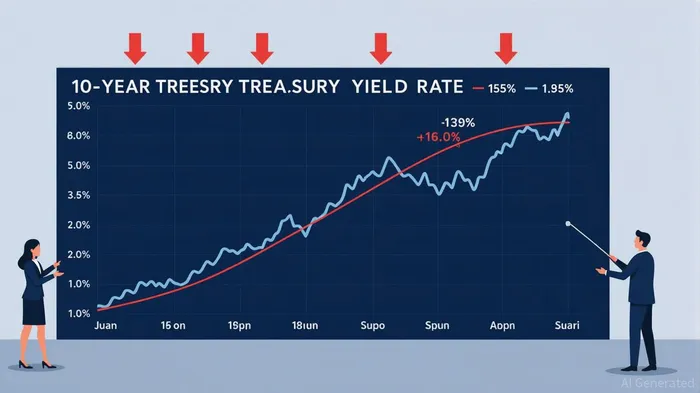
The Inverse Relationship Paradox
Typically, rising inflation pressures push bond yields higher as investors demand compensation for eroded purchasing power. Yet, as of July 11, the 10-year Treasury yield has dipped to 4.43%, while the annualized CPI inflation rate hit 2.7%—the highest in three years. The disconnect is stark:
- Shelter costs (owners' equivalent rent + 0.3%, rent + 0.2%) and food prices (+3.0% annually) are driving inflation, but bond traders are pricing in a slowdown.
- The 10-2 year yield spread—a recession bellwether—has widened to 0.53%, signaling a less inverted curve than feared. However, the 10-3 month spread hovers near zero, hinting at fragility.
This divergence suggests markets are betting that the Federal Reserve will pivot sooner than expected, even as inflation remains elevated.
Fed Policy Crossroads: Hawks vs. Doves
The Fed faces a dilemma:
- Inflation Persistence: Energy prices may stabilize, but shelter costs—accounting for ~32% of CPI—are sticky. The Fed's 2% target is still distant.
- Economic Soft Landing: The yield curve's historical lead time (11 months) implies a recession could hit by mid-2026. A prolonged inverted curve (like the 537-day streak ending in August 2024) could force the Fed to cut rates.
Key Risk: If inflation remains sticky but growth slows, the Fed could face a “no-win” scenario. Bond markets are already pricing in a 25.5% probability of an inverted yield curve by 2040, per simulations.
Investment Strategy: Duration Plays and Volatility Hedging
For investors, this environment demands a two-pronged approach:
1. Duration Exposure in Treasurys
- Longer-Dated Bonds: The 30-year Treasury (yield: 4.96%) offers a higher coupon, and its price sensitivity to yield declines is amplified. Consider laddering maturities between 10- and 30-year notes.
- Short-Term vs. Long-Term Trade: The positive 10-2 spread suggests shorting the front-end (e.g., 2-year futures) and buying the long end to capture curve steepening if the Fed pivots.
2. Hedging Equity Volatility
- Inverse ETFs: Use SPLV (low-volatility S&P 500 ETF) or SH (S&P 500 inverse fund) to offset equity declines if a recession materializes.
- VIX Options: Buy VIX call spreads to profit from volatility spikes during Fed policy uncertainty.
Conclusion: A Delicate Balance
The Treasury market's contrarian behavior is a warning: investors see slower growth ahead, even as inflation ticks upward. The Fed's next move—whether to tighten further, pause, or cut—will determine whether bonds or equities dominate.
Recommendation:
- Aggressive Investors: Overweight Treasurys (e.g., TLT, the 20+ year bond ETF) and pair with SPLV to hedge equity risk.
- Conservative Investors: Stick to intermediate maturities (e.g., IEF, 7-10 year bonds) and use VIX options for downside protection.
The next few months will test both bond bulls and inflation hawks. Stay nimble.

Stay ahead of the market.
Get curated U.S. market news, insights and key dates delivered to your inbox.


AInvest
PRO
AInvest
PRO



Comments
No comments yet