
Treasury Tremors: Can the U.S. Survive the $9.2 Trillion Bond Cliff?
This year marks a critical juncture for U.S. Treasury bonds, with nearly $9.2 trillion worth of bonds set to expire. In June alone, $6 trillion will mature, a significant increase from the $1 trillion that matured in the entire previous year. This massive financial hole, largely a result of pandemic-era spending, now falls on the current administration to resolve. However, the landscape for U.S. Treasuries is fraught with challenges, as there are currently very few buyers for these securities. The U.S. government may need to offer higher interest rates to attract buyers, but this strategy comes with its own set of financial burdens.

The U.S. Treasury bond market is facing unprecedented challenges. With $9.2 trillion in bonds maturing this year, the government must find new buyers and renegotiate interest rates. This task is made more difficult by the current economic climate, where few buyers are willing to purchase U.S. Treasuries at the current rates. The U.S. government may need to offer higher interest rates to attract buyers, but this strategy comes with significant financial risks.
One of the primary concerns is the impact of higher interest rates on the federal budget deficit and national debt. As interest rates rise, the cost of servicing the national debt also increases. This could lead to a higher budget deficit, as the government would need to allocate more funds to pay interest on its debt. The national debt, which already stands at a staggering $30.9 trillion, could also increase as the government borrows more to cover its expenses.
The geopolitical implications of the U.S. leveraging tariffs to push countries into buying long-term, low-interest U.S. Treasuries are also significant. Countries like China, which hold a large portion of U.S. Treasury debt, could refuse to buy more bonds if they perceive the U.S. as using tariffs as a coercive tool. This could lead to a trade war, with both countries imposing tariffs on each other's goods. The potential geopolitical consequences of such a scenario are far-reaching, as it could disrupt global trade dynamics and lead to economic instability.
The sudden spike in Treasury yields could also have a significant impact on the U.S. economy, particularly in sectors heavily reliant on government borrowing, such as infrastructure and housing. Higher interest rates make borrowing more expensive, which could lead to a slowdown in these sectors. The government may need to take measures to mitigate these effects, such as providing tax incentives or subsidies to encourage borrowing and investment.
To ensure the stability of its bond market amidst the current economic and political climate, the U.S. government could employ several strategies. One option is to reduce its reliance on foreign buyers by encouraging domestic investment in Treasuries. This could be achieved through tax incentives or other financial incentives. Another option is to diversify its sources of funding by issuing more short-term securities, which are less sensitive to interest rate changes. The government could also consider implementing policies to reduce its budget deficit, such as cutting spending or increasing taxes, to reduce its reliance on borrowing.
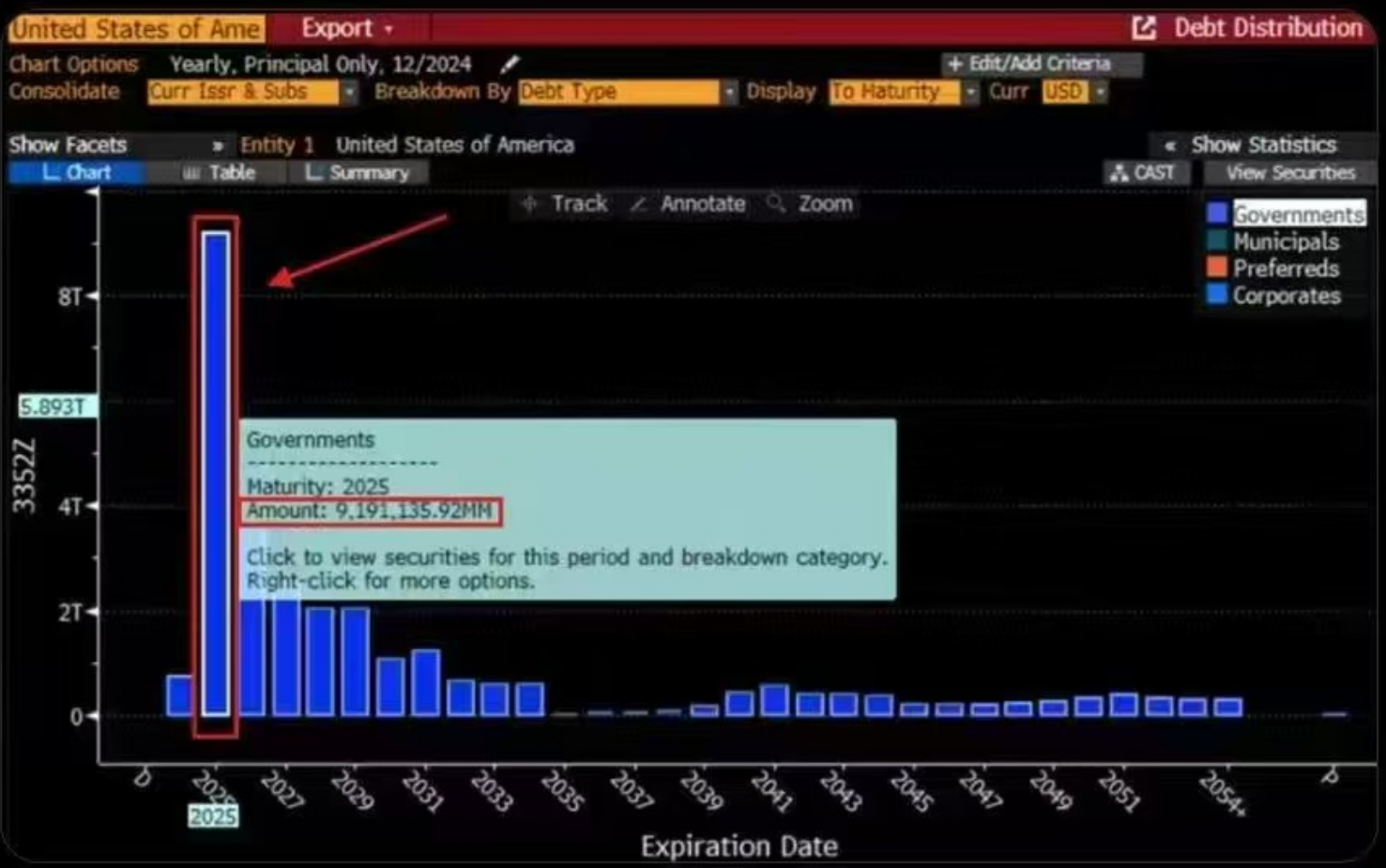
The peak of U.S. Treasury bond maturities this year presents significant challenges for the U.S. government. The need to find new buyers and renegotiate interest rates, coupled with the current economic and political climate, makes this task particularly difficult. However, by employing strategic measures to mitigate the financial burden of higher interest rates and ensure the stability of its bond market, the U.S. government can navigate this challenging landscape and maintain financial stability.

Stay ahead of the market.
Get curated U.S. market news, insights and key dates delivered to your inbox.






Comments
No comments yet