
Treasury Secretary Calls for Bretton Woods Reorientation Amid Dollar Decline
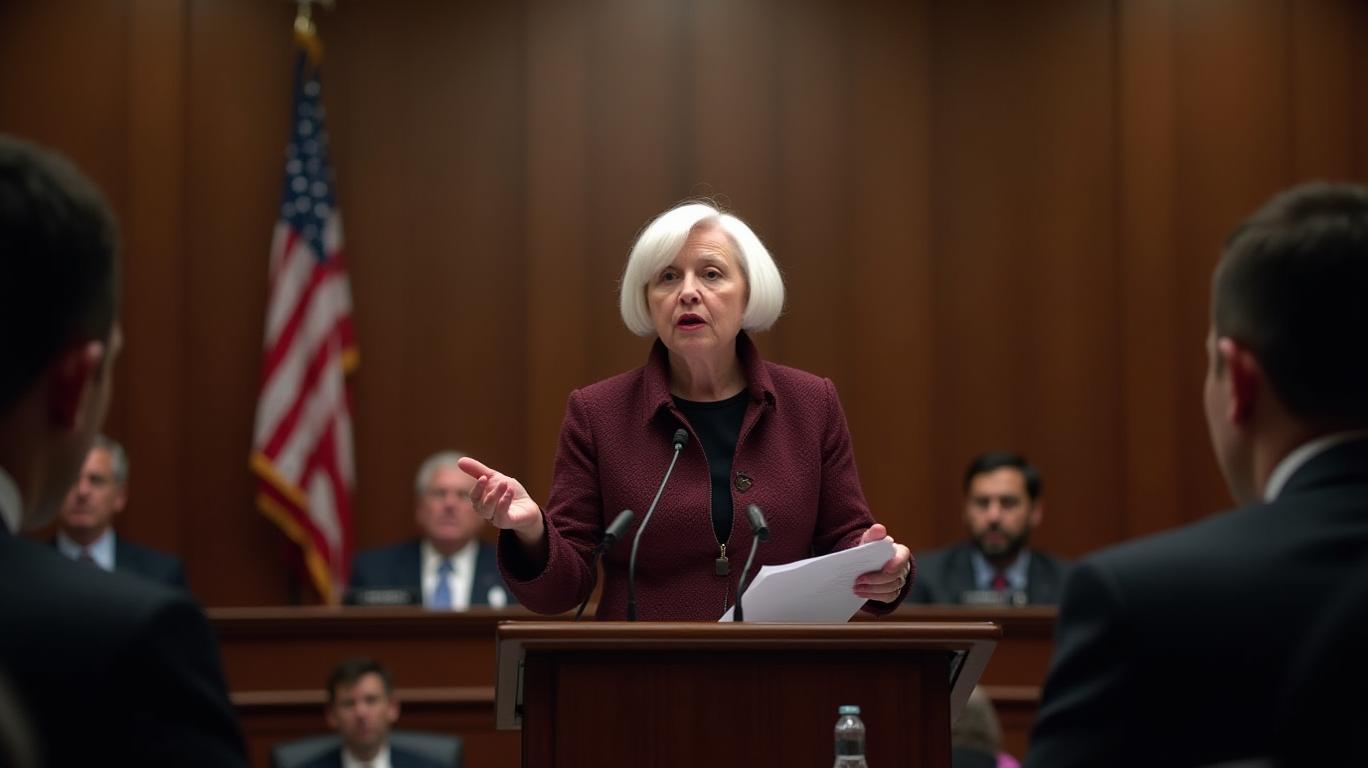
United States Treasury Secretary Scott Bessent recently called for a reorientation of the Bretton Woods institutions, signaling a potential shift in the global monetary order. Speaking at the Institute of International Finance on April 23, Bessent urged the International Monetary Fund (IMF) and the World Bank to address trade imbalances and safeguard the value of fiat currencies against exchange rate risks. He emphasized that the IMF's mission should focus on promoting international monetary cooperation, facilitating balanced trade growth, encouraging economic development, and discouraging harmful policies such as competitive exchange rate depreciation.
Bessent's remarks come at a time when the US dollar has declined to three-year lows, with $36 trillion in US government debt and intense economic competition from China. The Dollar Currency Index (DXY), which measures the US dollar’s strength relative to other major currencies, has plummeted to its lowest levels in three years. This decline has raised concerns about the stability of the US dollar as the global reserve currency.
Investor and hedge fund manager Ray Dalio has argued that the world is undergoing a significant macroeconomic shift that could disrupt the post-WWII financial order. Dalio suggests that this shift may eventually lead to the replacement of the US dollar as the global reserve currency, potentially with a digital form of money. This perspective aligns with Bessent's call for the Bretton Woods institutions to refocus their efforts on stabilizing the global monetary system.
The Bretton Woods Agreement, signed in 1944, established a system where the currencies of 44 countries were pegged to the value of the US dollar, which was itself pegged to gold at $35 per ounce. The primary goal of this agreement was to eliminate complex foreign exchange risks between freely floating currencies, thereby making global trade more efficient. However, in August 1971, US President Richard Nixon announced the end of the dollar's convertibility to gold, effectively ending the Bretton Woods system. Despite this, the IMF and the World Bank continue to operate, attempting to mitigate the effects of free-floating fiat currencies on the foreign exchange market.
Bessent has also expressed interest in using stablecoins to drive international demand for US dollars and US government debt instruments. Speaking at the White House Digital Asset Summit on March 7, he stated that the Trump administration plans to leverage stablecoins to protect the US dollar's status as the global reserve currency. However, Bitcoin maximalist Max Keiser has argued against this plan, predicting that gold-backed stablecoins would outcompete dollar-pegged tokens due to the desire for low-volatility, inflation-resistant money.
In March, BlackRockTOPC-- CEO Larry Fink wrote that the $36 trillion US national debt could drive investors to Bitcoin as a better store of value than the US dollar. Similarly, BitwiseBITB-- executive Jeff Park predicted that the ongoing trade war would cause worldwide inflation, leading individuals to seek alternative stores of value like Bitcoin, which could drive its price higher in the long term. These predictions highlight the growing interest in digital assets as a potential hedge against economic uncertainty and inflation.

Stay ahead of the market.
Get curated U.S. market news, insights and key dates delivered to your inbox.


AInvest
PRO
AInvest
PRO



Comments
No comments yet