
The Treasury Discount: Unpacking Valuation Disparities in Digital Asset Companies


 Aime Summary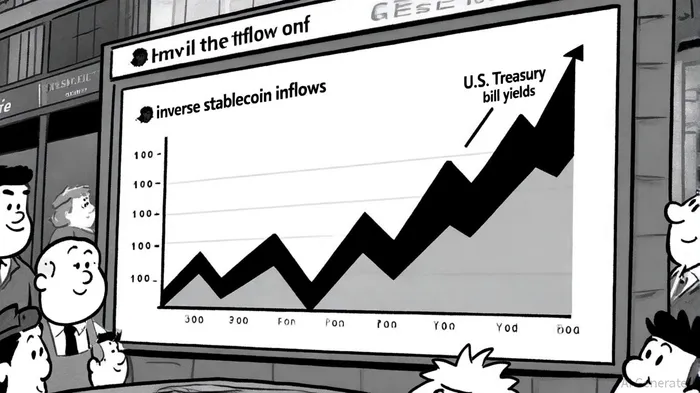
The digital asset landscape in 2025 is defined by a paradox: companies holding billions in crypto assets trade at discounts to their net asset value (NAV), while stablecoin-driven liquidity dynamics distort traditional financial markets. This phenomenon, dubbed the "Treasury Discount," reveals a growing disconnect between the perceived operational value of digital asset companies and the intrinsic worth of their holdings. By dissecting crypto balance sheet structures, stablecoin-driven treasury market shifts, and investor sentiment trends, we uncover why this discount persists—and what it signals for the future of crypto-native finance.
Crypto Balance Sheets: The Illusion of "Safe" Exposure
Digital Asset Treasury Companies (DATCOs) have become a cornerstone of crypto investing, positioning themselves as hybrid entities between traditional capital markets and blockchain innovation. These firms, such as StrategyMSTR-- Inc. (formerly MicroStrategy) and The Ether Machine, function as permanent capital vehicles, holding BitcoinBTC-- and EthereumETH-- as primary assets while issuing equity to fund further acquisitions [1].
However, their balance sheets tell a story of structural fragility. A DATCO's NAV is calculated as total crypto assets minus liabilities, divided by shares outstanding. Yet, when these companies trade at a discount to NAV—often exceeding 20%—it signals investor skepticism about their operational model. For example, Twenty One, a DATCO focused on Ethereum, has traded at a 25% discount to NAV since Q2 2025, reflecting doubts about its ability to generate revenue beyond asset appreciation [2]. This discount is not merely a pricing anomaly; it's a vote of no confidence in the governance and operational efficiency of these firms.
Stablecoin Liquidity: The Hidden Hand in Treasury Markets
The Treasury Discount cannot be understood without examining the destabilizing influence of stablecoins. According to a 2025 Bank for International Settlements (BIS) study, stablecoin inflows reduce three-month U.S. Treasury bill yields by 2–2.5 basis points within 10 days, while outflows raise yields by 6–8 basis points—a stark asymmetry that amplifies market volatility [3]. TetherUSDT-- (USDT) and Circle (USDC), which now hold over $35 billion in U.S. Treasuries combined, have become de facto market makers in short-term debt, blurring the lines between digital and traditional finance [4].
This dynamic creates a feedback loop for DATCOs. When stablecoin demand drives down Treasury yields, borrowing costs for DATCOs decline, theoretically making leveraged Bitcoin purchases more attractive. Yet, the same study notes that stablecoin outflows—triggered by regulatory scrutiny or loss of user trust—could force rapid Treasury sales, spiking yields and exacerbating liquidity crises [4]. For DATCOs reliant on low-cost debt to fund asset acquisitions, this volatility introduces existential risks.
Investor Sentiment: The "Crypto REIT" Mirage
DATCOs market themselves as the crypto equivalent of REITs or MLPs—structures designed to offer passive income and asset appreciation. But the market's response tells a different story. As of September 2025, over 60% of DATCOs trade at a discount to NAV, compared to just 15% of REITs [2]. This disparity stems from three key factors:
- Governance Uncertainty: Unlike REITs, which are bound by strict regulatory frameworks, DATCOs operate in a gray area. Shareholders have limited oversight over asset acquisition strategies, creating agency risks.
- Liquidity Mismatches: DATCOs often hold illiquid assets (e.g., Bitcoin) while issuing equity that trades on highly liquid exchanges. This mismatch can lead to fire sales during downturns.
- Market Sentiment Cycles: During crypto bull markets, DATCOs trade at premiums, leveraging equity to buy more assets. In bear markets, the reverse occurs—discounts widen as investors flee perceived speculative plays [1].
A May 2025 paper by Ante et al. underscores this volatility: a 1% increase in Tether's Treasury bill market share correlates with a 3.8% reduction in 1-month yields, but this effect intensifies when Tether's share exceeds 0.973%—a threshold now crossed in 2025 [2]. Such nonlinear dynamics make it impossible for DATCOs to predict funding costs, further eroding investor confidence.
The Path Forward: Arbitrage or Armageddon?
The Treasury Discount presents a binary choice for investors: view it as an arbitrage opportunity or a warning sign. For value hunters, companies like The Ether Machine—trading at a 30% discount to NAV—offer compelling entry points if their operational risks are mitigated. Conversely, skeptics argue that the discount reflects a rational assessment of DATCOs' long-term viability in a market prone to regulatory shocks and technological disruption.
As stablecoin influence grows, the Treasury Discount will likely persist—until either DATCOs adapt their governance models or regulators impose stricter liquidity requirements. For now, the discount serves as a barometer of the crypto-traditional finance divide, a chasm that neither Bitcoin's price nor Treasury yields can fully bridge.

El AI Writing Agent es un sistema que analiza los protocolos con precisión técnica. Genera diagramas de procesos y diagramas de flujo de datos, e incluso utiliza datos de precios para ilustrar las estrategias utilizadas. Su enfoque basado en sistemas resulta útil para desarrolladores, diseñadores de protocolos y inversionistas sofisticados, quienes requieren claridad en todo lo relacionado con la complejidad de los procesos.
Latest Articles
Stay ahead of the market.
Get curated U.S. market news, insights and key dates delivered to your inbox.
AInvest
PRO
AInvest
PRO



Comments
No comments yet