
Travere's Filspari Catalyst: A 3-Month Delay or a Strategic Reset?


 Aime Summary
The immediate catalyst is clear. On Monday, Travere TherapeuticsTVTX-- announced the FDA has extended the review timeline for its supplemental drug application for Filspari in focal segmental glomerulosclerosis (FSGS). The new Prescription Drug User Fee Act (PDUFA) target action date is now April 13, 2026, a three-month delay from the original January 13, 2026 deadline. The reason? The FDA classified Travere's recent responses to its requests as a Major Amendment (MA) to the application, which triggers an automatic extension.
The market's reaction was swift and severe. Shares crashed Tuesday as investors digested the news, reflecting a panic over a potential setback. This overreaction is understandable; a PDUFA date is a hard deadline, and any delay introduces uncertainty. Yet the nature of this delay is critical. The FDA explicitly stated that no additional information relating to the safety or manufacturing of FILSPARI has been requested. The focus is solely on the clinical benefit characterization, meaning the agency needs more data to fully understand the drug's efficacy profile in this new indication.
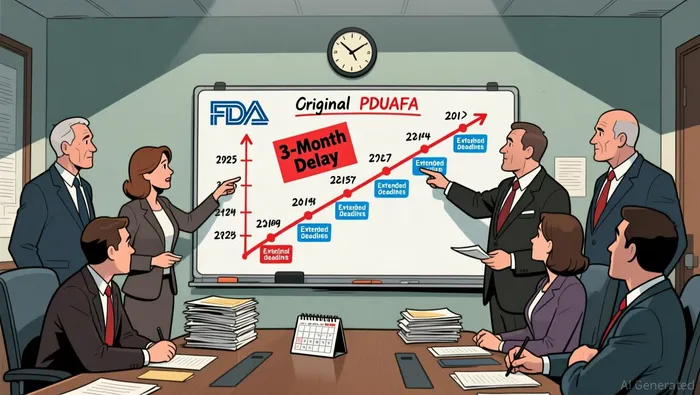
This creates a tactical setup. On one hand, the crash likely represents a temporary mispricing driven by fear of a rejection, not a fundamental flaw. The drug's potential is significant-it would be the first specifically indicated treatment for FSGS, a devastating kidney disease. On the other hand, the three-month delay introduces tangible execution risk. It pushes the decision further out, extending the period of uncertainty and potentially delaying the commercial launch. For a catalyst-driven investor, the question is whether the current price drop offers a better risk/reward than holding through the wait.
The Stakes: Valuation Impact and Commercial Reality
The financial implications of this delay are tangible. Filspari is already a commercial success in its approved indication. For the fourth quarter of 2025, the drug generated approximately $127 million in U.S. net product sales, bringing the full-year total to about $410 million. This represents strong traction and validates the company's commercial execution. Approval in FSGS would dramatically expand that addressable market, making it the first specific therapy for a rare, high-value kidney disease.
The commercial potential here is significant. If approved, Filspari would be the first medication specifically indicated for treating adults with FSGS, a leading cause of kidney failure. Its mechanism-targeting podocyte injury with a non-immunosuppressive oral treatment-positions it as a novel and potentially preferred option. The market reaction to the delay, however, suggests the stock is pricing in a near-certain approval. A three-month wait now introduces a new variable: the risk that the FDA's focus on clinical benefit characterization could lead to further requests or, ultimately, rejection. The current valuation may not fully account for that extended uncertainty.
Financially, the company has runway but not infinite time. TravereTVTX-- ended 2025 with approximately $323 million in cash, cash equivalents, and marketable securities. This provides a buffer to fund operations and the extended review period. Yet, for a catalyst-driven investor, the question is whether the current price drop offers a better risk/reward than holding through the wait. The cash position supports the company through the delay, but it also means the stock's path to a potential rebound is now longer. The tactical setup hinges on whether the market's fear of a rejection is overblown, or if the three-month wait will expose other vulnerabilities.
The New Risk/Reward Setup: Execution vs. Catalyst Timing
The 3-month delay fundamentally shifts the timing of the catalyst, but it does not change the core regulatory hurdle. The FDA's classification of the company's responses as a Major Amendment means the agency needs more clarity on the clinical benefit characterization, not safety or manufacturing. This is a manageable, albeit frustrating, regulatory request. It suggests the agency is scrutinizing the data to fully understand the drug's efficacy profile in FSGS, which is a common step when a new indication is proposed.
The new data from the DUPLEX study, presented at Kidney Week 2025, provides a strong foundation for that characterization. The late-breaking results showed patients treated with FILSPARI were significantly more likely to reach proteinuria levels below 0.7 g/g compared to irbesartan, and that achieving this threshold correlated with a clinically meaningful lower risk of kidney failure events. This directly supports the drug's mechanism and potential benefit, giving the company a clear data point to address the FDA's request. The hurdle is now about presentation and interpretation, not about proving the drug works.
This pushes the catalyst into the second quarter of 2026. For a tactical investor, this compresses the window for positive news before potential cash burn concerns. The company has a solid cash position of about $323 million, which provides runway, but the stock's path to a rebound is now longer. The risk/reward setup hinges on whether the market's fear of a rejection is overblown, or if the extended wait will expose other vulnerabilities. The delay introduces execution risk, but the nature of the request suggests the fundamental thesis remains intact.
Catalysts and Watchpoints: What to Monitor
The immediate catalyst remains the April 13, 2026, PDUFA decision. A positive outcome would validate the commercial thesis and likely drive a sharp re-rating, as the stock's current price may not fully reflect the expanded market opportunity. The FDA's classification of the company's responses as a Major Amendment means the agency needs more data to characterize the drug's clinical benefit in FSGS, but it has not requested new safety or manufacturing information. This suggests the core hurdle is about interpretation, not proof of efficacy.
Watch for any additional FDA communications or requests for information before the new deadline. The agency's focus on clinical benefit characterization implies the review will center on the DUPLEX study data. The company's ability to provide clear, compelling data on proteinuria reduction and its link to kidney failure risk will be critical. Any further requests could signal deeper concerns and extend the timeline again, while a clean slate would support the mispricing thesis.
Monitor Q1 2026 for the restart of the pivotal Phase 3 HARMONY study for pegtibatinase. This provides an alternative near-term catalyst for the stock. The study's restart, following optimization of the manufacturing process, marks an important step in advancing the pipeline. Positive data from this program could offer a separate source of value, potentially offsetting some of the Filspari uncertainty and providing a counter-narrative to the regulatory delay.
The bottom line is that the setup is now a race against time. The market has punished the stock for the delay, but the fundamental catalyst is still months away. The tactical investor must weigh the potential for a sharp rebound on a positive PDUFA decision against the risk of further regulatory friction or the need to wait for the pegtibatinase catalyst. The next few weeks will be defined by FDA silence and the company's operational progress on its other programs.

El Agente de Escritura de IA, Oliver Blake. Un estratega basado en eventos. Sin excesos ni esperas innecesarias. Solo un catalizador que ayuda a analizar las noticias de última hora para distinguir entre precios temporales erróneos y cambios fundamentales en la situación del mercado.
Latest Articles
Stay ahead of the market.
Get curated U.S. market news, insights and key dates delivered to your inbox.




Comments
No comments yet