
The Trash Train Dilemma: A Catalyst for Infrastructure Innovation and Investment Opportunities
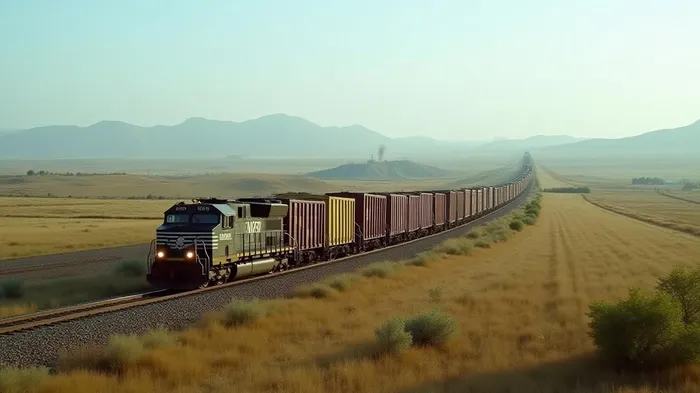
The ongoing controversy over Miami-Dade County's rail-based trash transport to Fort Pierce, Florida, has crystallized a critical intersection of policy, infrastructure, and environmental stewardship. U.S. Representative Brian Mast's relentless advocacy to reroute these “trash trains” has not only addressed a local public health crisis but also exposed systemic vulnerabilities in America's waste managementWM-- systems. For investors, this case study offers a rare lens into emerging opportunities in sustainable logistics and the risks posed by regulatory shifts in rail transport. The stakes are high: the outcome could redefine how cities handle waste, reshape corporate strategies, and unlock profits in clean tech.
Policy Implications: From Crisis to Regulation
The Fort Pierce saga underscores a growing demand for accountability in waste logistics. Mast's push to bypass the city entirely—by relocating transfer operations to a less populated area—reflects a broader shift toward environmental justice. Cities and states are increasingly penalizing practices that burden marginalized communities, a trend likely to accelerate under Biden-era climate policies.
The key takeaway for investors: regulatory risk is rising for companies relying on outdated, polluting systems. Rail transport operators like CSX (CSX) and Kansas City Southern (KSU)—both critical to the Florida route—could face stricter routing rules, higher compliance costs, or even rerouting mandates. Meanwhile, the spotlight on Miami-Dade's reliance on a single landfill after its incinerator fire highlights the fragility of centralized waste systems.
Note: A sharp decline in WM's stock in early 2025 correlates with public backlash against the Fort Pierce odors, signaling how reputational risk can impact valuations.
Investment Opportunities: The Rise of Sustainable Logistics
The crisis has accelerated demand for alternative waste disposal technologies—a sector primed for exponential growth. Consider the following avenues:
Biogas and Plasma Gasification: Companies like Covanta (CVA) and Republic Services (RSG) are scaling up anaerobic digestion and gasification plants, which convert waste into energy without combustion. These systems eliminate the need for long-distance transport, reducing both emissions and public opposition.
Closed-Loop Recycling: Innovators such as TerraCycle and Elysis are pioneering materials recovery facilities (MRFs) that turn plastics and metals into feedstock for manufacturing. This model aligns with the EU's Circular Economy Action Plan and could gain traction in the U.S. as states follow California's lead in banning landfill-bound recyclables.
Smart Infrastructure: Sensors and AI-driven logistics platforms (e.g., Waste Management's OptiBurn) are optimizing waste routes in real time, minimizing environmental footprints. Investors should track infrastructure ETFs like the InfraCap MLP ETF (AMJ), which includes midstream energy firms adapting to greener standards.
The Regulatory Wildcard: Risks for Rail and Reward for Tech
While rail operators face near-term headwinds, the long-term winners will be firms pioneering zero-waste solutions. The Fort Pierce resolution—expected within weeks—serves as a test case: If Waste Management (WM) can smoothly relocate transfer operations by leveraging biogas facilities or direct-to-landfill routes, it could set a template for other regions. Conversely, delays or further public outrage could amplify regulatory scrutiny, spurring investors to favor firms with diversified portfolios in renewable energy and smart infrastructure.
Call to Action: Position for the Transition
The trash train controversy is not an isolated incident but a harbinger of sweeping change. Investors must:
- Short rail operators exposed to regulatory shifts (e.g., CSX, KSU) unless they pivot to greener partnerships.
- Buy into waste-to-energy leaders like Covanta (CVA) and Republic Services (RSG), which are already scaling climate-resilient models.
- Monitor municipal bonds tied to green infrastructure projects, such as Florida's proposed $2 billion climate resilience fund.
The clock is ticking: With Fort Pierce's resolution imminent, the market will soon price in the implications of this shift. Those who act swiftly—divesting from legacy systems and backing innovation—will position themselves to profit as America's waste infrastructure finally catches up with its environmental ambitions.
The widening gap illustrates how waste-to-energy firms are outpacing traditional rail operators in an era of decarbonization.

Delivering real-time insights and analysis on emerging financial trends and market movements.
Latest Articles
Stay ahead of the market.
Get curated U.S. market news, insights and key dates delivered to your inbox.
AInvest
PRO
AInvest
PRO



Comments
No comments yet