
X's Transparency Push Unmasks Foreign Influence, Sparks Privacy Debate


 Aime Summary
Elon Musk's social media platform X has ignited a firestorm after rolling out a new transparency feature that revealed the overseas locations of numerous high-profile MAGA-aligned accounts. The tool, introduced over the weekend, allows users to view the country or region where an account is based by clicking on the "Joined" date on a profile. What began as a move to combat bot activity quickly escalated into a political controversy as users discovered that prominent accounts touting pro-Trump rhetoric were actually run from countries like Nigeria, Bangladesh, and Eastern Europe according to a report.
The feature, championed by X's head of product Nikita Bier as a step toward "securing the integrity of the global town square," exposed a network of accounts that presented themselves as American patriots but were linked to regions with no obvious ties to U.S. political movements. For example, an account named "@BarronTNews_," which claims to be a fan of Donald Trump's son and has over 580,000 followers, is listed as based in "Eastern Europe (Non-EU)" according to Fortune. Similarly, "MAGA NATION," a pro-Trump account with nearly 400,000 followers, is tied to Eastern Europe as reported by Forbes, while "America First" is flagged as originating from Bangladesh according to Newsweek.
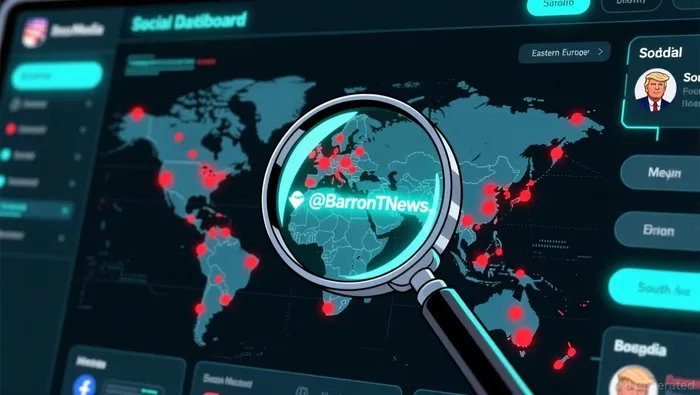 The revelations have raised alarms about foreign influence in U.S. politics. Researchers at NewsGuard identified accounts disseminating polarizing claims-such as allegations that Democrats bribed debate moderators-while posing as American conservatives. Online sleuths further amplified the controversy, sharing screenshots of accounts like "ULTRAMAGA 🇺🇸 TRUMP🇺🇸2028," which claimed to be based in Washington, D.C., but was listed as African according to NBC News. Some accounts, including one parodying the U.S. Department of Homeland Security as being based in Israel, were debunked as misinformation according to NBC News, but the damage to public trust was done.
X's feature has also drawn criticism for privacy concerns. Users like Ian Miles Cheong, a right-wing commentator with 1.2 million followers based in the United Arab Emirates, called the update an "invasion of privacy". The platform, however, allows users in restrictive regimes to display only their region instead of a specific country as stated in a TechBuzz article. Bier acknowledged "a few rough edges" in the rollout, promising 99.99% accuracy by Tuesday, though critics note that virtual private networks (VPNs) can still obscure true locations according to US News.
Political reactions have been swift. The Department of Homeland Security (DHS) denied claims its X account was based in Israel, calling circulating screenshots "easy to forge". Meanwhile, Democrats celebrated the exposure, with one user declaring it "a vindication of warnings about foreign psyops". Musk, who has long positioned X as a free-speech haven, has yet to comment directly on the fallout.
The incident underscores broader challenges for social media platforms in an AI-driven era. While X aims to curb disinformation, the tool has also exposed the paradox of a global "town square" where identities are increasingly fluid. As Bier noted, the feature is just the first step; future updates may include warnings for accounts using proxies or VPNs. For now, the controversy highlights the delicate balance between transparency and privacy in digital spaces.

Stay ahead of the market.
Get curated U.S. market news, insights and key dates delivered to your inbox.






Comments
No comments yet