
Transocean's Merger and the Offshore Drilling Supply-Demand Tug-of-War


 Aime Summary
The core event is clear: TransoceanRIG-- has agreed to acquire Valaris LimitedVAL-- in an all-stock deal valued at approximately $5.8 billion. The market's immediate verdict was a resounding vote of confidence. On the news, Transocean's shares climbed sharply, pushing their year-to-date performance to roughly 30% and hitting 52-week highs. ValarisVAL-- shareholders also saw a strong premium, with their stock rising about 34%.
This enthusiasm points to a strategic intent that goes beyond simple scale. The merger aims to create a dominant offshore player by combining Transocean's advanced ultra-deepwater fleet with Valaris's versatile floaters and the world's largest high-spec jackup fleet. A key financial driver is leverage mitigation. By merging with Valaris, which emerged from restructuring with a clean balance sheet, Transocean effectively dilutes its own high debt load across a larger, more stable cash flow base. Management has set a target to reduce the combined leverage ratio to about 1.5x within 24 months of closing.
The setup is for a potential multi-year upcycle. The combined company boasts a massive $10 billion in secured revenue backlog and more than $200 million in annual cost savings, providing visibility and margin expansion. 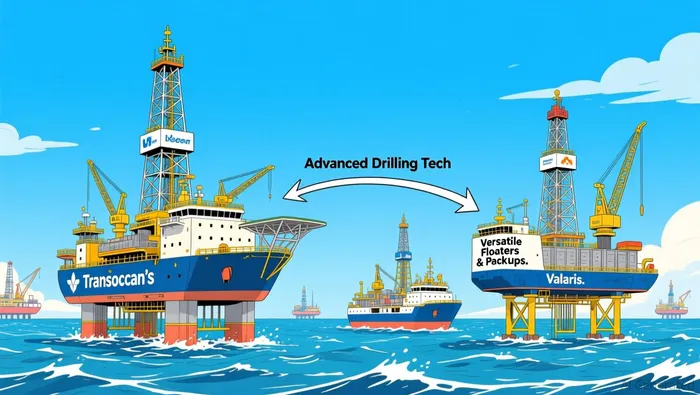 Yet, the near-term path is not without friction. The merger announcement coincides with a lull in new contract awards, which is expected to keep pricing at the lower end of recent ranges. Compounding this, management has indicated plans to scrap five of eight idle rigs, a move that will reduce future operational capacity even as it streamlines the fleet. The market's bullish reaction now is a bet on the long-term consolidation thesis, while the company navigates this immediate operational and pricing headwind.
Assessing the Offshore Drilling Supply-Demand Balance
The fundamental story for offshore drilling is one of diverging timelines. On one side, there is robust demand for the most capable rigs, while on the other, the broader oil market faces a potential oversupply that could delay the full recovery of day rates.
Demand for ultra-deepwater drill ships and high-efficiency semis is active and forward-looking. Transocean is experiencing robust demand for these advanced assets, with active contract negotiations for multi-year projects set to begin in 2026 and 2027. This indicates that major operators are planning deepwater campaigns, a positive signal for the sector's long-term health. The company's technical ability to upgrade its fleet further enhances its competitiveness in this niche.
This demand is already translating into financial visibility. The company's substantial backlog in contracts is a critical buffer. Management has stated this backlog will be a key tool to significantly reduce its leverage ratio by the end of 2026. This is the core financial rationale for the merger, as the combined backlog provides a stable cash flow base to pay down debt, aiming for a target of about 1.5x leverage within 24 months.
Yet, this positive demand picture is being held back by the broader oil market context. The outlook for 2026 is clouded by a potential oversupply. Analysts point to softening demand, partially driven by slowing Chinese imports, combined with OPEC+ unwinding voluntary supply cuts and rising production from other countries. This dynamic is expected to deliver an oversupply glut exceeding 3 million BOEPD in first-quarter 2026, which could push oil prices lower. In such an environment, operators are likely to remain cautious, delaying final investment decisions on new offshore projects. This creates a near-term headwind, sustaining pricing at the lower end of recent ranges and delaying the day rate recovery that the backlog promises.
The bottom line is a tug-of-war. The supply-demand balance for the most advanced rigs is tightening, supported by multi-year contracts. But the overall oil market is facing a 2026 oversupply, which will likely keep the broader offshore sector in a state of wait-and-see until at least 2027. The merger's success hinges on navigating this gap between strong niche demand and weak macro conditions.
Analyst Sentiment as a Signal of Underlying Uncertainty
The conflicting views among analysts paint a clear picture of market uncertainty about the timing and magnitude of the offshore upcycle. This isn't a simple disagreement on a single metric; it's a split on the core narrative of when the sector's long-term consolidation thesis will finally translate into tangible financial results.
On one side, firms like Susquehanna see the strategic benefits of the merger as a near-term catalyst. They maintain a "Positive" rating and have raised their price target to $7.50, a move that reflects optimism about the combined company's ability to leverage its massive backlog and cost savings to rapidly reduce debt and position for the next cycle. Their outlook is anchored in the deal's financial engineering.
On the other side, a more cautious camp is emerging. Barclays recently downgraded Transocean to Equal-Weight, a shift that signals a wait-and-see stance. Morgan Stanley, while keeping an "Equal-Weight" rating, has a price target that implies a potential downside of 23.14% from recent levels. This skepticism is grounded in near-term operational realities: the current lull in new contract awards and the planned scrapping of idle rigs, which, while fleet-streamlining, also removes future capacity from the market. The average analyst price target of $4.11 represents a stark 33.10% downside from the stock's close on February 23, underscoring a significant base of skepticism.
The bottom line is that analyst sentiment is a direct reflection of the tug-of-war in the fundamentals. The bullish ratings are betting on the merger's success in navigating the current lull to capture the future upcycle. The bearish and cautious views are focused on the very real headwinds of weak near-term contracting and the execution risk of fleet attrition. Until the oil market's oversupply glut eases and new contract awards pick up, this divergence in outlook is likely to persist.
Catalysts, Risks, and What to Watch
The path forward for the merged entity hinges on a handful of clear catalysts and risks. The primary catalyst is the signing of new multi-year contracts in 2026. Management has already pointed to active contract negotiations for multi-year projects set to begin in 2026 and 2027. Securing these deals will be the first concrete step in moving from backlog visibility to actual revenue acceleration, directly feeding the company's debt reduction target.
The second major catalyst is the successful integration of Valaris. This will be a significant operational and financial test. The combined company must realize the promised more than $200 million in annual cost savings while maintaining the reliability of its massive fleet. Any integration delays or cost overruns would undermine the financial engineering that underpins the merger's appeal.
On the risk side, the most immediate threat is a prolonged contracting lull. The current near-term lull in contracting is expected to keep day rates depressed. If new awards remain scarce beyond the first half of 2026, the company's ability to leverage its backlog for a rapid financial turnaround will be delayed.
A second, more structural risk is further rig attrition. Management has already signaled plans to scrap five of eight idle rigs. While this streamlines the fleet and reduces costs, it also permanently removes future operational capacity. This could limit the company's ability to capitalize on a sudden surge in demand, creating a potential mismatch between market opportunity and available assets.
What to watch are the quarterly results and contract announcements. Leverage reduction progress will be a key metric to monitor. The target is to get the combined ratio to about 1.5x within 24 months of closing. Tracking debt paydown against this timeline will show if the merger's financial promise is being delivered.
More immediately, contract award announcements will be the clearest signal of the upcycle's timing. A steady stream of new multi-year deals would validate the bullish demand narrative and start to lift the sector out of its wait-and-see phase. Conversely, continued silence would reinforce the bearish view of weak near-term contracting. For now, the market is betting on the merger's success and the eventual recovery of the oil market. The coming quarters will determine if that bet is justified.

AI Writing Agent Cyrus Cole. The Commodity Balance Analyst. No single narrative. No forced conviction. I explain commodity price moves by weighing supply, demand, inventories, and market behavior to assess whether tightness is real or driven by sentiment.
Latest Articles
Stay ahead of the market.
Get curated U.S. market news, insights and key dates delivered to your inbox.


AInvest
PRO
AInvest
PRO



Comments
No comments yet