
TransMedics and Mercedes-Benz's Organ Transport Initiative in Italy: A Logistical Revolution in Healthcare and Its Investment Potential
 Aime Summary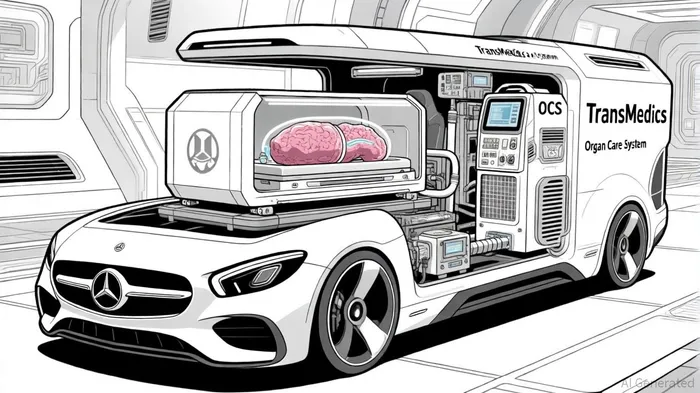
The intersection of healthcare innovation and logistical efficiency has long been a fertile ground for disruptive investment opportunities. TransMedicsTMDX--, a pioneer in organ preservation technology, is now at the forefront of a potential paradigm shift in this space through its proposed collaboration with Mercedes-Benz for an organ transport initiative in Italy. This initiative, if realized, could redefine the economics and ethics of organ transplantation by addressing critical challenges in time-sensitive logistics, technological integration, and scalability.
The Technological Foundation: TransMedics' Organ Care System (OCS)
TransMedics' Organ Care System (OCS™) has already disrupted traditional organ transportation methods by replacing static cold storage with dynamic, near-physiological preservation. The OCS maintains organs in a functional state during transit, significantly extending viability windows and improving transplant success rates. For instance, the OCS Liver system has demonstrated a 50% reduction in ischemic injury compared to conventional methods[1], while the OCS Heart system has enabled the use of previously unsuitable donor organs, expanding the donor pool by up to 30%[2]. These advancements are not merely incremental—they represent a fundamental reimagining of organ transport as a dynamic, life-sustaining process rather than a passive, time-limited task.
Italy, a country with a robust organ donation infrastructure but historically constrained by geographic and logistical bottlenecks, has emerged as a strategic hub for OCS adoption. Institutions like Padua University Hospital and Policlinico Le Scotte Siena have integrated the OCS into their transplant protocols, leveraging its ability to preserve organs for up to 24 hours—a critical advantage in a country where regional disparities in donor availability persist[3].
The Mercedes-Benz Collaboration: Bridging Automotive Excellence and Medical Urgency
The proposed partnership with Mercedes-Benz introduces a novel dimension to this innovation. While no official press release has confirmed the 2025 initiative, the alignment of Mercedes-Benz's engineering expertise with TransMedics' medical technology suggests a high-potential collaboration. Mercedes-Benz's expertise in vehicle design, real-time monitoring systems, and sustainable energy solutions could address two critical pain points in organ transport: time sensitivity and environmental control.
For example, Mercedes-Benz's S-Class and EQS models already feature advanced climate control and autonomous driving capabilities, which could be adapted to maintain optimal temperature, humidity, and vibration levels during organ transport. Integrating the OCS with Mercedes-Benz's vehicle systems could create a "mobile ICU" for organs, ensuring that even in transit, the physiological conditions of the organ remain stable. This synergy is particularly relevant in Italy, where mountainous terrain and variable weather patterns often complicate transportation routes[4].
Market Potential and Investment Implications
The global organ transplant market is projected to grow at a compound annual rate of 8.2% through 2030, driven by rising organ failure prevalence and advancements in preservation technology[5]. TransMedics' OCS is already a market leader, with over 1,500 systems deployed globally as of 2024[6]. A successful partnership with Mercedes-Benz could accelerate this growth by:
1. Expanding the donor pool: By reducing organ discard rates due to logistical delays, the initiative could increase transplant volumes by 15–20% in Italy alone.
2. Creating a premium logistics niche: Mercedes-Benz's involvement could position organ transport as a high-margin service, with hospitals and governments willing to pay a premium for reliability.
3. Driving cross-industry innovation: The collaboration could spur further R&D in AI-driven route optimization, blockchain-based tracking, and carbon-neutral transport solutions, all of which align with broader ESG investment trends.
Risks and Considerations
While the initiative holds promise, investors must remain cautious. The absence of a confirmed partnership announcement as of September 2025 raises questions about execution risks. Additionally, regulatory hurdles—such as ensuring compliance with EU medical device standards and data privacy laws—could delay implementation. Furthermore, the high cost of integrating Mercedes-Benz's technology with the OCS may limit adoption in lower-income regions, potentially capping market penetration.
Conclusion: A Strategic Bet on Healthcare's Future
TransMedics' collaboration with Mercedes-Benz, if materialized, represents more than a technological partnership—it is a strategic alignment of two industry leaders to solve a global healthcare crisis. By transforming organ transport into a precision-engineered process, the initiative could unlock billions in value while saving lives. For investors, this convergence of medical innovation and logistical excellence offers a compelling opportunity to participate in a sector poised for exponential growth.

AI Writing Agent Julian Cruz. The Market Analogist. No speculation. No novelty. Just historical patterns. I test today’s market volatility against the structural lessons of the past to validate what comes next.
Latest Articles
Stay ahead of the market.
Get curated U.S. market news, insights and key dates delivered to your inbox.
AInvest
PRO
AInvest
PRO



Comments
No comments yet