
Transhumanist Proposes Automated Abundance Economy With Universal Basic Income
Zoltan Istvan, a prominent transhumanist, has proposed a new economic model tailored for the era of artificial intelligence and robotics. This model, dubbed the Automated Abundance Economy, envisions a future where technological advancements lead to a significant reduction in the need for human labor. Istvan argues that as machines become more capable of performing tasks traditionally done by humans, the essentials of life—such as food, shelter, healthcare, and education—can be produced in abundance with minimal human effort.
At the core of this economic shift are two key components: near-total automation and a proposed universal basic income (UBI). Automation is rapidly advancing, with machines and software becoming more efficient and cost-effective. This trend is already evident in various sectors, from manufacturing to service industries. Istvan predicts that within the next five years, machines will handle a wide range of tasks, including construction, agriculture, education, and elder care. This increased productivity will generate substantial wealth, even if humans are not directly involved in its creation.
To ensure that this wealth benefits everyone, Istvan proposes UBI as a means of distributing the value created by automation. Unlike traditional welfare, UBI would function as a dividend, providing every citizen with a share of the economic gains generated by automation. This system would support private ownership, entrepreneurship, and innovation, while also ensuring that a portion of the wealth is redistributed to the public through mechanisms such as UBI or stock options from AI companies.
In this new economic model, UBI and other social monetary programs would serve as a form of economic citizenship, guaranteeing access to basic necessities without the need for traditional employment. This challenges the conventional notion that a person's value is tied to their job, instead recognizing that everyone has intrinsic economic value simply by being part of society. While work would no longer be a requirement for survival, many people would still choose to engage in creative and fulfilling activities, driven by intrinsic motivation rather than economic necessity.
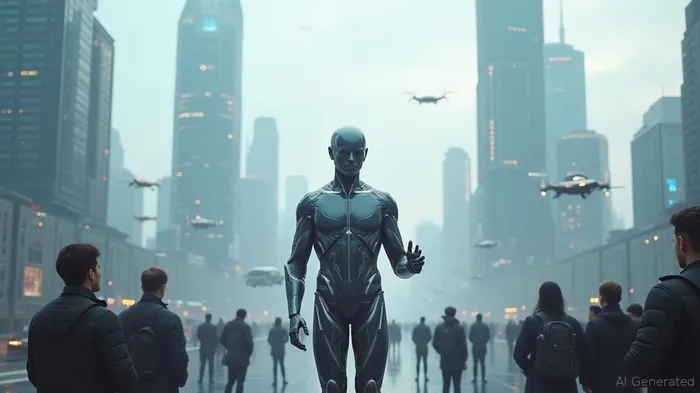
The Automated Abundance Economy also envisions a future where personal robots are provided to households, handling everyday chores and freeing up time for families. Governance could evolve as well, with AI systems enforcing safety and compliance, and public systems managed by transparent AI trained on ethical frameworks. This could lead to more democratic and inclusive decision-making processes, where citizens have a direct say in policy and governance.
Istvan emphasizes that the Automated Abundance Economy avoids the extremes of both capitalism and socialism. It aims to maintain innovation and private ownership while ensuring that no one is left behind. However, achieving this vision will require careful consideration of ethical, social, and political challenges. Surveillance, job displacement, and cultural backlash are potential risks that must be addressed through inclusive and democratic processes.
Despite the challenges, Istvan believes that the Automated Abundance Economy is an inevitable and rapidly approaching reality. He advocates for guiding this future rather than resisting it, shaping a society where freedom, fulfillment, and human dignity are accessible to all. This new economic model represents not just a change in economic structure, but a fundamental shift in the way society functions and values its members.

Stay ahead of the market.
Get curated U.S. market news, insights and key dates delivered to your inbox.






Comments
No comments yet