
The Transformative Impact of Wegovy on Novo Nordisk's Long-Term Earnings and Market Positioning


 Aime Summary
Novo Nordisk's stock
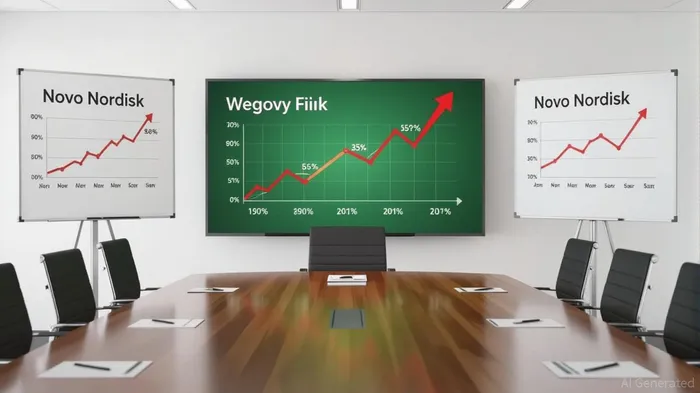
surged 7% in premarket trading on December 23, 2025, following a landmark regulatory milestone: the FDA's approval of its first oral version of Wegovy, a once-daily pill designed to compete directly with Eli Lilly's injectable GLP-1 drugs. This development marks a pivotal shift in the company's strategy to reclaim market share and stabilize revenue growth amid intensifying competition and pricing pressures. While 2025 presented significant headwinds for NovoNVO--, the launch of the oral Wegovy in early 2026 could redefine its long-term earnings trajectory and solidify its leadership in the obesity and diabetes therapeutics space.
2025 Challenges: Slowing Growth and Market Share Erosion
Novo Nordisk's 2025 financial performance was marred by slower-than-expected growth in its GLP-1 drug portfolio. Wegovy sales reached $3.1 billion in Q3 2025, reflecting an 18% year-over-year (YoY) increase but a sharp deceleration from the 67% YoY growth recorded in Q2
according to EMarketer. The company was forced to cut its full-year sales forecast for the third time in 2025, as Eli Lilly's aggressive market expansion-driven by its blockbuster drug, Mounjaro-captured 58% of GLP-1 prescriptions in the U.S. by September 2025, compared to Novo's 42%
according to EMarketer.
Pricing pressures further compounded these challenges. In response to U.S. government mandates and competitive dynamics, Novo
slashed prices for Wegovy and Ozempic by up to 70%, projecting a "low single-digit" negative impact on global sales growth in 2026. However, the company anticipates that these price cuts, combined with expanded Medicare and Medicaid coverage, will drive higher prescription volumes, partially offsetting revenue declines
according to Morningstar.
Oral Wegovy: A Game-Changer for Market Access and Competitive Positioning
The FDA's December 2025 approval of the oral Wegovy pill represents a strategic breakthrough for Novo NordiskNVO--. Scheduled to launch in early January 2026, the pill offers a needle-free alternative to existing GLP-1 therapies, addressing a key patient preference and expanding access to millions averse to injections
according to Investing.com. Analysts view this as a critical differentiator, particularly as Eli Lilly's oral counterpart, orforglipron, remains unapproved
according to Bloomberg.
The convenience of the oral formulation is expected to drive adoption among both patients and healthcare providers. According to Bloomberg, this innovation could stabilize Novo's market share in 2026 and reinvigorate revenue growth for its semaglutide franchise, which is projected to generate $36 billion in sales-up from $33 billion in 2025
according to Drug Discovery Trends. By simplifying administration, Novo is also positioning itself to capture a larger segment of the obesity treatment market, which is forecasted to grow substantially as telehealth partnerships and streamlined access programs expand
according to EMarketer.
Long-Term Outlook: Pipeline Advancements and Strategic Restructuring
Beyond the 2026 launch of the oral Wegovy, Novo Nordisk is investing heavily in long-term differentiation. The company is advancing new indications for semaglutide, including its use in treating metabolic dysfunction-associated steatohepatitis (MASH), a condition affecting millions of patients with non-alcoholic fatty liver disease
according to The Fool. This expansion into new therapeutic areas could diversify revenue streams and reduce reliance on the competitive obesity market.
Additionally, Novo's pipeline includes Amycretin, a dual-acting GLP-1 and amylin mimic, which could offer enhanced efficacy in diabetes and obesity management
according to The Fool. These innovations, coupled with a restructuring plan targeting $8 billion in annualized cost savings by 2026
according to Nasdaq, underscore Novo's commitment to maintaining profitability despite industry-wide pricing pressures.
Risks and Opportunities for Investors
While the oral Wegovy launch presents a compelling opportunity, investors must remain cautious. Intensifying competition, regulatory hurdles for new indications, and potential pricing concessions in international markets could temper growth. However, Novo's first-mover advantage in oral GLP-1 therapy, combined with its robust pipeline and cost discipline, positions it to outperform peers in the long term.
For now, the December 2025 stock surge reflects market optimism about Novo's ability to navigate these challenges. If the oral Wegovy delivers on its promise to simplify treatment and expand patient access, Novo Nordisk could reclaim its position as the dominant force in the GLP-1 space-and redefine the economics of obesity care for decades to come.

Stay ahead of the market.
Get curated U.S. market news, insights and key dates delivered to your inbox.


AInvest
PRO
AInvest
PRO



Comments
No comments yet