
Transatlantic Tariff Talks Open New Fronts in the Auto Industry: Where to Invest in the Supply Chain Shift
The ongoing EU-U.S. automotive tariff negotiations, particularly the June 12, 2025, talks proposing a 15% investment threshold for tariff exemptions, mark a pivotal moment for global manufacturing. Automakers are racing to restructure supply chains to avoid punitive tariffs, creating a strategic reallocation of capital that investors can exploit. This article explores how the push for tariff relief is reshaping investments in transatlantic automotive ecosystems, with a focus on battery manufacturing and semiconductor partnerships—sectors poised to thrive amid shifting trade dynamics.
The Tariff Threshold and Its Ripple Effects
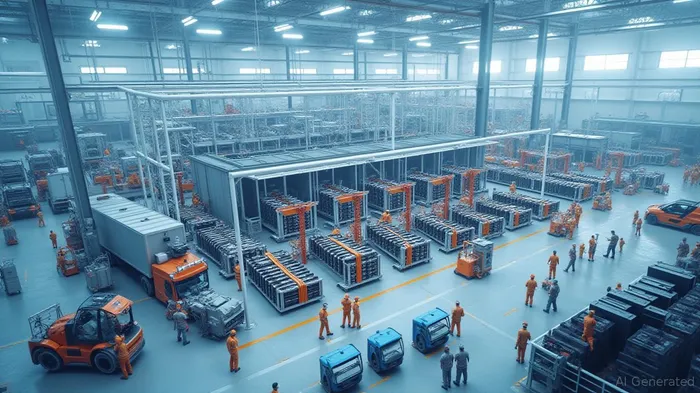
The proposed 15% investment threshold requires automakers to source or invest 15% of their components or capital in the U.S. to qualify for tariff exemptions. This rule, tied to the U.S. Trade Representative's (USTR) push for localization, forces companies like Volkswagen, BMW, and Mercedes-Benz to expand U.S. operations to avoid a potential 50% tariff hike on EU exports. Volkswagen's $2 billion battery plant in South Carolina—a key example—demonstrates how manufacturers are aligning investments with tariff requirements to secure market access.
The EU's retaliatory tariffs, now targeting $95 billion in U.S. goods, add urgency. Automakers face a binary choice: localize production in the U.S. or accept margin erosion. This creates two clear investment themes:
1. Battery Manufacturing: EV adoption is accelerating, and U.S.-based battery production will be critical to meeting both tariff compliance and demand.
2. Semiconductor Partnerships: Advanced chips are now as vital as engines, and regional sourcing is a U.S. priority under the CHIPS Act.
Battery Manufacturing: The New Battleground
The Volkswagen Group's $2 billion U.S. battery plant (part of its $50 billion EV investment plan) is a bellwether for sector dynamics. By 2030, global EV battery demand is projected to hit 1,800 GWh, up from 700 GWh in 2023, per BloombergNEF. The U.S. is aggressively incentivizing domestic production through tax credits, but automakers must also navigate the USTR's content rules.
Investment Opportunity:
- Battery Materials: Lithium, nickel, and cobalt suppliers with U.S. or North American operations (e.g., Livent, Piedmont Lithium) benefit from localization mandates.
- Manufacturing Partners: Companies like Bosch, which is expanding U.S. battery production, or startups like Factorial Energy, backed by Ford, could gain from partnerships with automakers seeking compliance.
Semiconductors: The Invisible Supply Chain linchpin
Automakers now spend $1,000+ per vehicle on semiconductors, up from $300 in 2010, as software-defined cars become the norm. The U.S. has prioritized chip production under the CHIPS Act, requiring automakers to source chips from regional suppliers to avoid tariffs.
Investment Opportunity:
- Regional Chipmakers: U.S.-based firms like Texas Instruments (automotive revenue up 18% in 2024) or Analog Devices are positioned to capture share.
- Partnerships with Automakers: Companies like Renesas (a ToyotaTM-- partner) or Infineon (investing in U.S. plants) are critical to ensuring supply chain resilience.
The Risks and Trade-offs
While the tariff threshold creates opportunities, risks loom large. The U.S. and EU may fail to finalize terms by the July 9 deadline, leading to a 50% tariff spike on EU autos—a scenario that could trigger a 23% drop in EU car exports to the U.S. (€26.4 billion in losses). Meanwhile, automakers like Stellantis (which already operates U.S. plants) or Hyundai (expanding in Georgia) may outperform rivals reliant on transatlantic imports.
Investment Strategy: Where to Allocate Capital Now
- Buy U.S.-exposed battery and semiconductor firms: Companies with production or partnerships in the U.S. will benefit from both tax credits and tariff compliance.
- Short European automakers without U.S. footholds: Stocks like BMW or Mercedes-Benz face margin pressure unless they accelerate U.S. localization.
- Hedge with EV demand plays: Even amid trade uncertainty, EV adoption is a secular trend. Firms like NIO (expanding in the U.S.) or Lucid (leveraging U.S. production) could outperform.
Conclusion: A New Geography of Auto Manufacturing
The 15% investment threshold is more than a tariff rule—it's a catalyst for reshoring capital to the U.S., creating a multi-year tailwind for supply chain players. Investors who bet on battery and semiconductor firms with regional footprints, while avoiding automakers lagging in localization, stand to capitalize on this shift. As Volkswagen's battery plant exemplifies, the auto industry's next chapter will be written in the factories and partnerships that straddle transatlantic trade lines.
Josh Nathan-Kazis is a pseudonym for an author specializing in global trade and automotive market analysis.

Stay ahead of the market.
Get curated U.S. market news, insights and key dates delivered to your inbox.




Comments
No comments yet